Month: June 2008

  • The Landscape of Life: Kinji Akagawa

    Get a little zen with contemporary sculptor, teacher, and garden wanderer Kinji Akagawa.
    You’ll spend the day with this local master learning about his art and
    process which will come to a close with a VIP tour of of the artist’s
    studio and private garden in the beautiful St. Croix River Valley. For
    the past 40 years, Akagawa has made a name for himself with his
    site-specific public sculptures such as THIS
    one in the Minneapolis Sculpture Garden on top of having a brilliant
    reputation as an arts educator. Today’s lecture/field trip ought to be
    as informative as it is pleasant. The Landscapes of Life is part of the U of M’s Curiosity Camp,
    a program designed as a one-day "summer camp" for adults. Can’t get
    away for a real vacation? This might just be the next best thing.
    Register for this event and others HERE.


    9am-4:30pm, MCAD, 2501 Stevens Ave., Minneapolis, $125

  • Borges on Bloom

    The introduction to this week’s Poem Worth Reading is taken from Bart Schneider’s forthcoming novel, the highly Minneapolized The Man in the Blizzard:

    "Sometimes I wonder why Americans are as afraid of poetry as they are of al-Qaeda. Screw the ones who’ve decided that poetry’s an effete enterprise. Let ‘em party with the homophobes. It’s the others who concern me, the folks who claim they don’t get it, who think they’re too dumb to read poetry. Thing is, they’re not willing to be dumb enough. That’s their problem. If you want to get inside a poem, you need to dumb down your senses. That’s where the receptors are. You need to accept that you don’t know. Why should you know? What’s the matter with a little mystery? They think the poem’s a theorem. If they can’t solve it, if they can’t control it, then they’re afraid of it. It’s so American to want it all or nothing. If you can’t conquer it, what good is it? Americans have become so frozen with fear, they’ve lost their sense of play. It’s time to lighten up and lower our expectations. It’s time to rediscover our basic fluency. If a man’s not fluent, if he ain’t got flow, what chance does he have to converse with his soul?"

    Isn’t that kind of great?

    And now the actual poem. In honor of Bloomsday, which celebrates James Joyce’s Ulysses every June 16 (the date of the book’s action), I’m posting a piece by Jorge Luis Borges dedicated to Joyce. Here goes:

    Invocation to Joyce

    Scattered over scattered cities,
    alone and many
    we played at being that Adam
    who gave names to all living things.
    Down the long slopes of night
    that border on the dawn,
    we sought (I still remember) words
    for the moon, for death, for the morning,
    and for man’s other habits.
    We were imagism, cubism,
    the conventicles and sects
    respected now by credulous universities.
    We invented the omission of punctuation
    and capital letters,
    stanzas in the shape of a dove
    from the libraries of Alexandria.
    Ashes, the labor of our hands,
    and a burning fire our faith.
    You, all the while,
    in cities of exile,
    in that exile that was
    your detested and chosen instrument,
    the weapon of your craft,
    erected your pathless labyrinths,
    infinitesmal and infinite,
    wondrously paltry,
    more populous than history.
    We shall die without sighting
    the twofold beast or the rose
    that are the center of your maze,
    but memory holds the talismans,
    its echoes of Virgil,
    and so in the streets of night
    your splendid hells survive,
    so many of your cadences and metaphors,
    the treasures of your darkness.
    What does our cowardice matter if on this earth
    there is one brave man,
    what does sadness matter if in time past
    somebody thought himself happy,
    what does my lost generation matter,
    that dim mirror,
    if your books justify us?
    I am the others. I am those
    who have been rescued by your pains and care.
    I am those unknown to you and saved by you.

    Translated by Norman Thomas di Giovanni


  • Happy (Belated) Bloomsday!

    Last night, The University Club of St. Paul hosted their annual Bloomsday celebration, honoring James Joyce’s Ulysses, a novel whose action takes place on June 16, 1904. A group of eighty or so people, primarily sexagenarian (by one superficial participant’s observations), gathered in a well-lit room.

    Aside from a fairly amazing reading of Molly’s soliloquy (by Molly Culligan, who could play Maude in Harold and Maude if it ever needed to be re-cast), little of the evening’s events had much to do with the book itself. There were some Irish folk songs, some Irish-flamenco folk songs, a reading from a contemporary book that has been compared to Ulysses, and then some poems about Joyce and his tome.

    At first I thought this was a little strange — shouldn’t a holiday about Ulysses focus its festivities on the text? But then I was all like, Nah — that would probably be kind of boring, or at least predictable. I assume that everyone who celebrates Bloomsday has read Ulysses (who else would possibly care?) and maybe wants something separate from analyses and praises of the book.

    In Dublin they do these sort of scavenger hunts, where people follow the paths of Leopold Bloom and/or Stephen Dedalus — the novel’s principal characters — throughout the city, but that can’t really be replicated in the Twin Cities, despite St. Paul’s deep Irish roots.

    So then I thought about Bloomsday’s temporal proximity to Father’s Day, and how maybe it should or could be a sort of anti-Father’s Day. One of Ulysses‘s central themes is about the disowning of one’s dad; Stephen is constantly trying to sever his ties with his father, while in a very morbid sense Bloom has been disowned by his son, who died. In The New Bloomsday Book — a wonderful paraphrase of Ulysses for any first-time reader — Harry Blamires describes what happens in the "Circe" episode: "Stephen runs away from his destiny. He flees the Pater, whether God, fatherland, Simon [his dad], home, Bloom, in his pursuit of freedom. Hunted, he gives the hunting cry, and Simon Dedalus swoops down on him like a buzzard."

    Declan Kiberd adds to this in his introduction to Penguin’s Annotated Student Edition of Ulysses, "The revolt of the son is never the cliché-rebellion against a tyrannical parent, but the more complex revolt against the refusal or inability of an ineffectual father to provide any lead at all."

    Maybe for Bloomsday, all sons (and daughters) could run around with leashes padlocked around their necks, though no one holding the leash. All the fathers (and mothers) could have the keys to the padlocks … and then lose them (another theme of the book is of lost keys/access/acceptance/etc). The day could be spent trying to wriggle out of our respective collars, probably to no avail. Just a thought.

    That was the first part of the post. Now comes the second part.

    As mentioned above, the crowd at The University Club was kind of small and kind of old. While no doubt there are some tight-jean’d hipsters out there reading Ulysses so they can say they read it, it’s a little sad to me that the book’s following seems to be dwindling.

    I’m not sure if it’s critics, or professors, or what, but there’s definitely a stigma about the novel that suggests it’s impenetrable. Ulysses is kind of like the stone that held Excalibur — we are told and believe that something invaluable and amazing exists therein, but it’s simultaneously insinuated that, for the commoner, extracting that value is damn near impossible. There are a lot of potential readers, I think, who won’t approach the book because they think it’s inaccessible. In fact this might be the fault, or intention, of Joyce himself, who declared that his book was written as a kind of practical joke to keep critics busy for a hundred years.

    Which is why it was so refreshing to come across this passage written by Anthony Burgess (author of A Clockwork Orange, etc) in his book ReJoyce:

    My book does not pretend to scholarship, only to a desire to help the average reader who wants to know Joyce’s work but has been scared off by the professors. The appearance of difficulty is part of Joyce’s big joke; the profundities are always expressed in good round Dublin terms; Joyce’s heroes are humble men. If ever there was a writer for the people, Joyce was that writer.

    And really, the entire novel supports this thesis. While much of the prose is intentionally difficult and obfuscated, the dialogue is mostly straightforward — and powerful. Joyce said that what he intended to do was take a sandblaster to the history of the novel and wipe the slate clean. Each of the eighteen episodes presents us with a literary style that is emulated, satirized, and then discarded.

    And then, finally, there is Molly’s soliloquy. It is Joyce’s gift to literature, the form of stream-of-consciousness writing. (Vladimir Nabokov calls it "Stepping Stones of consciousness" because he doesn’t believe it’s an actual stream — he argues that people think in images as well as words, and because there are no actual images in Ulysses, it cannot be the complete flow.)

    Molly, Bloom’s adulterous wife, is vulgar, simple, indulgent, human. And we get to see her thoughts and emotions from inside her skull. The lack of punctuation is dizzying, but as for the actual words, there’s nothing difficult about Molly’s internal monologue. Once you sync your own brain to hers — which happens pretty naturally — you can easily understand her thoughts. Of Bloom, for example, she thinks, "he never goes to church mass or meeting he says your soul you have no soul inside only grey matter because he doesnt know what it is to have one yes."

    The rest of the book is necessary — it prepares us for the soliloquy, which might not have the same revelatory power without the slog it takes to get there. Nevertheless, Molly and the other characters, through their actual words and thoughts, transmit enough revelations — in mostly plain English — that really anyone can grasp the power of Ulysses. So, hopefully next year there will be some fresh faces at Bloomsday.

  • Expand Your Boundaries with Gender-bending Vampire Mutants

    MUSIC
    Vinyl Venus Space Lounge

    Cozy Northeast neighborhood nook, the 331 Club, switches
    gears every Tuesday night to bring you a retro-glam space odyssey
    courtesy of Twin Cities music scene icon Venus DeMars. The All the Pretty Horses
    gender-bending front woman is a statuesque and decadently costumed
    sight to behold, and her charisma definitely rubs off on the record
    player. Rock, jam, or chill out to ’70s glam, ’80s punk, and plenty of
    underground and rare gems. The people watching isn’t half bad either.

    10pm, 331 Club, 331 13th Avenue NE, Northeast Minneapolis, Free

    FILM
    The Omega Man (1971)

    An
    early pioneer of the post-apocalyptic vampire-mutant survivalist story
    was the novelist responsible for the 1954 science fiction book, I Am Legend.
    Richard Matheson’s story about the last man alive in a future Los
    Angeles has now been reproduced as a movie three times. The Omega Man
    deviates from Matheson’s book and the other movies by turning the
    vampire creatures into a cult called "The Family," an obvious reference
    to the Manson Family and their murderous plot a few years prior.
    Neville must avoid being caught by the nocturnal Family at night by
    barricading himself in an apartment with powerful searchlights outside
    to keep the albino light-sensitive creatures at bay. Death to Our Enemies will provide the music portion of the evening at this outdoor event. —Christopher Kelleher (See full article HERE.)

    Dusk, The Basin, 22nd Avenue NE & Quincy Street NE, Free

    ART

    New Masters of Woodturning


    Twenty-nine international artists
    descend on the Nina Bliese Gallery in Downtown Minneapolis for a
    season-long exhibit of wood sculpture. Nature and fine art collide in
    surprising ways in this show, from intricate and delicate design work
    to more organic sculpture. Pick up the new book by Terry Martin and
    Kevin Wallace, New Masters of Woodturning: Expanding the Boundaries,
    an artful tome that will fill you in on what’s hot and what’s not in
    woodturning. Hear the authors discuss the exhibit at the opening reception this Friday, or stop in during regular gallery hours.
    This exhibit will run through September, so if your office is in downtown Minneapolis consider a lunchtime field trip for a little
    artistic rejuvenation.


    Noon-5pm, Nina Bliese Gallery, 225 South 6th Street, Suite 100, Downtown Minneapolis, Free


  • Keeping the Peace Means Communication and a Warm Taser

    While terrorists plotting to obliterate the Xcel Center in a
    fertilizer-scented blast of hellfire would seem to be the larger cause for
    concern among the various agencies responsible for security around the RNC, the
    Department of Homeland Security, in conjunction with Texas Security Threat
    Group officers, the California Department of Corrections and the Sacramento
    Intelligence unit, is bringing its "A" game. In other words, it’s examining all
    threats, no matter how unlikely.

    Saint Paul’s
    own plans
    for dealing with malcontents, such as corralling protesters in bamboo cages, a
    strategy code-named "The John McCain experience," are already well known. But
    even as Ramsey County invests
    in tasers
    and autonomous independently targeting turrets, they can likely
    find other useful tools by digging in the Department of Homeland security’s
    arsenal. In fact, at a recent counterterrorism conference, a book of
    slang terms
    (PDF), coined by a variety of street gangs, white supremacist
    groups, a variety of ethnicities, and, strangely enough, the judiciary, was
    circulated to help officers of the peace better understand those who would do
    harm to their innocent charges.

    While the primary threat to the RNC remains terrorism and
    unwashed hippies swaying in unison during group sit-ins and marches, the possibility
    of the Latin Kings, Mandingo Warriors, or Minnesota Court of Appeals judges
    growing militantly political and staging an assault on the Xcel can’t be
    discounted. And, failing that, it’s unlikely the various gangs have forgotten
    how much money they once made in the mid-80s selling various powders to rabidly
    capitalistic Republicans frothing at the mouth for junk bonds and snorting coke
    off Jennifer Beals’ taut buttocks.

    This bible of colloquialisms, ripe with
    charming observations about the nature of feminism, social commentary and keen insight on the seven habits of highly effective prison bitches,
    will act as security forces’ guardo camino, enabling them to protect the
    right-leaning stalwart souls come from all four corners of our great country to
    assemble and safely rejoice in a
    decision that was made half a year ago
    .

    We at the Defenestrator, however, want to ensure all can
    identify the malcontents in the crowd sure to lay siege
    to the House that Norm Coleman Built.
    Empowering the citizenry with such insider knowledge will help ensure our
    safety and deter the criminals who will surely seek to disrupt this shining
    example of the democratic process. While the full list of terms is linked
    above, examples of terms you may hear from the hardened criminals in the
    streets and our judicial system are listed below.

    • BEEF STEAK…..(Rap)…..Refers
      to the penis.
    • NINJA TURTLES…..(Prison)…..A
      team of Officers dressed in riot gear in preparation to quell a riot, or
      to conduct a forced removal of an offender. The term is derived from
      the fact that the Officers resemble the Teenaged Mutant Ninja Turtle
      (Cartoon Characters) in this gear.
    • BEES
      KNEE’s
      …..(Latin Kings)…..An extraordinary person, thing, idea, The
      ultimate
    • BOOYAH…..(Street)…..Word
      used to simulate the report of a shotgun
    • CHARGE OF THE GODDESS…..(Occult)…..Originally
      written by Doreen Valiente, the charge gives the story of the message of
      the Goddess and her children. The High Priestess often recites the charge
      at the full moon Esbat.
    • HORSE FEATHERS…..(Latin
      Kings)…..A term for nonsense; lies (Same as applesauce, banana oil)

    So what have we learned from this sampling of the
    nomenclature of America’s
    most dire threats to peace and order? We’ve learned that:

    • criminals
      have an appreciation for early 90s action figures,
    • Wiccans
      are a danger to national security,
    • judging
      by their slang, the Latin Kings are a roving band of malicious octogenarians,
    • and the
      Department of Homeland Security, in conjunction with Texas Security Threat
      Group officers, the California Department of Corrections and the
      Sacramento Intelligence unit, could’ve saved a great deal of money by
      skipping this exercise altogether and making use of Urban Dictionary.

    Of course, if you have favorites I didn’t mention here, take
    a look in
    the book
    and mention them in the comments below.

  • Crowdsourcing the Citizen Cafe

    Citizen CafeWanna be a restaurant critic? Wanna be a citizen journalist?
    Let’s try an experiment. The Citizen Café is opening tomorrow, at 24th
    Ave.and 38th St. in south Minneapolis. Instead of just me writing a
    review (which I will do eventually), how about all of you readers out there
    visiting the restaurant and sending me your impressions. You can either post
    them online as comments on this post, or send them to me as emails, to Iggers@rakemag.com.

    You don’t have to write a full-blown restaurant review,
    though you can if you want to. Don’t bother with star ratings, either (I always
    hated those), but do use lots of adjectives and adverbs. There’s no prize or
    payment or anything, just the glory of being quoted in Breaking Bread. I’ll read
    through your comments, and combine them into a collective review – and will add
    some comments of my own. Of course, keep in mind that it isn’t really fair to
    review a restaurant the first week it opens, so go prepared for the usual
    opening week screw-ups, and don’t be too harsh. Deadline for submissions is
    Sunday, June 29.

    To whet your appetite, here is what we know so far: Chef-owner
    is Michael McKay, who opened the Sample Room in northeast Minneapolis, and
    still owns a piece of it. The Citizen Café will be open six days a week for breakfast, lunch and dinner –
    closed Mondays and Sunday night. The menu is basically classic American fare
    made from scratch – McKay says he’ll make his own catsup from fresh tomatoes,
    and stuff his own sausage. For breakfast, McKay will offer scones, muffins,
    quickbread, homemade gravlax, and a Citizen Breakfast – two eggs over easy with
    hashbrowns, toast, your choice of meat, and a basket of breakfast breads ($6).

    The lunch menu adds salads and sandwiches – ranging from a
    Reuben to a shrimp po’ boy ($7-$11), while the dinner entrees will range from
    pot roast ($13) and brick chicken ($12) to braised short ribs ($15) all served
    with Yukon gold mashed potatoes and roasted vegetables. The most expensive
    entrée will be a $17 certified Angus strip steak

    The Citizen Café is open Tuesday to Thursday 7:30 a.m. to
    9:30 p.m., Friday 7:30 a.m. to 10 p.m. Saturday 8 a.m. to 10 p.m., Sunday 8
    a.m. to 2 p.m. Website coming soon: www.citizen-cafe.com
    .


  • Quick Thoughts and Queries for An Open Thread on Game Five

    (Photo by Brian Babineau/NBAE/Getty Images)

    NBA Finals, Game #5: Boston 98, Los Angeles 103

    Series to date: Boston up 3-2

    Other assignments prevented me to compiling a good three pointer for last night’s game, and it is already late in the day to slap together some of my impressions and questions about the contest. But given the exquisite recent feedback this site has received from a great mix of both Celtic and Laker partisans, KG fans, and everything quasi-neutral in between, I thought I’d briefly weigh in and open the floor for discussion. In any case, I’ll have something more thorough after Game Six.

    * I woke up this morning somewhat surprised that the "Kobe fouled Pierce" line seems to have generated some legs. Personally, I thought the worst call of the game was the third whistle on KG, when he obviously had a clean block on Gasol and yet was forced to go to the bench. The Kobe "foul" on the steal from Pierce was minimal contact, and given the stage of the game and the very slight infraction, I thought I was an appropriate no-call. But both the second and third fouls on KG were huge in deciding the game, and both were very questionable calls. Without Kendrick Perkins, the Celts were already hamstrung down in the low block. Pau Gasol and Lamar Odom finally seem to have gotten the message that they have to attack the paint with some urgency. Garnett discovered that guarding an energized Gasol is a tougher task than handling Odom; and James Posey on Odom should almost always be, and usually was, a mismatch in Odom’s favor. On a night when the Celts again did a good job on Kobe (post first quarter) and Paul Pierce was unstoppable, I think Boston wins if KG stays on the floor more than 11 minutes in the first half. Yes, LA got a majority of the "could go either way" calls, including the crucial ones like KG #2 and 3 and the Kobe steal. That’s a natural tendency when a team is at home and trying to stave off elimination.

    * I am rooting for the Celtics (but not so hard that I don’t want to see, close, well-played games) and have been a big critic of the Laker defense during the series, but did anyone else think that Van Gundy, Jackson, and Barry in particular were way too harsh on the Lakers’ indifferent D? JVG at least tried to be very specific, as when Jordan Farmar didn’t want to take the charge on Pierce, and I’m all for roasting Vlad Rad, but I can’t ever recall such vitriol being directed against the *winning team* in such widespread fashion. Barry essentially predicted the Lakers will get blown out on the return trip to Boston. Uh, I’m not so sure. The fact remains, the Lakers have a very good team, and that they don’t play team D nearly as well or tenaciously as the Celts shouldn’t obscure the fact that they have a superior offense and the game’s most talented player, and that the Celts are starting to physically break down. What sort of perverted logic will these pundits deploy if the Lakers snatch Game Six, which is not totally outside the realm of possibility, even if they play defense as porously as they performed last night? Do you folks agree or disagree with this? In any case, I was amazed at the negativity directed toward LA; maybe because many of them had picked the Lakers and are overcompensating for currently looking wrong.

    * KG lovers, including yours truly, have to own up to the fact that those two misses at the line in crunchtime were killers, the sort of misses that can invade the psyche if he’s put in a similar situation in the next game or two. Another ray of hope for LA’s chances of keeping this thing alive.

    * Yes, Pau Gasol is a lousy defender. But he is underrated for his grit on the offensive boards and I think his contesting for rebounds wore KG down some last night. Garnett is usually a master at snatching rebounds that are up for grabs and Gasol and Odom were able to keep many of them in play last night. Given how little ground Gasol covers on defense, especially compared to KG, he expends much less energy during a typical game. Thus, here is what I’d say to KG, who usually is very receptive to messages that emphasize defense as opposed to offense: "KG, unless you want to be worn out down the stretch, you need to take it at Gasol and get *him* in foul trouble so *he*’s the one who has to sit. Because Gasol is a key to their offense right now, both in the low block and the high post, where he can feed the perimeter shooters or dish down to Odom. The best defense you can execute right now is drawing fouls on him, which is what will inevitably happen if you go strong and hard in the paint when you guys have the ball."

    * How many points did Odom score with the right hand last night? Why hasn’t he been switching hands on the penetration off the dribble this entire series?

    * I don’t understand why Rondo and the other Celtics haven’t been able to make LA pay for sloughing off Rondo when he is running the half court sets, but after three games of this pattern, isn’t it time to start thinking about starting House, essentially matching him up with Fisher, and bringing Rondo in when the Lakers go to Farmar and Vujacic?

    * Will there be a fight before this thing is over? If so, my money is on either Posey or Vujacic as the instigator.

  • Multipurpose

    Exhibitions discussed in this article:

    Information Sickness and Time Fever by Molly Roth
    At Thomas Barry Fine Arts through July 3rd

    Roger Roger by Traci Tullius, and Meander, including work by Andrea Selese Carlson, Angela Zammarelli, Bethany Kalk, Brian Jorgenson, Caleb Coppock, Chad Rutter, Dan Tesene, Emily Smith, Erika Ritzel, Isa Gagarin, Joe Sinness, Markus Merkle, Mitchell Dose, Molly Roth, Robin Cotton, Ryan Macintyre, Sally Grayson, and Shepherd Alligood
    At the Soap Factory through July 6th

    The Multipurpose Statement

    It is by now customary that single-artist shows come conjoined with texts like the one that accompanies Molly Roth’s Information Sickness and Time Fever, at Thomas Barry Fine Arts. Striking a tone between the breathless and the merely descriptive, and often loaded with jargon, these multipurpose documents serve as a press release, advertisement, and curatorial explication in one. They argue for the significance of the work, and they often obviate the individual spectator’s response, (or the critic’s, for
    that matter).

    Perhaps such a text, useful before and after the exhibition should be kept out of the gallery space, where it can interfere with the work. In the case of Roth’s work, postcards peppered throughout the space assure us that it is "labor-intensive." We’re told she works in "tiny bows," and currently her medium is "newspaper." Approaching the work will also reveal these things.

    Could this text, that so carefully anticipates the correct response, be intended to alienate? After all, we’re told that the work involves "the post-modern depressed subject." And if there is one thing that such a subject knows, it’s that everything has already been said, read and interpreted.

    But don’t let anyone tell you that Roth’s work isn’t intriguing. Giant cursive words are mirrored across their midlines to create insect-like shapes. The resulting encryption leaves one final task, even for a subject thus interpolated. I won’t spoil it for you by translating. What depressed this subject about the exhibit is that the work — one that suggests the crazed empowerment of creating a single bold and lasting word from the cultural detritus of millions of words that are instantly obsolete — was limited by its multipurpose document. The potential of discovery was, to a large degree foreclosed.

    The Multipurpose Room

    Before I tell you of my trials on the way to see the current exhibition at the Soap Factory, I’ll say that you should hurry down to the show, if not to see the interesting failure of a collective work that is Meander, then to immerse yourself in Traci Tullius’s majestically melancholic video installation work, Roger Roger.

    I made time to see the exhibition on the Friday after its opening. But when I arrived at the gallery, workers setting up for a weekend wedding informed me that the gallery was closed. Upon asking when it would reopen, I was told, "Sunday."

    The collapse of the interstate has left access to the gallery an endeavor. Second street is buried under rubble. North of Hennepin, Main street is closed indefinitely. Traffic clogs the remaining routes most days and evenings. Not to be denied again, but wanting to see the work before the gallery’s Monday-Wednesday weekend, I phoned the number on the website during gallery hours and reached a recording. There was no mention of the closure, nor the resumption of regular hours. Discouraged, I elected not to waste another trip but left a message. I received a call the next day informing me that it had been open Sunday and would be open again on Thursday during regular hours.

    Thursday, I ducked in briefly on my way to a meeting to confirm that a special trip on Saturday would be warranted. But when I returned, an unannounced arts and crafts sale was filling the entire gallery. DJs had set up in the center of one of the galleries and were playing dance music for the attendant shoppers. The throb of commerce obliterated the layered audio track that accompanies Tullius’s work. A video advertisement for the Sound Unseen film festival had been installed so near to Tullius’s piece that it appeared to be a part of it. "I’m pretty sure that wasn’t there before," I said to my companion. A fourth visit confirmed this.

    I finally managed to have the experience with Tullius’s work that it deserves. In the cool and vacant gallery, six large video screens are hung like sheets on washing lines. Video projections show performances and private moments. Yet everything is shot through with the profound loneliness of place — a vacant venue, a deserted car dealership, and a weather-beaten farmhouse. In most of the videos, the lens observes a private moment, attended by no one but the camera. Contrasted to this, family videos evoke the homey nostalgia of filial companionship and harmony. Tullius has an eye for the evocative moment, and she understands that as a video artist, her effort should be focused on selection and subtraction. In the black space at the end of one loop, one can see another screen reflected, suggesting the idle mind’s movement to memory and repetition.

    The Soap Factory is an unconventional art space, and it owes some of its success to its cross pollination — hosting craft events, film screenings and a haunted house to generate the revenue that keeps its doors open. But it’s worth questioning whether a gallery that is effectively closed during two weekends of a six-week run is really fulfilling its obligation to the featured artists. If nothing else, The Soap Factory needs to be honest about when it is open for art viewing and when it is open for other functions, or closed altogether, so that viewers serious about seeing the art on display don’t get discouraged.

    The second work on display at The Soap Factory, Meander, is a collective work by artists too numerous to list in the text of this article. It’s a mishmash of roughly hewn sculpture, drawing and painting laid directly on the unfinished timbers of the gallery, where it seems likely to be eaten by a passing swarm of silverfish. Most of the works are unsigned. Some are identifiable to those familiar with an artist’s idioms and thematic concerns. With its varied light, its unfinished aesthetic, and its wide-open rooms, The Soap Factory can overwhelm all but the most focused and brilliant exhibition. Fellow writer Andy Sturdevant has noted that Meander is explicitly an attempt to deal with this problem. Its partial success is a testament to the specificity of the space.

    The urge to blanket such a work with the some textual analysis, some manifesto of hive mind pluralism conjoined with a fictional unity must be almost irresistible. More on group shows next time, but I’m grateful in this case for a silence that bravely foregrounds the in-itselfness of the diffuse, collective work. The exhibition ultimately lives or dies by its own merit on the gallery floor, dependent on the eyes and ideas of the individual viewers as much as on those of the artists and curators who have placed it there. Its rugged, rangy self-sufficience is an extreme example of art unhelped and unhindered by self-analysis.

  • Don't Need a Cure, Need a Final Speculation

    MUSIC
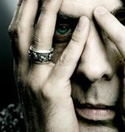
    Peter Murphy

    The "Godfather of Goth" glides into town tonight to treat Twin Citians to his seductive brand of gloom-tinged pop. Those of you who went through a goth phase
    will most certainly get a kick out of seeing Murphy live; at 50 years
    old he’s still as hot, mysterious, and mesmerizing as he was back in
    his Bauhaus
    heyday. Unfortunately, this performance is not in support of a fresh
    album, so don’t expect any new material; The Retrospective Tour is
    just for kicks (and probably bucks), but if you’ve been around as long
    as Murphy has, you’ve definitely earned the right. And who doesn’t want
    to hear the classic goth-jam "She’s in Parties" live? Ali Eskandarian opens.

    7pm, Fine Line Music Cafe, 318 1st Ave. N, Warehouse District, $41.50

    PERFORMANCE
    Flak Radio

    If you’re familiar with smart n’ sassy local writers/Flak Radio

    hosts James Norton and Taylor Carik, then you’ll certainly be
    interested in tonight’s super-ultra-rare live broadcast at the Ritz
    Theater. As someone who has been an in-studio guest on this show, I can
    absolutely endorse the live version as officially cool. The guys kick
    off the evening with a reading by Lit 6 author Geoff Herbach in support
    of his new novel The Miracle Letters of T. Rimberg, as well as the comedic stylin’s of Eric Nigg, beer-talk with author Doug Hoverson, tons of fabulous prizes, and many more surprises.

    6:30, Ritz Theater, 345 13th Ave. NE, Northeast Minneapolis, Free

    READINGS
    Speculations

    The Carol Connolly Reading Series
    features eclectic public literary events across the metro area.
    Tonight’s event, Speculations, includes a fiery reading courtesy of Rebecca Marjesdatter, a
    Rhysling Award-winning poet, fiction writer, poetry editor, and member of the poetry performance group, Lady Poetesses from Hell. The festivities will be hosted by curator Eric Heideman
    at Uptown alternative bookstore, Dreamhaven Books. If you’re on the
    fence, a free "soda pop and cookies" reception follows the reading.

    6:30pm, DreamHaven Books, 912 W Lake St, Minneapolis,
    Free


  • Irma Thomas/James Hunter

    The official Soul Queen of
    New Orleans, Irma Thomas has gracefully matured from the belter who
    literally 50 years ago (1958) told her romantic rivals, "You Can Have
    My Husband (But Please Don’t Mess With My Man)
    ," to a caresser who
    engages the violins and doesn’t shed a shred of dignity on the bittersweet
    "Another Lonely Heart." A survivor of not one but two hurricanes
    (Camille and Katrina, the first one arguably tougher, as it temporarily
    short-circuited her career), Thomas is equally comfortable with soaring
    blues and gospel gravitas, wry, sexy mama send-ups, and, her stock-in-trade,
    testimony about the day-to-day triumphs earned and tears dropped. At
    the Dakota last time through she was engaging and self-assured, took
    requests, and played a generous set that left everyone wanting more.
    According to the various label and ticket sites, this Zoo gig is the
    only spot on her concert calendar this summer—don’t be surprised
    if she pulls something out from her upcoming Simply Grand CD,
    due in August. The stellar and simpatico opener is James Hunter, who
    plays retro blue-eyed soul with a passion and panache that seems steeped
    in the mid-60s but conveys its immediacy the moment it hits your ears.