Author: Max Ross

  • Protest Music for the New Millenium

    (Todd Smith already wrote this article)

    On stage, Steve Earle led the crowd in a sing-a-long of "Steve’s Hammer (for Pete)" – a song that picks up on that parenthetical Pete (Seeger)’s "If I Had a Hammer," from 1949.

    "I’m gonna say a line, and you’re gonna repeat it back to me," Earle said. "And none of the just-mouthin’-the-words stuff. I grew up in a Methodist church, and I know all about that shit."

    The audience, in attendance for the 1st Annual Take Back Labor Day Festival at Harriet Island, acquiesced to Earle’s demands. Hippies and hipsters, whole families and lone children, organizers in support of workers’ rights and apolitical groupies who came just to see their favorite bands – everyone yelled the musician’s lyrics back at him. Though there were fourteen-year-olds in the front row who’ve probably never even had a job yet, everyone was eager to add their own energy to the day’s momentum.

    Later, just across the Mississippi River, more than 280 protestors would be arrested for varying degrees of felonies, and a faint stench of tear gas would linger in the city’s grass. There would be a bomb threat on the Roberts Street Bridge. A man in the center of downtown St. Paul’s labyrinth-like riot gates would stand in a spotlight, preaching salvation, though no one would listen. Hidden speakers would blare "Danger Zone" throughout the metropolis.

    Now, though, at the concert, people sat cross-legged in the sun, and others kicked around a hackey-sack, and Steve Earle alternately played songs and lamented Woody Guthrie’s absence.

    The quietest presences were those backstage. During Earle’s set, a number of Iraq Veterans Against the War milled about, partaking of the festival’s various fried foods and texting friends on their cell phones. Some listened to the music, but none sang along. Certainly they seemed to be enjoying themselves, but they were distanced somehow from the celebration.

    "We came as part of a group of veterans to the DNC and RNC, to address issues affecting vets," said Eddie Falcon, who served four tours – two in Iraq, two in Afghanistan – as well as helping out in post-Katrina New Orleans. He was dressed in a black tank top, silver dog tags hanging loosely over the cloth. "We want all occupying forces out of Iraq and Afghanistan – you know, just, ‘troops home now’ – and we want full benefits for veterans. There are a lot of things that happen back home: PTSD (post-traumatic stress disorder), suicide, depression, alcoholism…and a lot of veterans aren’t getting the help they need."

    It’s strange and disturbing to think that of all the people gathered under the aegis of Taking Back Labor Day, the people enlisted by our government to protect our country are some of the most mistreated by their employers.

    In about forty-five minutes, when Tom Morello would be finishing his set with a rendition of Woody Guthrie’s "This Land is Your Land" (subversive lyrics reinstated), Falcon and his twenty or so peers on stage would pump their fists during the chorus and jump like they were listening to Kris Kross. Backstage, though, they were subdued, maybe accustomed to explaining their difficult positions to the media. Low-key as they seemed, though, they were very aware that they were under threat of arrest.

    Last week at the DNC in Denver, the group – then reportedly comprised of more than sixty vets – enacted Operation First Casualty, which, Falcon explained, was a piece of guerrilla-style theater.

    "With that we were bringing the war home," he said. "We dressed in our full fatigues, and had planted allies throughout the city, and we would detain them, handcuffing them and masking them in the middle of the crowd, to simulate what happens every day in Iraq."

    Then a group of veterans composed a letter listing demands they wanted to present to Obama’s campaign. They marched, Morello explained during his set, through the streets of Denver, and as they got closer and closer to the convention’s headquarters, a group of policemen in full riot gear began to block their path.

    That’s the absurd thing, isn’t it? That war veterans could get arrested during what really was a peaceful, even pacifist event – back home in the U.S.

    But the vets were undeterred. Eventually their letter was delivered and, Morello said, the dialogue with the Democratic Party will continue.
    In St. Paul the vets drafted a similar missive for the McCain camp. "Our First Sergeant got an escort through St. Paul to see McCain and bring him the letter," Falcon said. "But McCain declined to come out."

    During the latter half of the show, when the music shifted from Steve Earle-style folk rock to rap, the veterans began congregating on the wings of the stage. They danced along to Atmosphere, Mos Def, and The Pharcyde. The terms ‘PTSD’ and depression resounded in the mind – diseases that by definition set one apart form larger society. The vets had backstage passes, were touring with the musicians, and jamming on the set, but one wonders when, if ever, they’ll be able to re-join the larger crowd.
  • A Rakish Interview: Big Quarters

    In the Jasmine Deli, Zach and Brandon Bagaason – the brothers that constitute the rapper/producer team Big Quarters – don’t mess with the menu. Regulars well-acquainted with the selection at this Vietnamese spot on Eat Street, they ordered without consulting the dual-language laminated pages.

    Regularity, it might be said, is what defines Big Quarters – their work ethic, at least, if not their actual music. After the 2007 release of their debut album, Cost of Living, they’ve been working relentlessly on a number of mixtapes and EPs. Now, having devised a producers’ sort of Holy Grail, they’ve found an effective means to release them. On September 5th, they will introduce their monthly subscription system – Big Quarters Direct – where for five bucks a month you’ll get five new tracks a month, sent to your email account.

    “People have been talking about how albums aren’t relevant anymore,” Brandon said. He speaks in a drawl, as if he chews his words a little, flattening them, before spitting them out. “So this is a way to maintain a connection with fans. People who want our stuff will have it instantly.”

    Recently, a number of musical acts – most notably (and most successfully) Radiohead – have been reaching audiences by releasing their work online. Last December, Atmosphere put out Strictly Leakage for free download; earlier this year Big Quarters made the Fall in Love EP, produced in conjunction with Mux Mool, available online for free.

    (An interesting tangential story, paraphrased, because my tape recorder stopped working at some point during the interview: Zach and Mux Mool used to work together at the now-defunct Discount Video on Hennepin [its spot has since turned into a cell phone shop]. On Saturdays, only one of them would be scheduled for a shift, but both would show up, and they’d trade turns clocking in. Then, while one of them helped customers and stocked shelves and did what video store clerks do, the other would be in back, recording audio clips from the in-stock movies to use later for production. The store, Zach estimated, had over 40,000 titles, and they ended up with an unwieldy amount of samples, which they are now turning into a series of Discount Musical tracks, some of which will possibly be released – and now we get back to the main body – on Big Quarters Direct.)

    “It’s the first time we’ve been able to speed up the process of releasing music,” Zach said. He is more soft-spoken than his brother, his sentences maybe dampened by the beard that haloes his face. “We want to put out quality music every month, because now we have that capability.”

    Their compositions aren’t made for passive fans. Rather, they produce with the hope that their music is something to interact with. After Cost of Living, they released the Cost of Living Construction Kit (yours free when you sign up for Big Quarters Direct), which is actually a dissection of the original album, with both a cappella and instrumental versions of the songs laid out for other producers and MCs that might want to use them. Beyond that, though, Big Quarters hopes that people are able engage with their tracks on a more personal level.

    “Everything’s about telling our own story,” Brandon said. “Communicating, storytelling, we like to try and do that through rapping, and through our instrumentals.”

    Fittingly, their lyrics are marked by introspection. They explained that when they write about personal experiences, that’s when fans pay the most attention. The line that’s gotten them the most renown, off their song “Everyday,” is “Home of brown babies and white mothers” – an embrace of their own mixed-race heritage.

    Carrying their music over into their professional lives, Big Quarters try to promote the curative aspects of storytelling in their (our) community. By day, Zach and Brandon work with a number of youth groups – at the Hope Community, at IDDS, at the Minneapolis YMCA – teaching kids to DJ, to put together a song, and most importantly, to unleash their personal narratives.

    “It’s about therapy,” said Zach. “We hope that people can relate to us, find similarities even if their story’s not exactly the same.”

    Discerning a story from their instrumentals is a bit murkier of a task, but certainly there’s a narrative element to their production. None of their beats relies on a simple loop; rather they stoke a melody throughout the track, layering and collapsing it in progressions that never let go a listener’s ear. As far as actual sound, one might compare their production to some of the stuff RZA does for Wu-Tang Clan – full-bodied and sour and vaguely kung-fu-ish – though the recent Fall in Love EP seems to try and crack through this, bordering on pop.

    “The goal for us when we’re producing,” Zach said, “is to take something people might know, and play with it and break it down until it’s not really recognizable anymore. That’s when a beat sort of becomes our own, and we can begin to tell a story with it.”

    (If you listen to this, it’s easy to see what he means.)

    September 3rd, 2008 @ Turf Club.
    Performances by: Big Quarters, Mux Mool and DJ Anton
    21+ / $4 / 9pm


  • Hail to the Bus Driver

    When I was in third grade, my school bus driver was named ‘Slice,’ and he was the coolest. His hair was blond and spiked, held in place by gravity-resistant gel. In the front seat – where not even the nerdiest of nerds dared sit – he kept a Styrofoam container filled with icepacks and cans of orange Slice soda, which he sold for twenty-five cents, instead of the usual pop machine fifty. Before school, my friends and I would each chug one down to get our morning sugar fix – our teachers and parents probably didn’t think Slice was the coolest. But best of all, he drove what might in retrospect be called dangerously fast, so we would get to school early. Instead of dropping us off, though, he would crank up KDWB and drive around the block three or four extra times, letting us climb over the seats and run up and down the center aisle, so long as we promised not to hurt ourselves. Man, he ruled. Then he moved to Alaska, which I’m pretty sure is bus driver code for getting fired.

    Every year at about this time I’m reminded of Slice, because I see the big yellow buses start to make their rounds around the city. Empty of children, the drivers and supervisors go through their routes, as if practicing will make them any more adept.

    What this all means, of course, is that the school year is coming up. Zooming ten years ahead of third grade, college students are beginning their treks of various lengths across the country, packing their hand-me-down cars with "carefully secured suitcases full of light and heavy clothing; with boxes of blankets, boots and shoes, stationery and books, sheets, pillows, quilts; with rolled-up rugs and sleeping bags; with bicycles, skis, rucksacks…stereo sets, radios, personal computers; small refrigerators and hairdryers and styling irons…the controlled substances, the birth control pills and devices; the junk food still in shopping bags – onion-and-garlic chips, nacho thins, peanut crème patties, Waffelos and Kabooms, fruit chews and toffee popcorn; the Dum-Dum pops, the Mystic mints." (From the first page of Don Delillo’s White Noise – a wonderfully relevant book even though I don’t know what Waffelos are.)

    Something about sixty-eight degrees and sunny with a cool breeze always makes me nostalgic and weepy. Oh my gosh – good poetry also makes me nostalgic and weepy. Synergy.

    I couldn’t find any good verse on mildly subversive bus drivers, so this one goes out to the college kids (somewhat ironically, as it’s more about leaving school than arriving there…sorry…suckers)…and to former English majors about to embark on their Kerouac kicks, and to anyone who has a long commute each day and finds the means to enjoy it. In fact – not to get political here – the Road Trip seems to me a very American entity, and with gas prices doing what they’re doing, one wonders how much longer it can remain a pastime. Let’s sing it some praises, shall we?

    "Song of the Open Road" (part 1)
    by Walt Whitman (who rules, like Slice does)

    Afoot and light-hearted I take to the open road,
    Healthy, free, the world before me,
    The long brown path before me leading wherever I choose.

    Henceforth I ask not good-fortune, I myself am good-fortune,
    Henceforth I whimper no more, postpone no more, need nothing,
    Done with indoor complaints, libraries, querulous criticisms,
    Strong and content I travel the open road.

    The earth, that is sufficient,
    I do not want the constellations any nearer,
    I know they are very well where they are,
    I know they suffice for those who belong to them.

    (Still here I carry my old delicious burdens,
    I carry them, men and women, I carry them with me wherever I go,
    I swear it is impossible for me to get rid of them,
    I am fill’d with them, and I will fill them in return.)

  • Corrections, Amendments, Omissions, Apologies, Get-Backs

    So I’ve been at this blogging thing for a few months now, and judging from my comments sections, it would seem I’ve messed up kind of a lot. Which is to be expected, I suppose, as my personality is composed of equal parts naivety and ego — a mixture conducive to blanket statements that I can’t ever quite back up. So I’ve decided to issue some retractions in today’s post, and also to defend myself a little bit where I feel it’s warranted.

    First off, though, here is a hyper-linked list of what you should probably be reading right now instead of this blog – the year’s best books thus far, variously endorsed by Amazon, publishing house PR people, or myself.

    Okay. What I’ve been nailed with most have been statements that I should ‘do more research.’ In fact, that’s a weak paraphrase, so I’ll give some of the juicier examples:

    Anonymous: "Maybe [the death of criticism is] due to the lack of credibility and factual reporting in journalism…for example, [REDACTED]…so you can remove that tired example from your essay. All it takes is a bit of research rather then lazy comparisons to make a piece compelling."

    Lane: "[REDACTED]…You should have done more research instead of choosing to express more of the unending contumely put forward for hits. You failed to prove your point with this pedantic effort."


    Ouch, right? Let’s take a breath. Both of those are from the piece entitled, "Are All Critics Obsolete?" in which I copycat Jeremy Iggers’ post from the same week, and pontificate a bit as to whether cultural critics are necessary and/or heeded anymore.

    Now, I admit that even one false fact can indeed ruin a piece of journalism, and that I let slip a falsity in this particular piece (whether this is journalism or not is another issue…more like journalizm). I said, incorrectly, that this is a country where "Clay Aiken rules the radio," and did so in a derogatory manner. (The redacted sections: "Clay Aiken DOESN’T get played on the radio" and "Clay Aiken rules the radio? What radio stations are you listening to?" and there are a half-dozen other identical call-outs).

    And it’s true, I neglected to check the billboard charts for that week. I have no real defense, but to say I assumed that, given Aiken’s vast, loyal following, there would be enough momentum behind the guy to get him on the airwaves. Apparently his fans are as obsolete as I am. (Ahh, another Aiken throwaway joke. Bring on your predictable backlash.)

    In short, I apologize for saying that Clay Aiken ‘rules the radio,’ when in fact he doesn’t.

    Does this ruin my credibiliy?

    Trick question! I had none to begin with. (Short answer: probably)

    More seriously, the first essay/article/blog I did for "Cracking Spines" was perhaps the most ambitious, and the most errant. And for this I’d like to offer sincere apologies as to not looking at our libraries closely enough, in terms of circulations rates, patronization, et al. Certainly the library system is in much better shape than it was a few years ago before The Merger, and seems to be continuing its improvement. Every time I go to do some work at the Downtown branch, I become more impressed with it, and have even bought a fashionable Minneapolis Public Library t-shirt from their gift shot (just $5!), and wear it with something like pride.

    Moving right along…Hipster Literature:

    I still like McSweeney’s, but that doesn’t absolve them of publishing things like this Stephen King novella. There was one very astute commenter on that piece who absolutely cowed me, and to him/her I say well done.

    Barnes and Ignoble:

    Having gone to a couple Barnes and Noble readings post-posting, I’m led to believe that – due to paltry turn-outs – Magers and Quinn’s enthusiastic reading community is indeed a better spot for touring authors.

    Also, I got a comment about the links in that article…it was sort of a joke, misdirecting them everywhere. As was my excitement about Mario Lopez. Sarcasm and meta-sarcasm. My humor fell into a sarchasm…

    Oh that’s bad.

    Blurbs:
    This is an addendum. Last week there was an article in the New York Times about a business whose service is to provide author blurbs for a fee, regardless of how good a book is or isn’t.

    Finally, in my post about the conspiracies surrounding Vincent Bugliosi’s new book, a commenter was wise enough to inform me that Ben and Jerry’s do not, in fact, get their milk from Canada. Which means that my theory about global warming being a scam put on by B & J to boost the Canadian GDP is – prepare to be shocked here – false. Thanks for getting to the bottom of that one, Anonymous. You’re a great watchdog.

    Here‘s how it’s done.

    To those that are still here, I just want to say thanks for reading. I very much appreciate all the feedback – positive and otherwise – much of it is incredibly well-thought out, and delves deeper than I am capable. Cheers.

  • A Poem for Newlyweds

    I was at a wedding this weekend, which reminded me that, at least in Minnesota, summer is the same as wedding season.

    I’d only met the bride and groom a few months ago, after they’d already sent out the invitations. They were carrying a couch out from a duplex in Kenwood, trying to figure out how to fit it in their minivan; I was carrying my Lunds bags filled with books and DVDs into said duplex. I was to occupy the room that Dan, now a young husband, was vacating so that, for two months, he and his now-wife could live in mild sin.

    "Whuttup," I said.
    "Yo," they responded.
    "Word," I said.
    "Word," they agreed.

    My roommates – fine, eligible young men – are good buddies with Dan, and he still brews beer in our basement. It’s a pretty regular occurrence that I’ll come home from pretending to work at an Internet hub, and Dan is in our kitchen, washing out old bottles to re-use, or boiling down hops, or sampling a recent brew out of a wine glass. ("Whuttup," I’ll say…)

    Naturally we – my roommates, Dan, and I – end up drinking together a bit. Sometimes we accidentally get drunk. Which has led to some expedited bonding, to the point where it would have been awkward if I didn’t go to the wedding. (Upping the ante: a half dozen of Dan’s friends from the west coast were staying at our house this weekend.) And yet the invitations were gone.

    Dan and I get along, but are still not so close that I should be able to disrupt the entire invitation/R.S.V.P. protocol of classic wedding tradition simply because I live where he used to live. I got the sense that for a couple days there was a ‘what should do about Max’ conversation going on, though that may be have been my narcissism speaking and not actual people.

    It was decided that I would tag along as a ‘plus one’ of one of my roomies, whom I’ll call Robert, even though that’s not his name. Everyone was happy – the protocol was undisturbed, I’d scored an invite through normal means, and Rob didn’t have to scramble for a real date.

    Rob did, however, have to read a poem at the wedding.

    And he was totally cool with it – Rob’s been a poetry hound for some time now. Mornings, he sits in our living room with his headphones on, bobbing his neck and mouthing lyrics – except that his iPod is filled not with hip-hop, but with recordings of Wallace Stevens and T.S. Eliot reading their own poetry. No joke.

    And so an incredibly appropriate poem was selected. A good poem, that will partially be copied below, called "Epithalamion/Wedding Dawn," by local writer Michael Dennis Browne. Rob committed it to memory and everything. But then he found out that Mr. Dennis Browne was good friends of the groom’s family, and would be in attendance.

    For two days, Rob’s hands didn’t stop shaking.

    At five p.m. on Saturday, we were sitting in our assigned chairs at the Event Center on St. Anthony Main, Rob running the stanzas over in his mind, a crumpled facsimile of the poem in his back pocket. Soon an eminent-looking man crouched down beside his seat.

    "Whuttup," Rob said.
    "So what part of the poem are you reading?" asked Michael Dennis Browne.
    "The last part. Part three."
    "Ah," said the poet. "That’s the best part."

    I’m inclined to agree.

    "Epithalamion/Wedding Dawn" (Part 3)

    You must not be angry with this planet.
    For we are in a company
    whose music surpasses its pain.
    For I tell you, I sat in the dark, also,
    and the wedding light came onto my window,
    and the hills were cleared for me,
    and the field spread out in front of me, remarkable, like marble.
    And I thought; this is their day,
    how it breaks for them!
    O sir, the angel flies, even with bruises
    O lady, a bird can wash himself anywhere.
    The dawn that came up the day of your wedding
    took me in its hand like the creature I am;
    and I heard the dark that I came from
    whispering ‘Be silent.’
    And the dawn said ‘Sing.’
    And I found the best words I could find around me
    and came to your wedding.

  • Helter Skelter Advertising

    So I have a friend who’s kind of a conspiracy theorist. Which is fine, because conspiracy theorists can sometimes help one see the broader picture. Global warming is a scam put on by Ben and Jerry’s to sell more ice cream, which in turn helps the Canadian GDP because – unbeknownst to anyone who isn’t paying attention – that’s where B & J get their milk? Okay. In short, hanging around with a conspiracy theorist is a pretty good substitute for smoking pot.

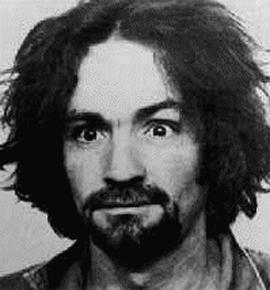
    A few nights ago, said friend was over at my place. We weren’t watching the Olympics, because of course they’re rigged, anyway, so why bother? And he was talking about this book, called The Prosecution of George W. Bush for Murder. It’s written by Vincent Bugliosi, a lawyer-turned-best-selling-author, most famous for Helter Skelter, which chronicles the legal proceedings of the Manson family. In his new book, Bugliosi states that he has a watertight case against Bush on grounds of homicide, and given the chance, could nail our President with a ‘guilty’ verdict.

    It came out in May, and received minimal press. Like, actually, no press whatsoever, according to my friend. This was suspicious, because Bugliosi is a world-renowned writer, who has topped the New York Times best-seller list. My friend attributed the lack of coverage to the fact that the government controls the media, including the liberal-seeming Times, and simply wanted to suppress this title.

    And he has some corroboration. "The author is receiving the silent treatment from many media outlets," reported Cara McDonough in an article for Finding Dulcinea. "Bugliosi…thought that at least MSNBC and Comedy Central’s ‘The Daily Show’ [where he’d made previous appearances] would show interest in interviewing him about his new book, but neither responded to requests for appearances."

    Did someone say Kafkaesque?

    Nevertheless, the book became a bestseller. Now The Prosecution is being hailed as a working prototype for how the Internet can sell literature, perhaps more effectively than mainstream media outlets.

    "The latest title by former Los Angeles attorney Vincent Bugliosi has become publishing’s favorite example of how the web can move books," writes Mark Flamm in Crain’s New York Business. "A campaign that blanketed blogs with excerpts, podcasts, author videos and advertising has led to sales of more than 60,000 copies of The Prosecution, according to publisher Vanguard Press, part of the Perseus Books Group. A total of 140,000 copies are in print."

    Ahh…so it would seem that, in the book world, conventional marketing is losing out to newer forms. This of course is a somewhat predictable progression – it’s easy to see that history is marching blogward. I guess I’m just dumb enough to be surprised that the industry hasn’t yet completely shifted its paradigm. Especially because it’s cheaper to do targeted online ads.

    "While a half-page black-and-white ad in USA Today costs $53,000, a two-week online campaign on a network of small Web sites can go for as little as $3,000 to $5,000 and reach 2 million to 3 million people," Flamm reports.

    I don’t think it’s too much of a reach to say that this same approach could work for fiction, and maybe even poetry, so long as marketers don’t just tap insulated lit blogs the way they do insulated lit mags.

    Back to Bugliosi, I guess I still can’t explain why the media didn’t give him coverage, in terms of reviews and interviews. While the success of The Prosecution is impressive, no one has yet dealt with the book’s actual content. Pundits are surmising that people are just sick of hearing about how much Bush sucks, but still, given Bugliosi’s stature, it is surprising that no one picked him up (and way too post-Modern that EVERYONE, including me, covered his lack of coverage). I guess the conspiracy theorists can keep their suppositions in tact on that count.

  • Doomtree by Doomtree

    It seems sometimes like every debut rap album is long-awaited, highly anticipated. We heard the usual phrases a couple weeks ago on Muja Messiah‘s premier release ("They said this would never get done…I made it happen. I was part-time hustlin’, now I’m full-time rappin’ "). Likewise, in the liner notes to their new CD, the Doomtree crew informs us this project has ‘been a long time coming.’ That phrase is repeated verbatim on the hook of "Let Me Tell You, Baby," and echoes throughout various songs on the album. "So coming soon to a college town near you/here we are DTR/holla atcha rap group," Mictlan, one of the collective’s five emcees, intones on the lead-off track.

    And indeed, there has been hype. After P.O.S.’s second solo album made waves in 2006 as The Next Big Thing in Minneapolis hip-hop, a palpable bit of excitement presaged this crew’s collective release. As a group they’ve been gaining steam around town, playing to packed crowds, and even scoring a slot this last spring to open for the Wu-Tang Clan.

    So here it is! The first collaborative album featuring all the members of Doomtree.

    Maybe we should have waited a little longer.

    It’s a bad sign that the five solo tracks (each MC is given one showcase piece) are five of the best six songs on the album. ("Kid Gloves," with Mictlan and Dessa, is the only tandem track to crack the shortlist.) When it comes to collaboration, the group fails to find any real cohesion. Three or four or five rappers might all appear over a single beat, but they are unable to transcend their personal styles to become a unit. There isn’t much interplay between the rappers; rather it typically goes verse-hook-verse-hook-verse-hook. Listening to them is kind of like watching the 2004 USA men’s basketball team at the Olympics – a bunch of obviously talented individuals that are unable to work together. (Hey, guess what’s on TV…)

    Certainly there are moments of virtuosity on Doomtree.

    Cecil Otter is able to devise rhyme schemes more twisted and intricate than anything he’s previously created, and he sounds natural spitting them out – one doesn’t get a sense that he’s impressed with how clever he is. And the production is consistent; never exactly innovative, but never sinking a track down, either. Which is exactly what you want, because the beats should never outshine the rhymes on a rap album. MK Larada, Turbo Nemesis, Paper Tiger, and Maker display a variety of styles, ranging from jazzy-cool to hard-rock-hard.

    The most consistently outstanding member is Dessa, the collective’s lone female member. Her solo piece, "Sadie Hawkins," is by far the most successful part of the album. She’s the only one who’s able to morph her style to a given beat, to curve her talent to a track. In most cases, too, her lyrics are the most on point, the cleverest, and spoken with the most original delivery. Her solo album is highly anticipated.

    But these strengths are overwhelmed by the fact that, by and large, no one is really saying anything. The words rhyme, but only sometimes match; many songs are more akin to polished freestyle sessions than to finished written songs. The first verse to open up the album features an impressively complex rhyme scheme:

    "We work the mics and rehearse the lines that life furthers/
    and curse the vines that you might have heard your rumors from/
    like it’s me verse a vice or vice versa/
    then I returned to the life that Christ nurtured"

    Say it aloud and it sounds cool, but if you try to actually understand what it means, you may run into some issues. It may be a debut album, but it’s not a rookie album – these guys have all been around for years, playing shows and releasing EPs. So it’s a little disconcerting to hear Doomtree repeatedly rhyme their way into oblivion. Ultimately, the album is defined by lyrics so disconnected that they become abstract, so abstract that they deteriorate and become indecipherable.

  • Chris Adrian's New Collection of Short Stories

    These angels are useless. The heavenly agents that populate Chris Adrian’s new story collection, A Better Angel, sit idly by their hapless wards, disappointed and impotent. Their existence, it seems, is incidental, and at times they are nothing more than a higher order of fuck-ups. Which somehow makes these angels strikingly believable.

    A trinity of woes dictates the nine stories herein — sadness, illness, and death. It’s hard not to view this as the thematic culmination of Adrian’s educational background: he holds and MFA from the Iowa Writers’ Workshops (tantamount to a masters degree in sadness); an MD from the University of Virginia (illness); and is currently a divinity student (mapping out, I assume, the world of death). Thankfully these narratives are not so academic or esoteric as one might fear; Adrian explores his subjects with caution, respect, and most of all, imagination.

    If the angels might be described as inactive, then many of the characters can be called hyperactive. Adrian’s protagonists range from children to the geriatric, but don’t waver in their desire for pain. In this world, it seems that suffering is the most effective means of communication and solidarity. "My father warned me that sadness cleaves to sadness," says the protagonist of "Why Antichrist?" – in which a sixteen-year old lacrosse player discovers that he is the devil incarnate. "And that depressed people go around in hangdog packs." This collection is itself one such hangdog pack.

    The narrator of "Stab" – a seven-year-old boy who is mute except for his narration – wants to die because he knows death will reunite him with his dead brother. Likewise, in "The Changeling," a father mutilates himself because causing himself pain is the only way to bring his son out of his ominously catatonic state. In "The Vision of Peter Damien," the eponymous character wants to be sick, and rubs his skin with hickory root to simulate jaundice, so he can be more like his brothers and sisters. For many of these characters, death and illness are natural as sunlight. All but one of the protagonists has lost a loved one before their story even begins. It’s only natural that their ambitions pertain to more sickness and more death.

    The rules of Adrian’s world are vague enough to be plausible. The semi-magical setting is akin to that of Karen Russell’s recent collection of stories St Lucy’s Home for Girls Raised by Wolves, or any collection that George Saunders has put out in the last decade. Here there are angels, and there are demonic, masochistic children. The prose and dialogue are striking for their plainness (by which I do not mean dullness) – as it’s hard to imagine Dali creating his surrealist designs with ordinary paint. But when Adrian begins to add in elements of the real-real world – Happy Meals and Spiderman, for example – his stories become less convincing. In fiction (and maybe life in general), the balance between real and unreal is always tenuous. Perhaps because so much of Adrian’s world is heavenly, when Earth gets involved it is too obviously mundane.

    In "The Vision of Peter Damien," for example, a Big City Doctor is brought in to help out the community when a sort of epileptic illness spreads from child to child.

    "An upsetment in the blood," said Dr. Herz, summoned all the way from Cleveland by Sara’s father. For her he prescribed opium and antimony and cinchona.

    Both the diagnosis and prescription are, to say the least, archaic. When the reader finds out this story is actually about 9/11, then, it’s shocking – and not in a revelatory sort of way. Sadly, it’s more like the obvious twist in M. Night Shyamalan’s The Village than any sort of meaningful convergence of tragic old world and tragic new. Still, when Adrian delves into the metaphysical parts of this same story, his narrative strength shows through. His prose is heady enough to support Big Statements — he has the rare ability to talk about souls and be sincere, as with Sara’s final revelation:

    The mirror me – the one that is all of this world and all surfaces – is spotted up and bruised and jaundiced and thin, and my hair, as Mother tells me, has lost its spirit. But beyond my body I am a growing giantess, and every time I enter another vision I get a little closer to an end that I know is not death. You are a giant too – I see it no matter how you seek to hide from me. We stand over all the others the way the towers once stood over us, before we became them. Don’t you understand the progression – from frail little person to soaring angel to monolith? What next, except the sky above it all, and a spirit that comprehends everything, and is apart from nothing?

    Thankfully, Adrian plays heavily to his powers. There are stories so thoroughly imagined and expertly written that alone they warrant the price of the entire collection.

    "A Better Angel" succeeds because it contains a character that is keenly aware of his failures, but still does nothing about them. Early in life Carl was granted a sort of guardian angel, a privilege given only to people destined to go on to greatness ("There were fewer than I expected, and as many who were greatly bad as greatly good," he says.) His angel, though, has no power of Carl’s actions, and every time there’s a chance to make a bad decision, he makes it. Upon viewing his 7th-grade classmate’s ‘pooty,’ Carl says he first "understood that I could want – so badly – something the angel thought I shouldn’t." Finally he is summoned to take care of his dying, cancer-ridden father. Armed with Ativan and morphine, he adheres to the one-for-you-one-for-me policy, and spends his last night with his father in a druggy haze. Meanwhile his angel becomes more and more perverted and jealous, unable to guide his hand. "If you were a great man," she tells him, "If you were president – and you could have been president – then I would be a national conscience!" Carl is sympathetic because so many of us are so much like him — he isn’t a bad person, just a little lazy; his angel’s inefficacy grants us an unwanted hint into just world the dying father may be entering.

    "A Child’s Book of Sickness and Death" re-introduces us to some of the characters from Adrian’s recent novel The Children’s Hospital, in which the world is flooded in seven miles of water and the only entity to survive are the NICU and PICU wards of a San Francisco hospital (it’s narrated by angels). Here we focus on Cindy Flemm, who was born with a foot less of small intestine than normal. Sixteen years old, she proudly sports tube tops and hot pants in the antiseptic hallways. One night she develops a crush on Dr. Chandra (also a transplant from the novel), who is something of a tragic fool, severely under-qualified for his job and with pants that inadvertently ride low on his girlish hips. Much to Cindy’s disappointment, Chandra is gay. "How can someone so unattractive, so unavailable, so shlumpy, so low-panted, so pitiable, keep rising up, a giant in my thoughts," she wonders. It emerges that she is attracted to impossibilities, to the allure of cures that will never come (even if the cure is death – death is impossible for her, we find out). The interplay of her desire for health and desire for love, and how she goes about reaching for them, is something wonderful to witness. Finally Cindy submits to her position, which perhaps stands in for the overarching philosophy of the book:

    < blockquote>It seems to me, who should really know better, that all the late, new sadness of the past twenty-four hours ought to count for something, ought to do something, ought to change something, inside of me, or outside in the world. But I don’t know what it is that might change, and I expect that nothing will change – children have died here before, and hapless idiots have come and gone, and always the next day the sick still come to languish and be poked, and they will lie in bed hoping not for healing, a thing which the wise have all long given up on, but for something to make them feel better, just for a little while, and sometimes they get this thing, and often they don’t.

  • A Rakish Interview with Minnesotan(-by-Proxy) Author Bart Schneider

    This is Minnesota. There’s Café Barbette, there’s Galactic Pizza, there’s the Armajani Bridge stretching from the Sculpture Garden to Loring Park. Except really it’s a month from now, the Republican National Convention is in town, and there’s a right-wing/neo-Nazi plot underway to kill three Jewish abortion doctors. This is the world of Bart Schneider’s new novel, The Man in the Blizzard, a highly Minneapolized – and highly entertaining – page-turner that involves violins confiscated by the Third Reich, minor brainwashing perpetrated by a therapist/hypnotist, and the aforementioned murder conspiracy. The man enlisted to solve it all is private detective Augie Boyer, who is more prone to smoke a bowl and memorize a poem than to follow any leads. The Rake contacted the author – whose previous books include Blue Bossa, Beautiful Inez, and Secret Love– by phone, and talked with him a bit about his new novel.

    The Rake: You make a remarkable amount of references to local landmarks and businesses in this book; did you view this at all as a love letter to Minnesota?

    Schneider: It quickly became like that. For a while I was trying to figure out how to get back out here to California, which is where I’m from, but I spent twenty-five years in Minnesota. I raised a family there, had a career or two, and wrote a few books. And so I’m really fond of the place. I loved it at first because it had such a wonderful inferiority complex compared to California. And, you know, it’s so rich with culture. I wanted just to paint the place as well as I could.

    The Rake: Did you need a little distance from the state to imagine it as you have?

    Schneider: Nah. The three novels I published earlier were all set in California. So I did have the distance from those. But they were also set in the sixties and the seventies, when I was much younger, and couldn’t have been really fully cognizant of the experiences that were going on that I was writing about – the Civil Rights movement. But this one is set in the present tense, so I thought I should just go for it. Be right now.

    The Rake: Did any of the real personalities, like David Unowski (of Magers and Quinn), know they’d be in the book? And were they all right with it?

    Schneider: With David I asked permission, because I actually put words in his mouth. And he said, "Yeah, cool, cool." I didn’t really put words in anybody else’s mouth. So I hope nobody minds. I haven’t heard from Bill Holm, I don’t know if he’s seen it yet.

    The Rake: It seems like you got to have a bit of fun writing this.

    Schneider: It was a fun one. I needed to write something fun after my last book, which was about suicide.

    The Rake: There are some fairly explicit comparisons between right-wing republicans and Nazis…Were you (or your publisher) at all worried about alienating readership?

    Schneider: They publish Anne Coulter. So this is baby stuff compared to her, right? The Nazi thing came from the violin material, and I had that thought early on — it’s kind of fascinating that that’s really true. The Sonderstab music was some agency that sent bureaucrats in after the Nazis had plundered different cities to come assess and collect the instruments. And Hitler really was going to set up a museum of cultural items from vanquished civilizations.

    The Rake: Was politicizing the novel in the way you have your intent from the beginning?

    Schneider: It just seemed like a nice opportunity. I was writing the book before the convention was even coming to town. I just had this Labor Day thing, where women would give birth at the Capitol as a sort of rally. Which I didn’t think was that huge a reach, because if you remember Pawlenty in his first term sanctioned a Christian revival at the State Capitol. It’s just one step beyond, you know. And then, lo and behold, the RNC did me the great favor of setting the convention in the Twin Cities, on Labor Day. It seemed dumb not to work it in. I decided at a certain point that I really wanted to write a present moment novel, and I had a hard time at first before the convention thing fell into place, but that set it in stone.

    The Rake: Moving beyond the plot, you’ve dedicated this book "To the poets and all their mysteries." Just wondering if you’d riff a bit on that.

    Schneider: I came up as a poet, and it’s a part of my life. I get really excited about reading poetry. And Minnesota’s got such a core of wonderful poets. I’m dumb enough to be surprised that more people don’t read poems. It’s the same with fiction, but it’s even worse with poetry. When we listen to music, we don’t necessarily think we’re going to understand it, but I think people really come to poetry with that sense that it’s a riddle to be figured out.

    The Rake: And Augie — as the book progresses he becomes more and more existential. A couple times he mentions wanting to go away alone, turn off the ‘leaky faucet’ that is his world. Has poetry helped him?

    Schneider: I’d be shy of attributing anything practical to it. I think you read poetry and it does you good, but it’s not a cause-and-effect kind of thing. It’s a nutrient to feed yourself. And I like Augie’s pothead approach to it. I love when he says, "Having truly cultivated the dumb part of myself, I must have a fantastic aptitude for poetry."


  • Reading This Post is Not Really Reading

    On the front page of yesterday’s New York Times is an article by Motoko Rich titled, "Literacy Debate: Online, R U Really Reading?" It’s the first in a series that will explore "how the Internet and other technological and social forces are changing the way people read." This installment focuses on the somewhat new debate as to whether online reading promotes literacy, or is detrimental to it. As Rich weighs out both sides of the issue in clear, measured prose, the central point that should have been made is completely lost amidst a sea of statistics and pedigreed quotes (the jab and hook of any journalist, to be sure).

    To clarify: Online reading in this context does not refer to the ingestion of long articles and stories that just happen to be on the Internet, but could just as easily have been printed. Rather, the debate is about un-linear reading, reading broken up by hyperlinks and tabs and blurbs, which allow readers to "skate through cyberspace at will and, in effect, compose their own beginnings, middles, and ends."

    Rich cites an NEA study ("a sobering report") that found only one in five 17-year olds reads for fun every day, down from one in three in the eighties. But then ‘reading’ is later defined basically as data analysis, or a "way to experience information." If this is what students are taught reading is, which seems to be the case, and I suppose has probably always been the case, it’s no wonder that that kids don’t read. How many kids do math for fun in their free time? I wouldn’t be surprised if that number is one in five, too.

    The reason I say the article is mostly worthless is because it considers reading only as a means by which to take in and process information, and then implicitly chastises younger generations for not reading books. There is no mention, sadly, of the pleasure one derives from losing oneself in a narrative or, on the non-fiction side of things, immersing oneself in a subject. If reading were depicted in this way, which it should be, I think there would be more cause to lament. (Rich does have an essay that touches on that here.) In effect, Rich lends credence to the suspect merits of online reading, without getting into the real benefits of books.


    To temper my wonking, here is a video of Ernie and Bert rapping.

    The article’s supporting cast of experts likewise define reading in scientific terms. "Reading a book, and taking the time to ruminate and make inferences and engage the imaginational processing, is more cognitively enriching, without doubt, than the short little bits you might get if you’re in the 30-second digital mode," said Ken Pugh, a neuroscientist at Yale. Ooooooh, sounds enriching, doesn’t it?

    But the thing is, reading ain’t for the head. It’s for the soul, or whatever that murk inside our chests is.

    (And yes, there’s a fundamental reading level one must attain in order to function in the everyday world, but the NYT article is about books, and the decline of readership, which is why I’m addressing/about-to-adress why people read books, and why the experience of a book is unlikely to be replicated online.)

    To read a book for its informational value is like joining a soccer team just to burn the calories. Yeah it’s a nice side effect – people who read more novels score better on reading tests (surprise surprise); likewise, people who play soccer in their spare time are probably in better shape than people who sit on the couch. But if you’re playing correctly, then that means you’re actually engaged in the game, immersed in it, caught in the flow and the surges of adrenaline, you care about the final score, and hate the other team, and also maybe hate your coach who doesn’t play you as many minutes as you deserve, the bastard. It’s more than a work-out.

    This isn’t just about novels, either. Non-fiction suffers, too. Consider Stephen Hawking’s A Brief History of Time. If read correctly, one doesn’t come away from that book simply with factoids about black holes and quantum physics; rather it helps one understand, on a larger scale, but in a small way, one’s connection to the universe.

    As Nicholas Carr points out in his Atlantic Monthly article, "Is Google Making Us Stupid?" the fractured nature of online reading necessarily annihilates the act of engaging with a narrative. This, I think, is the real danger.

    A similar idea is depicted in the current issue of the New Yorker, in an article about insight called "The Eureka Hunt" by Jonah Lehrer. He interviews a cognitive neuroscientist who believes that "Language is so complex that the brain has to process it in two different ways at the same time. It needs to see the forest and the trees." The left hemisphere excels at denotation – storing the primary meanings of words; meanwhile the right hemisphere deals with connotation – the emotional charges in a sentence or a metaphor. "The right hemisphere is what helps you see the forest," is the scientist’s next quote. But when one is distracted, he goes on, as one might be on the Internet, the right hemisphere’s functioning becomes limited.

    Meaning, I think, that when reading on the Internet, we can still process direct and obvious information – the stuff they’re concerned about on proficiency tests – but the nuances of literature get lost. Unfortunately, some of the best literature is the most nuanced. Unfortunately, though I suspect Motoko Rich might sympathize with this, it goes unmentioned in the article.

    A last thought:
    Metaphor. From what I can glean from Wittgenstein, which isn’t a lot, when we communicate we are endeavoring to express things that are actually, in a purer sense, inexpressible. Every word ever spoken, then, is a mini-metaphor. We don’t actually feel a word called ‘sadness’ – ‘sadness’ is just the term we’ve come up with to best describe certain awful emotions. The feeling is greater than the word. Likewise, authors use metaphor to give their stories meaning beyond the actual sentences written on physical pages. To make a gross blanket statement, by and large online content does not make use of metaphor. It seems generally to be more reductive. Blogs are boiled-down opinions, and wikis are generalized information. It’s fodder for arguments, rather than thoughts. Hyperlinks are not metaphors, they do not lead out to Real Life, but rather to other facets of the Internet. It’s just that we’re beginning to make the mistake of considering those two entities – Real Life and the Internet – to be the same.