Category: Blog Post

  • Yes We Can!

    Bad design is all around us, but there’s no bad design like bad election year design. Let’s take a moment here to catalog some notable atrocities from recent election cycles, and then hang our heads in bipartisan shame. Offender number one is Bush/Cheney’s militantly mindless logo from 2004; you can almost hear the designer making phlegmatic war movie sound effects to himself as he drafted it. There’s Howard Dean’s bumper sticker from the same year – the one that actually had goddamn yellow crayon writing on it. I sent the good doctor a whole bucketful of cash and I still couldn’t bring myself to slap that thing on my car. The Kerry/Edwards ‘04 logo was so incompetently designed it looked like an advertisement for a personal injury attorney named "Kerry Edwards" (and not one of the better ones, either). As for this eyesore, which looks as if it belongs on a bottle of your dad’s favorite aftershave circa 1982, the less said, the better. The sad fact is most campaign materials look, at best, like they were designed by an adjunct professor of design at an unaccredited two-year evangelical college (which may well be the case in some of these campaigns). At worst, they just drip willful contempt for the viewer’s intelligence and taste.

    But think now for a moment about the material Barack Obama has been putting out in the last year. Start with that typeface the campaign uses on all of its official signage, a sans-serif called Gotham. It’s clean, assertive and streamlined. Regardless of your political or aesthetic inclinations, you can easily appreciate that it’s the kind of elegant typeface that you don’t really see in most political campaigns. Gotham was created only a few years ago by a prominent New York typographer, but it draws heavily on mid-century sources, and there’s resultantly an authoritative, timeless sense to it. It looks great and it’s highly functional. Gotham is a capital-M Modern typeface that carries all the cultural implications of Modernism with it – optimism, clarity, progress.

    I know that seems like a lot to pin to something as simple as a typeface, but in the current electoral visual landscape, Obama’s clean, simple design look downright radical, like it came from another world. It certainly calls to mind some of the more inspiring parts of our collective past, but not in a way that panders to baser reactionary tendencies.

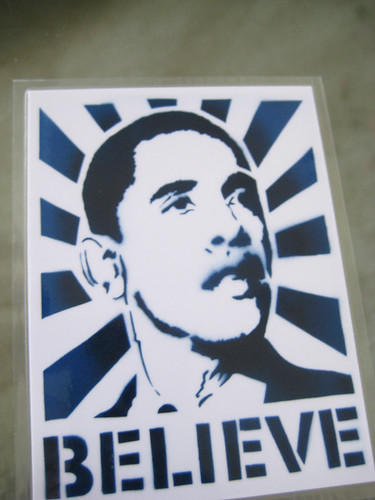
    A show of New Deal art called By the People, For the People will be closing this weekend at the University of Minnesota’s Weisman Museum (you can read Julie Caniglia’s outstanding review of the show for mnartists.org). Seeing it a few weeks ago, I was struck by how much the work on display reminded me not of fireside chats and Woody Guthrie ballads, but of the junior Senator from Illinois. I doubt that it was a conscious decision on the part of Obama’s design squad to make explicit references to the aesthetics of the New Deal in his campaign material. But think of that Shepard Fairey poster that looks it like it came right out of an IWW print shop. Think of the explicit references to the American heartland in the campaign’s it’s-a-flag-but-it’s-also-a-farm "O." Even that ridiculous Latin-enhanced faux-presidential seal that the campaign trotted out a few weeks ago (and then promptly retired) bore a strong resemblance to the logos of FDR’s so-called "alphabet agencies" like the NRA, WPA and CCC.

    Throughout the show, I detected a certain philosophical, functional and aesthetic kinship between our era and this one – it’s all easily-deciphered, populist, progressive art-making practices in service of the civic good. I don’t know if it is Obama’s intention to suggest outright that he’s the direct heir to FDR’s high-minded hard-times liberalism (and his detractors would say he’s hubristic enough to do just that). But there is something stirring about his campaign – yes we can! – that owes quite a bit to the outsized optimism of the 1930s, and a lot of that has to do with the aesthetic decisions Obama’s campaign and his supporters have made.

    Much of the work in the Weisman show was created by obscure regional artists working under the auspices of the WPA Federal Art Project, another one of those alphabet agencies that put American artists to work capturing the Great Depression on paper and canvas. I should say rather that many were obscure at the time, and then went on to have very successful careers later. But most did not; most were artists that were paid to do a job well, and went out and did it. As you might expect with work of this nature, it really ran the gamut in terms of quality. Some of it was very staid and workmanlike, some of it was quite distinguished. What was most remarkable about all of it, though, was the uniform clarity and toughness throughout with which the subject matter was depicted.

    The Great Depression battered America in a way that makes our recent economic troubles seem piddling by comparison, but there is a sense to all of the artwork that America is perfectly capable of drawing on its strengths and pulling itself out of unimaginably difficult circumstances. It’s a broad coalition of regular people, too, that will step up to carry out that task, the kinds depicted in the work – miners, laborers, scientists, factory workers, sharecroppers, truck drivers, builders.

    The Weisman show reminds us that artists, too, were a part of that populist coalition. With the death of Jesse Helms this month and all the editorial hand-wringing that has followed regarding the late Senator’s one-man crusade against contemporary art, we forget that artists could ever be a part of a broad-based populist coalition. And yet there they were, being paid to document the troubled times in which they lived and aligning themselves not with the elite and the influential, but with the dispossessed and the downtrodden. Granted, the work they made was not always popular with those Americans it depicted, and the kind of s
    ocial realist art the WPA produced is often bogged down by the struggle between the high-minded principles it espouses and the difficulty and grittiness of the subjects it depicts. But thinking back to those pre-Culture War times and considering that talented artists would be permitted, and even encouraged, to engage in such a dialogue – well, that’s what seems most surprising and satisfying.

    One of the best surprises for me in the show was a photograph of farm laborers by Ben Shahn, the much-admired mid-century painter and printmaker. Shahn was the kind of old-school Brooklyn Jewish left-wing artist that the Obama campaign, for all its talk of inclusion and progress, would probably take great lengths to demographically disassociate itself with – too radical, too East Coast, too "elite"! I’d had no idea Shahn was out there in the field snapping photos for the Farm Security Administration, but there he was, right next to Dorothea Lange and Edward Weston. Would an Obama administration give a contemporary Ben Shahn, an artist with demonstrably leftist sympathies, the opportunity to get out there into the heartland and create art? Would a contemporary Ben Shahn even want to undertake such an endeavor? Hell, are there even any artists left in his adopted neighborhood of Williamsburg making political art?

    Obama’s campaign has been a fascinating one to watch. At times I have felt (a) like it seemed too good to be true, (b) like it was the true last hope for whatever might be salvageable of the American dream, (c) like the whole thing was hopelessly personality-driven and vaguely demagogical, (d) like Obama might be the only major political leader in my lifetime I could get genuinely excited about, and (e) like it was all noble sentiment and erudite speechifying with no real call to sacrifice and action – often all of these confusing sentiments within the space of a week. Many Americans on both ends of the political spectrum also felt the same sort of ambiguity about Roosevelt. FDR’s harshest critics went so far as to decry him as a Fascist, a charge that has recently been unearthed again in two recent books from both the right (Jonah Goldberg’s phenomenally stupid Liberal Fascism) and the left (Nicholson Baker’s elliptical account of the lead-up to WWII, Human Smoke).

    When we look at this moment in time from a purely aesthetic perspective, it seems to me that we’re looking at a mainstream progressive movement that values good artistic practices and welcomes artists back into the fold, for perhaps the first time since the New Deal. In fact, one of the minor planks in Obama’s long-term plans is the creation of an "Artist Corps." Would the Ben Shahns of 21st century Williamsburg clamor to join such a movement for the good of the nation? Before you answer with a flip remark about the callous solipsism of the youth of America, it’s worth visiting this gallery of Obama-specific street art, which runs the gamut between officially-sanctioned campaign iconography and totally wacky guerilla work. Compare it to these beautiful specimens of WPA poster art. Even if Obama’s cult of personality is a bit overemphasized at the expense of the broader issues in much of the newer art, I would say the aesthetic, functional and ideological parallels are readily apparent, and the comparison on all counts is generally favorable. It looks, at very least, like the opening arguments in a long overdue national discussion over what role art is going to play in contemporary political engagement. That’s something worth getting fired up and ready to go about.
  • "Pop Vomit" Throws Up at Altered Esthetics


    ART

    The Throw Up Vol. 4 Release Party


    Elusive Minneapolis art duo, Pop Vomit,
    celebrates a number of things tonight! Not only can you get a last
    glimpse of a very cool exhibit at the closing reception for the Altered
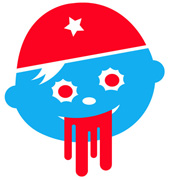
    Esthetics Resident Artists show, featuring Pop Vomit’s installation entitled "Operation: Vomit Boy," but they’ll also have new sticker sets, cool merchandise, surprise projections, and of course, the brand new edition of their collectible art book, The Throw Up Vol. 4. The Throw Up features over 100 pages of black and white print, with work by a number of artists including Mark Vomit, Tony

    Kephart, Kate Iverson (yes, that’s me!), Justin James Sehorn, Katrin Snider, Jeff Evrard,
    Scott Johnson, Jesse Draxler and Coy Douglas Larson. What started as
    a self-released "scrapbook" has turned into a medium for unknown
    artists to gain exposure, a visual candy store for those looking for
    something unique, and an ongoing collector’s series.


    Friday, 7pm-11pm, Altered Esthetics, Q.arma Building, 1224 Quincy Street NE, Northeast Minneapolis, Free


    BENEFIT EVENT

    Jazz for Peace


    You can’t argue with peace. Especially when it’s backed up by world class jazz music. Hit the cool, cool spot that is the Artists’ Quarter tonight for an evening of sultry sounds all in the name of a good cause. Pianist, vocalist and composer Rick DellaRatta has been the shining star behind the Jazz for Peace
    program, touring the world to raise money and awareness for causes that
    promote a better world – including providing musical instruments for
    under underprivileged youth. Considered by those-in-the-know to be one
    of the top jazz pianists and songwriters of today, Rick DellaRatta will
    thrill the audience with his unique sound and Chet Baker-esque vocal
    stylings. Not to mention, if you haven’t been, the Artists’ Quarter is
    an absolute must-go for anyone who considers ambiance to be an art
    form.


    Bonus: Want a later night? Debbie Duncan takes over the AQ at 9pm on both Friday and Saturday!


    Friday, 6pm-8:30pm, The Artists Quarter, 408 St. Peter Street, Downtown St. Paul, $25

    FAMILY

    Wild West Frontier Fest


    Attention buckaroos, cowboys, wranglers, varmints, gunslingers, and cowpokes! This weekend at Harriet Island indulge your inner villian/hero at Wild West Frontier Fest, where your mustache twirling and Clint Eastwood impression
    won’t creep anyone out. A perfect family day or a fun adventure for any
    history buff, this outdoor fest will feature paddleboat rides, a Tom
    Sawyer Fence Paintin’ Contest, old-fashioned photos, costumed
    characters, exhibits, demonstrations, plus live music and performance
    on four stages! Have dinner with Mark Twain or watch a silent movie, then
    learn about the Wild West and the culture and history surrounding it.
    Just leave your pistol at home.


    Saturday-Sunday, Noon-10pm, Harriet Island, Minneapolis, Tickets $12 per day, $20 for both days


    COMEDY

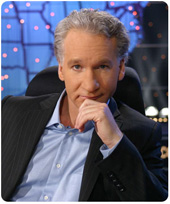
    Bill Maher


    Maybe the best thing about Maher is his refusal to be pigeonholed, his
    keen negotiation of the difference between unorthodoxy and hypocrisy.
    He’s variously proclaimed himself a libertarian and voted for Ralph
    Nader for President (after supporting Bob Dole in 1996), aligned
    himself with PETA and NORML, and was the first to bring Ann Coulter
    into the limelight via his Politically Incorrect show-which became a
    victim of our post 9/11 hysteria when Maher was vilified and PI
    cancelled when he said lobbing cruise missiles from 2000 miles away was
    more cowardly than flying airplanes into the World Trade Center. That’s
    Maher, for better and (occasionally) for worse a fearless slayer of
    shibboleths of all persuasions, at once a notorious skirt-chaser who
    was a regular at the Playboy Mansion, a staunch supporter of gay
    marriage and an unremitting critic of the Catholic Church for looking
    the other way while pedophilia was taking place within the clergy.
    Along with Jon Stewart and a few others, he’s in the vanguard of a
    current wave of social commentary that is simultaneously hilarious and
    astute, as anyone who checks out Real Time with Bill Maher on HBO
    already knows. He’s also extremely topical, so expect a few zingers on
    the stories in this week’s newspapers-and perhaps a few words about his
    friend and mentor, the late George Carlin. – Britt Robson


    Saturday, 8pm, Orpheum Theater, 910 Hennepin Avenue, Downtown Minneapolis, $81-$112


    FESTIVALS

    Bearded Lady Motorcycle Rally


    For the third year in a row, the Bearded Lady Motorcycle Rally
    takes over Northeast Minneapolis! This years’ festivities will be the
    biggest and freakiest yet, with the addition of a block party. Catch up
    on your people watching along 13th Avenue this afternoon as bikers,

    weirdos, and carnival folk show off their brawn, bikes, and
    bizarreness. Register your own bike at 3pm, or simply watch the
    ever-popular bike judging event, where tricked out motorcycles will compete against each other for cool points. Then, chow down on food from Pizza Luce
    while listening to live music from the likes of The Corpse Show Creeps,
    The Rockford Mules, The Evening Rig, Tim Rally Gold, The Brass Kings,
    and Al’s Rock-a-Billy Quartet, as well as enjoying performances by Le
    Cirque Rouge Cabaret & Burlesque, Miss Honey Combs and Ballet of
    the Dolls. The block party rocks from Noon to 6pm, at which point the
    party will travel indoors to the 331 Club and the Ritz Theater. Bonus
    points for bearded ladies!


    Saturday, Noon-6pm Block Party, 6pm-2am Indoor Music, 331 Club, 331 13th Avenue NE, Northeast Minneapolis, Free


    MUSIC

    Muja Messiah CD Release Party


    Muja Messiah’s new album, Thee Adventures of a B-Boy D-Boy, cycles through a medley of styles. The production ranges from the jazzy slow jam to the upbeat to the downright krunked,
    the rhymes from egotistical to introspective. And Muja effortlessly
    navigates from track to track, rapping convincingly over the varied
    beats – it’s not just like he wrote a rhyme and a producer made a beat
    and they synced them up and smashed them together; rather his flows
    seem actually to be linked with the rhythms. Overall, his style has a bit more of an edge than most Minnesotan
    rappers’. Just when I thought the local scene was as saturated as it
    could possibly be – this is a small city to have as many big names as we do – Muja is able to inject it with something that, if not completely new, is at least new to us. – Max Ross


    Read the full review of Thee Adventures of a B-Boy D-Boy by Max Ross HERE.


    Sunday, 8pm, First Avenue Mainroom, 701 1st Avenue N, Downtown Minneapolis, $10

  • Gandhi Mahal – In Pictures

    The first time I visited Gandhi Mahal, the new Indian
    restaurant at 27th and E. Lake St., was before it was actually open
    for business. I introduced myself to the owner, which seemed like the right
    thing to do at the time, since I wasn’t reviewing the place, and I wanted to
    ask a lot of questions.

    But it was a case of Not Thinking Ahead, since I should have
    predicted what would happen the next time I visited the restaurant, a few days
    after it opened. The owner greeted me with an effusive welcome, and proceeded –
    with the best of intentions – to send one dish after another to my table. This
    created the kind of dilemma I try to avoid: I still believe in paying for my
    meals, even though I no longer have a lavish expense account – or any expense account, actually. I didn’t
    want to be rude, so I insisted on paying for a lot of food I hadn’t
    ordered. And I took a lot of pictures.

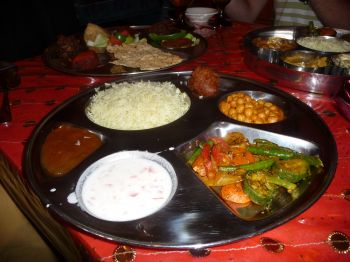
    non-veg thali at Gandhi Mahal

    When I went back with some friends yesterday to sample the
    lunch buffet, the same thing happened again, but this time the owner insisted
    that he just wanted to show me some of the new dishes on the menu. Since the
    platters didn’t arrive until after we had finished our lunch, I didn’t sample
    the dishes, but just took some more photos.

    At any rate, based on what I have sampled so far, my verdict
    on Gandhi Mahal is mixed, but there are a couple of options on the menu that make it definitely worth a visit.

    The owner is trying to create an image for Gandhi Mahal that
    sets it apart from the many other Indian restaurants in town that all serve the
    same three-pot repertoire of rogan josh and chicken tikka masala, etc.– but the efforts aren’t entirely successful. The names of some of the dishes are
    a bit more elaborate, but much of the menu is basically that same stuff you get
    everyplace else.

    On the plus side, they have done a very nice job remodeling
    the space, which is now adorned with Indian arts and crafts, and a lot of
    photos of Mahatma Gandhi. The menu finesses the fact that Gandhi was a strict
    vegetarian by noting that portions of the menu are dedicated to "a strict
    Gandhian diet" – which, translated into English, means that, just like every
    other Indian restaurant in town, they have some vegetarian dishes on the menu –
    but not as many as some of other local curry houses.

    I wasn’t impressed
    with the lunch buffet – at $9.99, it’s more expensive than most, and the
    quality and variety were only average. But the individual entrée items I
    sampled were actually quite good – including a shrimp coconut curry ($17), and
    (if I remember correctly), chicken tikka masala ($12) and lamb korma ($14).

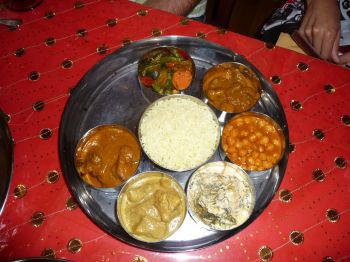
    entree sampler

    One thing I really like about Gandhi Mahal is the entrée
    sampler – you get to choose sample portions of up to six different entrees (the
    selection varies from day to day) – for only $3 for the first sample, with
    rice, and $2 for each additional sample. The portion sizes seemed generous, and
    it’s a good way to explore a variety of dishes. The appetizer sampler is also a
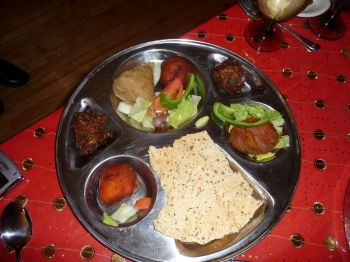
    good deal – five different appetizer for $5.

  • The F Word

    I absolutely loves me some Facebook. And I know what you’re thinking: What the hell is Todd Smith, the Spazz Dad, doing on Facebook? Isn’t he the guy with the Vagina Eye (Chop It Off) and the overactive colon? You are totally right. I have about as much right of being on the hip social networking website as I do in joining the Harlem Globetrotters. But so be it. I’m logged on and Facebookin’ the hell out of things.

    I was invited to join the website by an 18 year old coworker, a hyper college student named Joshlynn. She excitedly told me that “Oh, My, God, Everyone’s Doing It” and that it would be a super awesome way to keep in touch with my friends, since I’m like…old and stuff. Joshlynn said that me and my buddies could send each other pictures and notes back and forth… on our computers! We could even trade virtual gifts.

    I was extremely hesitant at first. Joshlynn didn’t fully understand that my friends are different then her friends. While her friends have raging indie-alternative college lives that are filled with gallery shows and Arcade Fire concerts, my friends are all middle aged and sweaty and have shitty jobs and even shittier kids and live on Cultasacks in Eden Prairie. I really didn’t need to see the progression of my friend Peter’s rapidly receding hairline every time I turned on my computer.

    Plus, it was a little awkward explaining the whole deal to my wife. She already puts up with enough of my shenanigans. And now I was about to take all my blarney and put it online for the whole world to see. Not a good idea. The conversation went something like this:

    “Hey, honey. Yeah, so …I’m going to join this social networking website, where I will be emailing and sending pictures to college age girls and boys.”

    Sarah cupped her hands around her mouth and mockingly booed me.

    “That’s really funny,” Sarah said, nearly out of breath with wheezing laughter. “You are trying soooo hard to stay cool.”

    She had a good point. The kids at my work do actually think I’m cool. What they don’t realize, of course, is that besides my seemingly limitless knowledge of Dave Chappell skits and pop culture in general, I’m really just an uncool 35 year old dad who before work douses his crotch with Gold Bond Medicated Powder and takes Metamucil on a daily basis.

    Undeterred, I joined up. Soon I had to choose a profile picture that the whole world would see every time I was using the website. Selecting my profile picture had all the drama of my senior year high school portrait. What do I wear? Do I look fat in this picture? Can they see my goiter in this one? As I deliberated the choices, my sneaky wife went ahead and downloaded an awful looking fake portrait I had done a few years back (which was titled “The Dirty Sanchez”) where I had a bad comb over, opened shirt to showcase chest hair, a greasy mustache, and looked exactly like the type of guy that would actually apply a Dirty Sanchez. Needless to say, it wasn’t my first choice.

    Shortly after my icky porno portrait hit the World Wide Web, I was immediately befriended online in my Facebook by the gaggle of twenty something hipsters at my work. It was like Junior High in a box! They posted comments on my wall (a message board like thingy on my main profile page), sent me growing gifts such as donut trees and cherry blossoms, and cute little pictures of cans of whoop ass and shamrocks. We played online games where I was attacked by werewolves and zombies and fought street gangs. They sent me bumper stickers that said catchy things like “My Balls Aren’t Gonna Lick Themselves” and “Stop Snitching”. My college age friends formed groups such as “I Got through Puberty Listening to Loveline” and “I Have a Suspicion that my Teacher Smokes Pot…and that makes me Happy”. One of my coworkers asked me to join her group that was titled “Enough with the Unicycling Already!” I joined immediately because who doesn’t hate fuckers who show off on their fancy one wheeled bikes?

    Over time, my network blossomed. And Joshlynn was totally right: everyone is doing Facebook. My friend list now includes a gun toting Marine, smooching hippies, NYC fashionistas, various Minneapolis Public high school rats, a M.I.T. Grad School nerd, and one dental hygienist. It is a daily occurrence that I will get a Friendship request from someone I went to grade school, high school, or college with. It’s so weird to see the names and faces of my past pop up on my computer. As I add them to my network, the memories come roaring back: I went to High School with that guy and he had testicles the size of tennis ball; Oh, my, that girl used to look like Jennifer Aniston but now she looks like Carol Channing; When I was in college, I think I took a shit in that guy’s mail box.

    The greatest feature of Facebook is one that no one talks about: Cyber Stalking. As a member of the website, you have access to millions of people, and can stalk all of your friends and family with great ease. You get to know who is in their network and what they are up to. We can peek through a virtual peep hole into their lives without causing suspicion. And before you know it, all the networks are intertwined, and internet snooping comes with your morning coffee.

    But the down side of all the cyber stalking is that you can get found by people you have tried to forget. A few weeks ago, the most wickedly popular girl from my childhood found me on Facebook. Megan was not only the cutest girl in the school but also the type of girl who would purposely break your crayons, throw them at you, and shriek with laughter. She had huge boobies in fifth grade, had grown into a full blown woman by seventh grade, and was dating buff high school dudes by eighth grade. She single handedly crushed my soul and then pissed on it. I had heard rumors that Megan had grown up and was now actually quite nice and started a family. Apparently, she was no longer smoking cigarettes behind the junior high, lurking in the shadows, ready to kick me in the gonads for smiling at her. But now there she was, in front of me on my computer, an entire lifetime later, requesting (I like to think she was begging) to be my friend.

    In 2004, when Mark Zuckerberg created Facebook in his Harvard dorm room, his goal was simple: to form an online community solely for Harvard and other Ivy League students to communicate. He had no idea four short years later, his networking website that was to be used strictly for Ivy Leaguers would become a giant popularity contest for bored housebound adults all over the world. As I sat there pondering whether to accept Megan’s request, I moved my cursor back and forth over the yes /no options. Facebook had finally leveled the playing field. For the first time in my life, I felt golden.
    I checked yes.

  • Judging a Book by its (Back) Cover

    I’ve been taught to trust blurbs about as far as I can throw them, which is roughly about as far as I can throw a book, which is not very far, because I am quite weak, my muscles haveing been described as sauce-like. In fact, the word blurb seems related, if only alliteratively, to the word blog – maybe both should be regarded with about the same amount of seriousness.

    "Long ago," writes writer Stephen Dubner in his "Freakonomics" blog, "I used to think [blurbs] mattered a lot. Then I changed my mind, thinking that blurbs don’t signal much about the quality of the book, but at least they signal something about the quality of the author’s friends or acquaintances who were willing to blurb the book." He goes on to describe a situation where a book’s editor offered to write a blurb for Dubner, and simply attach his name to it, for his convenience. (The link goes to that article.)

    Rob Walker, who writes for the Times Magazine, states in an addendum to the "Freakonomics" piece that "the real audience for blurbs isn’t really consumers at all – it’s bookstore and particularly chain bookstore buyers" who want the imprimatur or well-known artists to hopefully help sell the name of lesser-known artists.

    Fair enough, but I still don’t like the idea that I’m buying my books from people who stock their shelves based on anything but a novel’s actual merit. (Go used or go home, baby.)

    Despite the apparently widespread knowledge that blurbs are basically useless, they appear on the back of every book, and I can’t for the life of me ignore them. Sometimes they’ll even dissuade me from buying a novel.

    There are books that rely on their blurbs: Anything by James Frey, at this point.

    Books that self-consciously make fun of the blurbing tradition (from Dave Eggers’ A Heartbreaking Work of Staggering Genius):

    "This is a blurb. It conveys no information about the book whatsoever, no useful account of its contents, nor any serious comment as to its qualities. Authors like getting blurbs because they indicate that the author is an amiable and well-connected fellow; other authors like giving blurbs because it’s free advertising for their own work. Editors and publicists like blurbs because blurbs help legitimize their own generally rather timid publishing decisions. You, the reader, are not exactly ill-served by this process – it is, at worst, a harmless display of vanity and insecurity – but if you’re looking for a reason to buy and read this book, you’re better off relying on the advice of other readers whose taste you share, or what minimal sense of the writing herein you can glean by standing here and skimming through the pages." – Jim Lewis

    And books for which blurbs are superfluous:

    "Nabokov writes prose the only way it should be written, that is, ecstatically" – this quote, that is, John Updike’s, is affixed to the back of every Vintage Paperback edition of Nabokov’s books.

    Hot New Authors are often tapped, it seems, to blurb books by Slightly Less Hot New Authors. In the last couple years, I’ve been seeing current NYTimes darling Gary Shteyngart’s name on the back of what seems like every contemporary novel. Shteyngart’s own work (The Russian Debutantes Handbook, Absurdistan) might be described as ‘exuberant,’ and his blurbs, likewise, are notable for their exclamation points. The guy practically redefines hyperbole. What’s interesting is, it seems he’s wholly unaccountable for his opinions – what’s most important is getting Shteyn’s name on that back cover, not what he says. While emphatic, his blurbs are also generic. And some of the books he blurbs are actually kind of mediocre (according to other critics, not just me).

    Just a couple examples (I don’t want to name the actual books, because some of them are in fact good):

    "[ ] can’t write a boring sentence, and the English language is the richer for it."

    "[ ] has written a novel that is – sentence by sentence, idea for idea – peerlessly brilliant. Here is a supreme, mature novelist at the height of his powers. Take me to the hospital. My jaw has dropped."

    So I was delighted to find that someone shares my opinion.

    "I finished Sam Lipsyte’s Home Land which Gary Shteyngart calls ‘genius,’ " writes Stephen Schenkenberg, who edits St Louis Magazine. "Um, maybe a bit much. I really liked Shteyngart’s first novel — even bought it for my cousin in the X-mas gift swap — and he was very funny and lively and smart on ‘Fresh Air’; but how you can call Lipsyte’s book ‘genius’ is beyond me."

    (Finding corroboration about irksome blurbers is hard to do!)

    Completely ripping off Mr. Schenkenberg, and also in homage to him, here’s a little activity. I’ve got some blurbs, with links to the actual books. See if you can guess which book each blurb describes. Wheeee!

    "One is never far from a phrase that feels so acute and so true that it seems to be expressing an essential truth of the soul hewn out of primordial psychological matter."
    the London Times

    "A page-turner in the most expansive sense of the word: Its gripping plot pushes readers forward…[ ] is a reader’s writer, with sentences so cozy they’ll wrap you up and kiss you goodnight." – The Chicago Tribune

    And finally, one book, two quotes:

    "One of the few books I have been able to read in recent years." – William Burroughs

    "A terrifying and marvelous book." – Roald Dahl

  • IFP Turns 20 and Chris Osgood Makes Good

    SPECIAL EVENT

    IFP 20th Anniversary Party


    I don’t know about you, but I can peg a film geek from a mile away.
    It’s kind of like gaydar, except for filmmakers. The look often
    entails square framed glasses, a ratty baseball cap, possibly a beard,
    and if you get close enough, an air of over-confidence along with an
    over abundance of knowledge pertaining to any given genre of film and
    the ability to talk about it for hours on end. Luckily, I
    find this endearing and clever. And luckier still, Minnesota’s
    independent film scene is positively bursting with creative activity,
    more so than ever before – thanks in part to the wonderful resource
    that is IFP.
    Now in its 20th year (hence the 20th Anniversary theme), IFP has been
    assisting and supporting independent filmmakers, photographers and
    screenwriters in their quest for filmmaking glory. Tonight’s swanky soirée
    at the Varsity Theater will include a live auction, special musical
    guests, and of course, film. Choose to go to either the 8pm party with
    all the rest of the riff raff, or rub elbows with the elite at the VIP
    dinner at 6pm.


    6pm VIP Dinner, 8pm Party, Varsity Theater, 1308 4th Street SE, Dinkytown, $250 Dinner, $35 Party


    LECTURE

    150 Years of Music Making by the River


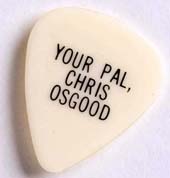
    Who knew a lecture could be so rockin’? Tonight get schooled by Chris Osgood, co-founder of Twin/Tone Records and legendary front man of Minneapolis seminal punk band The Suicide Commandos,
    as he talks at length about the Twin Cities music scene. Osgood is the
    unofficial "Godfather of the Minneapolis music scene", and for good
    reason – not only does he have the personal street cred to back up the
    title, but his professional track record
    is one of epic proportions. From Minnesota State Arts Board appointee
    to his current gig as VP of Organizational Development at McNally Smith
    College of Music, Osgood is certainly qualified to teach you a thing or
    two. Listen as he weaves the vibrant history of influential local
    musicians and movements throughout the ages, from 1950s folk music, to
    Bob Dylan, Prince and Babes in Toyland. You must register to attend, as space is limited.


    7pm, Minneapolis Central Library, Pohlad Hall, 300
    Nicollet Mall, Downtown Minneapolis, Free, RSVP Required by calling
    612-630-6155 or by clicking HERE


    SPECIAL EVENT

    Movies and Music in District del Sol


    When I was in high school I used to roll with many different crowds,
    most of them unsavory in one way or another. The West Side of St. Paul
    was the stomping grounds for a particularly rowdy gang of Latino thugs
    I somehow found charming in all their butterfly-knife
    carrying, weed smoking ways. Under their rough exteriors lurked a sort
    of ingrained wisdom, warmth and level of respect that you don’t come
    across every day. The West Side itself mirrors that description. Maybe it’s something about familia, maybe it’s culture, but definitely it’s community – and this weekly summer series
    in Castillo Park proves it. Each week, the event explores different
    cultures through art, music and movies, and tonight celebrates Africa
    with a mask-making art activity by Stepping Stone Theatre, the
    energizing sounds of Marimba Africa, and a screening of The Gods Must
    Be Crazy.


    6:30pm, music at 7:30pm, Film at Dusk, Castillo Park, 149 Cesar Chavez Street, West St. Paul, Free

  • Bruno Making His Rounds

    Okay, so the above pic is not Bruno, but is the same (Morkie) breed. Could be a cousin. Or future ladyfriend?

    Yes it’s true: I am obsessed with Bruno the new family dog but not
    for the reasons you may think…At first the house seemed calm and picture-like.

    Well that was last week. Now….not so much. Our new, little under-2 lb. Morkie is driving me crazy…After realizing that I have a job that requires me to be at an office and not playing at home–there was no choice today. Bruno was coming to work with me, his Grandma.

    Don’t get me wrong: After we dropped off his Mom at her work
    the car ride was fine. That is until his Mom got out of the car and it was just the two of us…

    This dog has not made a peep since we got him. He has used his potty
    pads and has slept through the night really well. So what the hell happened?

    Yip! Yip! Yip! at the top of his little lungs for the entire 30 minutes in
    the car while I was trying to keep my composure. When my kids used to "Yip" the pacifier worked wonders, but there is no pacifier for puppies!

    I turned the music to a station I figured he may like (WLTE) and kept my voice calm. But I soon got to the office and was greeted at the door by one of my office mates with a, "He is so cute! Can I hold him?"

    "Yeah you can hold him as long as you want. Are you busy for the next 3 hours?"

    In and out all day long, Bruno has been greeted by everyone here at
    Jacobs Trading with love and kindness—the only person who is about to lose it is ME!

    How on earth did I agree to this deal of my daughter having a new puppy? One she promised she would take care of all day? And here I am trying to catch up on e-mails and phone calls in between him finding pieces of styrofoam that I didn’t know existed, finding spots that have hidden wires and, worse, using his puppy pad from a distance and spraying my new rug.

    OY–Warning to all parents and grandparents–when the child you love
    begs and pleads for That Puppy…be very careful before you grant her wish or you could end up like me.

    Ahh, he is finally sleeping…Back to work! 🙂


  • Story of the Sea

    Thirty seconds is my guess. The generation of 20-something over-stimulated technophiles has notoriously short attention spans, fitting snugly within the confines of rapidly flashing images in 30-second commercials, mind-numbing YouTube videos, maniacal iPod shuffling and ever shifting favoritism to "bands of the hour." But some musicians have managed to cash in on our generational ADD. Girl Talk is the best example. The Pittsburgh-based king of sampling weaves together furious seconds-long bursts of the best and worst dance hall hits to create songs sounding like a schizophrenic radio station that can’t decide which Top Ten number to play. The result is a schlepped-together creation, and a serious copyright nightmare, that stands on the legs of others instead of its own two feet.

    In contrast, Minneapolis foursome Story of the Sea takes on this similar fast-paced blitzkrieg approach in a more intelligent, and listenable, mode. The music is overwhelming. At the July 18 Triple Rock show, the waif-filled audience simply stood and stared, wondering where the band would go next. Story of the Sea may be the very definition of genre-hopping. The music consists of blips and blurbs meshing, coercing, exploding and sinking below the surface, breaking through, thrashing, smashing and ultimately fading away. One moment they fill the room with psych drone– a millisecond later they resonate with guttural fervor. Then the music is melodic, then angular, then it stabs through with jagged dissonance and seeps with interludes of grunge. Story of the Sea splits and reassembles genres like Mary Shelley’s monster and builds an entity just as fantastic.

    But this isn’t a band to watch. It’s a band to listen to. Story of the Sea appears wholly disinterested in lively distractions. It is literal shoe-gaze with no banter or audience interplay. Onstage the four are talented statues, barely acknowledging the existence of anything but their epic sound, this heavy, heady obelisk. Rarely, a thin grin emerges on their faces when they can tell it’s really working. Still there is an enormous presence. Drummer Ian Prince is the ultimate beat blaster with a sound that seems too massive to come from his rig. He is the hidden weapon that ties down the band’s constant, frantic diversions. He is the pace that grounds the intricate but stable fortress of guitars as they swoon, intermingle and coalesce.

    Story of the Sea is indeed a strange machine. Shucking trends, the band is the misfit inside the Minneapolis scene. Yet it is one of the city’s top contenders. I recently sat down with Ian Prince, brother of singer Adam Prince, bassist John McEwen and guitarist Damon Kalar to discuss its encapsulated mischief.

    Erin Roof: Are there any brotherly rivalries?

    Ian Prince: Not really, no. We have very different personality types.

    ER: What are they?

    IP: I’ll give you an example. [Adam] is three years older, and he had a paper route, which I could not wait to get a paper route. He broke his ankle, and I had to take over for his paper route. And people–when we were kids–people thought we were twins because we looked so much alike. And he used to do such a bad job. The route was after school. When he would do the paper route he would go after school and watch TV and deliver the papers a couple hours later. And I was so gung-ho I would do it right away after school. All these people thought I was him, and they nominated him as paperboy of the month. And he totally took the credit for it. Somebody from the paper came and took his picture and interviewed him. They asked him what his favorite band was. I remember his favorite band was Def Leppard. I was just like ‘Go fucking figure.’ That’s the story of our lives, basically.

    ER: When is your new album coming out?

    IP: We don’t have an actual date. Fall-ish.

    ER: Could you explain the difference between this record and the first one?

    IP: The production is different. The first one was really kind of blown out.

    John McEwen: Real glossy.

    IP: [The new album] sounds like you’re a band in a room, instead of in an arena.

    JM: We also got Damon in the band. We were a three piece before. So getting him in the band added that whole new element that we had written for but hadn’t actually played live.

    ER: Why did you decide to add another person?

    JM: The songs were always kind of written for four pieces. All the recordings had four pieces. The songs actually sound the way that we thought they would.

    ER: Damon, how did you feel about stepping into this already established band?

    Damon Kalar: I was just pumped. I heard that they were trying people out, and I jumped out of my seat. It’s so exciting to think about this because I’ve seen Ian playing around a lot, and it’s always been unreal. Adam was pretty good about talking to me about what he wants me to play, what he hears. He’s very specific about the parts he wants. Something I really appreciate is direction. These guys already had a great idea, and it translated easily.

    ER: Describe your sound. It’s very genre-hopping and difficult to describe.

    JM: We never really go into songs thinking we want a song to sound exactly like this, or we want it to sound exactly like that. It’s really whatever feel is on the mind. We like to do a lot of pop things. Really poppy bands or more math rock.

    ER: What are some of the bands you like?

    JM: None of us really listen to exactly the same thing. All of us have a different collection of music that we listen to.

    IP: Adam is the primary songwriter. He’s into old pop– Roy Orbison and stuff like that.

    JM: He also loves Britney Spears, really strange things.

    IP: He’s a sucker for a pop song.

    ER: But you’re not pop at all.

    IP: I think ‘cause we grew up on not really punk, but post rock type stuff, so we have that angular element. They really are somewhat pop songs, in a nutshell.

    DK: I wanted to be in Pearl Jam. Really. I loved grunge. If there was a type of music that influenced me the most, it was that, like Pearl Jam, a little Sound Garden, a lot of Alice in Chains.

    ER: Do you think you, as a band, fit into the Minneapolis scene?

    DK: I don’t know.

    JM: We try to pick good shows. We try to make it a show that everybody wants to go and see. We play with bands that we really like. With a scene, there’s so many different ones. Scene is kind of a tough word.

    ER: I don’t see anyone here trying to do what you do, which is why I asked the question.

    IP: We definitely try to pick oddball shows, where there’s an acoustic guy and a pop band. There isn’t necessarily a scene that we fit into.

    JM: There’s so many bands that fit into so many different scenes. We try not to be in one of those.

    ER: I think you’ve accomplished that.

    JM: Well, I hope so. If we’re not playing for new people all the time, then what’s the point?

  • Art Cars!

    Prelude: A friend–and faithful supporter of this blog–recently told me to consider taking more risks online. So, following this piece of advice, I offer you an essay about cars, hoping not to step on fellow blogger and serious car enthusiast Chris Birt‘s toes. A disclaimer: apart from driving them, I am not "into" cars. I think of them as gas-guzzling necessities that get me from point A to point B in case those two points are too far apart to bike. Still, I can’t help feeling curious about cars, the ways they enthrall people’s imaginations, their cultural significance, the changes their–for lack of a better word–mystique is currently undergoing as a result of the economy, oil prices, etc., and their relationship to art.

    The other day–to use that aristocratically vague and suggestively intimate phrase the New Yorker Magazine‘s Talk of the Town is so excessively fond of–I attended a workshop on professional development for artists, sponsored by the Tremaine Foundation and capably organized by the College Art Association and Springboard for the Arts. The insights offered up for grabs were many, ranging from "New York is no longer number one in the art world" to "networking is out." Instead of networking, a rapt audience was told, we are supposed to build community, to share authentic relationships with one another–relationships whose authenticity ideally blossoms–for artists, that is–into inclusion in a show or, even better, a solo show. Community, from this rather jaded point of view, becomes a tool for allowing us all to do business together more pleasantly, to feign friendliness when truly we all understand whose eye we need to catch and whose verdict on whose work will make a difference in the long run.

    Do I sound suspicious of this vision of community? I am. Community, any decent dictionary will reveal, is based on the notion of a shared vision or shared interest. Sharing this interest, or passion, or vision does not require us to act the same, speak the same, pretend to be the same–but it requires sharing, that is, a common goal rather than pure and unadulterated self-interest. For those involved in the arts, the greater, shared, common goal could translate into advocacy for the arts in general and ingratiating self-interested authenticity in particular. A devoutly capitalist compromise seems entirely possible. But what this vision of art as community still leaves out are those who may share the interest in art and yet feel excluded and alienated from this community.

    Of course, some communities thrive on precisely their exclusivity. Consider, for instance, the commerce-driven kind of tribes who are drawn together by their shared attraction to a carefully designed brand and, equally important, their ability to afford said brand. Economic resources function as gatekeepers, and entry is allowed only to those who demonstrate they can afford to belong. Other communities rely not on economic but cultural capital to police their boundaries. Money won’t fail to impress but the hushed tone of expertise, the authoritative whisper that requires you to lean forward and crane your neck in order to absorb the proverbial pearl of wisdom should not be underestimated.

    When it comes to art and the community gathered in its name, where are the boundaries drawn? Who is allowed in, and who, in turn, is alienated and excluded? Who is art for? The self-proclaimed connoisseurs who come–if not with a background in art history or a degree in art school–with money or the amateur’s literal love for oil paint and creative expression? Is it for those who make art, regardless of whether anyone will ever see it? And what is the role of community in these complicated cultural negotiations of who gets to count, who is allowed in, and who has to remain on the outside?

    In creative circles, invoking and, in some way, shape, or form, involving community seems to serve a specific function: "Community"–it does not seem to matter much which one–has the power to give even the most reactionary body of work a dull cutting edge and, of course, that most sought after commodity–"street cred." But even the most well-meaning artists seem to stop short of actually bringing these communities whose experiences they mine in workshops, or visually, in photographs, to the galleries and museums. So yes to the quasi-anthropological appropriation of others’ stories and images, a welcome spice to invigorate a possibly languishing artistic practice–but no, we won’t go as far as inviting them–those eternal others–into our hallowed halls, become part of our community, our creative club. (I recognize and apologize for my over-simplification here for the sake of argument.)

    The annual Art Car Parade in South Minneapolis offers a welcome reprieve from the air-conditioned, educated exclusivity of the conventional art space: cars, fashioned from the quirky to the outrageous, cruise through the streets–around Lake of the Isles this year–to finally assemble at Intermedia Arts on Lyndale Avenue, where the artists and the curious get to mix and mingle, chat and laugh, wonder and enjoy the general outrageousness of the objects on display. Here is individuality whose expression does not exhaust itself in pricy customization; here is community, too, because the people who make these cars share a passion, a vision, and they are all too happy to talk about it.


    Polar Bear Car, July 19, 2008

    Art cars, then, circumvent the typical self-selective audience of gallery goers and connoisseurs. They make art accessible in the most basic, democratic sense: on the street, to everyone who happens to pass by. They are fun, too, frivolous at times, and nonetheless cannot help being political: either overtly–this year’s polar bear car drew attention to the threat of that species’ extinction–with strategically placed bumper stickers–"I want an electric car"–or indirectly, by rejecting the conformist, conventional avenues for expressing individuality on wheels.

    Intermedia’s showing of Harrod Blank’s 1992 documentary Wild Wheels added even more depth to the experience of appreciating the art cars, their makers, and the community that forms around the shared impulse to create this iconic American object anew. (A case in point: the 1960s Cadillac, chosen for its cultural significance, with ornaments that include a plastic Snow White figurine and pink flamingos on elongated fins, speaks to the opulence of American culture, as its creator proudly explains on screen.) The motivations of the artists interviewed in the film range widely, from the sentimental to the pathologically religious, from a keen understanding of audience–and wanting to appeal to a broader audience than your typical gallery crowd–to a tentative understanding of class politics in the art world and the viable alternative community these cars create.


    Art Car Detail, July 19, 2008

    Yet unlike most art objects, these cars are functional, which ironically hampers their status as art: in Wild Wheels, the driver of a Volkswagen Beetle, covered with small, oscillating light bulbs, recounts that no one, not even Lloyd’s of London, is willing to insure this work of art. "If it is worth as much as you value it at, you should not be driving it,&quot
    ; is–loosely paraphrased–the insurance company’s stance. Do art cars belong in museums, then? Interestingly, visitors to both the Walker Art Center and the Minneapolis Institute of Art can encounter cars–or parts of them–in the galleries, safely housed in the white-walled spaces designated to hold what’s precious and dear to the experts of the art community.

    The MIA’s car, a 1936 Czech Tatra T87, is housed in its 20th-century design area. In a 2006 article in the Star Tribune, William Griswold, the then director of MIA, described the car as "a great access point for the infrequent museum visitor." Visitors, said Griswold, will "see and understand this object, which will lead to understanding others." So apart from the artistic and historical value of the car’s design itself, what makes this art object compelling is its familiarity and accessibility.


    Hans Ledwinka’s 1936 Tatra T87 at the MIA

    Dave Hickey, who, somehow, despite his MacArthur genius grant, still manages to pull off the enfant terrible shtick of art criticism–quite convincingly, too–makes a similar point in his memorable essay, "The Birth of the Big Beautiful Art Market." Cars–customized and pin-striped and hopped up–served as the lingua franca of his American boondock education (Hickey’s terms, not mine). Cars offered a universal language, accessible to anyone who cared to look and listen to the roar of the engine. Entering the art world with its putatively refined aesthetics and insider mentality felt "just like coming home," says Hickey. His conclusion? The two markets–or communities, or culture clubs–aren’t that different, once you start peeling back and sanding off the layers of lacquer. Or are they?

    While car culture not only offered cool rides, it also provided young Hickey with an education in aesthetics and meaning making–and I quote: "We knew these cars and knew what they meant; and what they meant, over and above everything, was freedom." These cars, then, were a means to voice dissent from the factory models, a way to let loose and re-imagine what a vehicle could look like, could signify, could be. This culture club was not limited to art galleries; instead, cars cruised the main drag, raced on the highways, and generally served as the embodiment of their owner’s particular brand of cool. "Not limited to galleries" also meant no self-selecting audiences, no institutionalized spaces for display, and no exclusivity based on social class or education or any other of those markers we rely on to claim and bestow cultural capital. Finally, an obvious point: these cars worked.

    While both Griswold and Hickey see car culture as immediately accessible to the American collective consciousness, the meanings these cars transport for each of them are ultimately quite different: the cars of Hickey’s reminiscences mean freedom, speed, the open road–that old American dream. Griswold would probably not object to such associations either but he wants the Tatra’s audience to appreciate the lines, the design, the details, too–in order to move on to more complex and more sophisticated objects. The Tatra, while a gorgeous object in its own right, becomes a lure for the "NASCAR crowd," as the Star Tribune puts it, not shying away from cliché. Thus the Tatra comes to serve as a stepping stone to higher distinction and sophistication, an entry point into a different, perhaps more exclusive kind of community.

    A few steps closer to downtown Minneapolis, Richard Prince’s muscle-car hoods grace the walls of the Walker. As Nancy Spector astutely observes in her essay on Richard Prince, entitled "Nowhere Man," "the car offers testosterone-ridden dreams fueled by a desire for escape, pure velocity, and the romance of the road." All of Hickey’s ingredients for attraction are here: the speed, the romantic dream, and, curiously, the desire for escape. From what? Prince himself explains his choice of painting substrate like this: "It was the perfect thing to paint. Great size. Great subtext. Great reality. Great thing that actually got painted out there, out there in real life. I mean I didn’t have to make this shit up. It was there. Teenagers know it. It got ‘teen-aged.’ Primed. Flaked, Stripped. Bondo-ed. Lacquered. Nine coats. Sprayed. Numbered. Advertised on. Raced. Fucking Steve McQueened."

    As an appropriation artist (and I define "appropriation" as taking and using something as if it was yours–even when it’s not), Prince likes the previous life of the object. It offers him a handy subtext to work with, fodder for presumably potent allusions. But isn’t there a difference in appropriating from other artists–fine artists, such as De Kooning, in Prince’s latest work, or commercial artists, who produce the ads and fashion shots Prince recycles in his earlier work–and from the shared obsession of a community of outsiders to the art world? And who gave the object "life" in the first place? Again, we encounter the discomfiting quasi-anthropological mining of others’ experiences, passions, and visions for an ultimately self-interested artistic goal. When Spector describes Prince’s Hoods as revealing "the poetry of process" in ever increasing levels of abstraction and applauds his mastery of Bondo as an aesthetic element–does anyone else wonder why we do not appreciate the original as much as the derivative, appropriated work? Could it be because there is no original to appreciate? Is it because the whole point of appropriation art is to topple the reign of originality? Or because those kids who played so shrewdly with the meanings of their cars do not fit into the art community easily–despite the affinities between car culture and the art world that Hickey diagnoses?


    Art Car, Missile Launcher, July 19, 2008

    Back to Intermedia, where the ingenious makers of their art cars spent Saturday evening hanging out with their rides. Ostensibly less concerned with the slick version of cool that Hickey’s buddies bought into, these art cars are funky, quirky, expressive. Some of them are classics–the bone car, the astro-turf car, the car that’s covered in CD’s–and some of past years’ favorites were sorely missed. (But does anyone remember the lobster car? I believe it came from Texas-schools of fish and lobsters lip-synching and shaking their stuff to Queen’s "Bohemian Rhapsody"?) This year’s favorite: a patriotic missile launcher with a fabulous crew, clad in red-white-and-blue, outfitted with missile-shaped dildos to match the giant "Number One" missile on the van… ready to roll down Nicollet Avenue this fall in the Liberty Parade.

    Crew Member of the Missile Launcher Art Car, July 19, 2008

    What these speculations about cars, communities, and connoisseurs boil down to is one final question: What kind of community do we want art to inspire and to foster? An exclusive, snooty one, where only certain people are made to feel welcome and whoever does not fit the mold exactly is shamelessly condescended to? Or a space where we encounter not only the work on display with open eyes
    and minds–but each other as well? If we want art to be socially significant and accessible, is it not of paramount importance to build community across the divides of class differences? Kudos to Intermedia Arts for hosting this event, and giving this colorful, funky community a place to meet, celebrate, and cherish the wonderfully strange things people do to their cars.