Category: Yo Ivanhoe

  • Do I Repeat Myself? Very Well, Then, I Repeat Myself

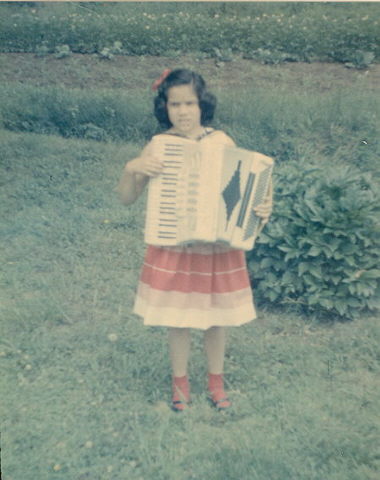
    For many months, on her way to and from school each day, Gloria had
    paused at the pet shop window to gaze with a combination of adoration
    and desire at the pretty little accordion nestled there in wood shavings and newspaper confetti.

    Each night at the dinner table she would beg her parents to let her
    have an accordion –and not just any accordion, but the one, lonely
    accordion in the pet shop window. How she longed to have that accordion
    in her arms, to have it for her very own.

    Her father, however, was insistent that they would never have an
    accordion in their home; Gloria, he said, was much too young, and an
    accordion was a serious and expensive thing. The world, he proclaimed,
    was already full of abandoned and unloved accordions.

    Perhaps, her mother said, when she was a bit older, Gloria might get
    an accordion. But her father looked sternly at his daughter across the
    table and said, Not as long as I am in charge of this house. I don’t
    have a moment of peace and quiet and can barely make ends meet as it is.

    At this, Gloria’s mother winked at her and said, Someday you will be
    older and you can work hard and save your money for an accordion of
    your own.

    Finally, one day when she had all but given up hope, Gloria came
    home from school to find the pet shop accordion wrapped in a red bow
    and resting on her bed. She took it lovingly in her arms and was
    startled to discover how much larger it had grown since the first day
    she had laid eyes on it in the store window.

    And then, as she cradled the accordion in her arms, Gloria found
    herself seized with a sort of panic that cast a quick, dark shadow over her
    joy. An accordion, she suddenly realized, was a tremendous and perhaps
    terrible responsibility.

    What, she wondered, shall be my accordion’s name? And what will I feed it?

    Gloria studied her accordion intently, and again and again she ran her fingers gently over its beautiful body and sang to it all the prettiest songs she could remember.

    And that night, as she curled up next to the accordion in her little bed, she thought, How will I ever sleep again?

  • The (Perhaps Deservedly) Lost Recordings Of Burt Sikorski, DBA The Burt Sugar Trio

    Every town and city has its share of genuine characters and eccentrics, but I think you could say that it’s somewhat easier to get a real feel for the personalities of such characters in a smaller town, where there are so few public secrets and mysteries, and where what might be mere sidewalk spectacle in a big city is often fleshed out with well-known family histories and personal anecdotes from actual encounters and conversations.

    True oddballs also seem to appear in even starker relief when looked at against the largely homogenized backdrop of an average midwestern small town.

    In my own hometown, a place of almost abject modesty and blandness tossed up in the middle of flat farm country, there were a number of such characters –flamboyants and dandies, for the most part, colorful fellows whom I now suppose were probably homosexuals– but the one who made the biggest impression on my adolescent self was a guy by the name of Adelburt "Burt" Sikorski.

    Burt was perhaps a dozen years my senior, and by the time I was really aware of him he was a rumpled, shaggy character who always wore bright polyester pants and what I now recognize were ironic tee-shirts (featuring musical acts like Rick Wakeman or Styx, or phrases along the lines of "Up Your Nose With A Rubber Hose," "Kiss My Grits," and "Keep On Truckin’"). He was also one of those muttering guys who was constantly walking all over town, and I guess in retrospect he was sort of the local one-man counter culture.

    You’d occasionally see him downtown, standing on a corner across the street from the courthouse and waving a sign that said something like "Don’t Rush Me Out!" or "Stop It!" He was also, so far as I know, the town’s only street musician, and he’d often play his guitar outside the Sterling Drug Store. I remember one time a friend and I rode our bikes over to the store to buy some candy –we were probably 12 years old– and Burt was out front with his guitar and said to us, "Hey, little dudes, want to hear something by your main man John Denver?" Which, even then, we thought was funny. I also recall him playing a manic version of "Tie a Yellow Ribbon Round the Old Oak Tree," which was at the time in heavy rotation on the local AM radio station.

    The town’s only movie theater was a single-screen affair that mostly showed family films, and it seemed like Burt Sikorski would be there every Saturday afternoon, sitting by himself in the back row, heckling and lobbing Sno Caps at the screen. One time I was with my parents and my little sister, and we were watching some Disney comedy –"Son of Flubber," or something like that– and Burt kept shouting out stuff like, "Fred MacMurray’s an adulterer! He’s a sociopath! The man’s a stone-cold killer!" until some of the grown-ups complained to the manager and Burt was asked to leave.

    By the time I was a teenager Burt Sikorski was regularly engaging my friends and me in conversation on the sidewalks around town. We were always "the little dudes," and Burt was always after us to join his band. His old man, Adolph Sikorski, had a meat market on the east side of town, and there was an abandoned smoke house out back that was Burt’s purported "practice space." Sometimes we’d ride our bikes by there and we could hear him pounding away on drums or creating distortion on an electric guitar.

    I knew a few guys who eventually got roped into jamming with Burt, and they all said he was crazy.

    When I was a junior in high school Burt opened, for a very short time, the town’s first and only head shop, The Soviet Revolution, and once when I went in there to poke around with a couple buddies Burt gave us a cassette tape of his band (which, of course, we all knew wasn’t a real band; to the best of my knowledge they never played a single public show in that town, or anywhere else).

    "What’s the band called?" we asked.

    "It used to be called Burton Veal and the Dead Baby Cows," he told us, "but that proved too provocative for local mores, so I’ve settled on the less threatening but classy Burt Sugar Trio." We spent a lot of time driving around in the country outside town getting high and listening to the Burt Sugar Trio, and I have very fond memories of that time in my life.

    After I graduated from high school, though, I moved to the Twin Cities, and I’d been living there for almost a decade when my mother called me one night and told me in passing that Burt Sikorski was dead. He’d died, she said, from an allergic reaction.

    "To what?" I asked.

    "I have no idea," she said. "The obituary didn’t specify."

    My father, who was on the other line, said, "My best guess would be life."

    "Burt had grown very fat in recent years," my mother said, "and he always seemed so depressed. Last time I saw him he was working at his father’s market."

    My parents are preparing for a move to Arizona, and I recently went down there to help them clear out the house. As I dug through the boxes in my old bedroom I was surprised to find my original tape of the Burt Sugar Trio. I listened to it on my drive back up to Minneapolis and it sort of broke my heart.

    Listen to a sampling by clicking the audio links in the left column (go to permalink).

  • An Endless River of Potatoes

    My first night in that shitty motel room in a tiny Wyoming town I was exhausted and wiped out on malt liquor and I slept in my clothes on top of the bedspread. All night I dreamt of potatoes on a conveyor belt, an endless river of potatoes.

    I’d driven straight through, twenty hours, to claim my mother’s body from the Wyoming Women’s Prison in Lusk. She’d been there for twelve years, after being convicted of paying a couple of greaseballs to whack my stepfather. My mother had worked with the two punks at a Kentucky Fried Chicken, and she’d paid them 800 bucks to do a job that they’d botched badly.

    I’m not entirely clear on how she ended up in Wyoming in the first place, but my mother had already done a previous, short stint at Lusk, this for embezzling money from the towing company she was working for in Sheridan.

    I had learned from her infrequent letters that she was battling breast cancer, but I never knew quite what to believe when it came to my mother, and, despite her increasingly pitiful pleas, I hadn’t been out to visit her.

    My father had been killed at the tail end of the war in Vietnam, and he was buried back in his old hometown in Wisconsin, alongside his parents and one of his brothers. I had no idea what I was going to do with my mother’s body, but I knew there wasn’t much I could afford, including, I felt certain, shipping her to Wisconsin to be buried next to my dad.

    I met a chain-smoking old reverend out at the prison. He was hunch-backed and had faded tattoos up and down both his arms, all the way to the wrists. His white collar was filthy with grease, and the shoulders of his black shirt were so heavily dusted with dandruff that it looked like he’d been doused with baby powder.

    The reverend didn’t have a whole lot of good advice for me, but he wanted me to know that my mother had been "redeemed." I didn’t ask for elaboration, but I got some anyway. She had turned her life around in prison, he told me, and had developed a deep, personal relationship with Christ. I heard a good deal more about this business, and the upshot was that she’d purportedly been at peace with herself when she died.

    I guess I was happy enough to hear that. Good for her, I thought. It didn’t, though, much help me with my own present dilemma. I made a few inquiries and realized pretty quickly that a coffin and burial were out of the question. I made arrangements to have her cremated in Lusk.


    It was approaching dusk when I went downtown to pick up my mother’s ashes, and afterwards, as I walked back up the street to my car, a kid in a devil mask burst from a bush, shook a plastic pitchfork in my face, and dashed back off down the sidewalk. It was, I just then realized, Halloween.

    I decided not to wait around another night, and gassed up the car and got back on the highway. At some point I stopped and got a motel room along the road, and I took the box with my mother’s ashes into the room with me and set them next to the television. It creeped me out having them there, though, and because I was having a hard time sleeping I finally hauled them back out to the car at three o’clock in the morning.

    The next day I realized that I didn’t want the ashes sitting there in the car with me all the way back across the country. They were in a plain cardboard box, and there was just something about it that bothered and distracted me. It also didn’t seem right to just shove them in the trunk.

    At some point I pulled off at a primitive rest stop that was situated right on a fast moving river, and I hauled the ashes down to the shore, tore open the box, and removed the twist tie from the plastic bag. I crept out into the river a bit on some rocks and turned the box upside down. It was sort of nice at first; a little cloud hung in the air for a moment, drifted a bit on the wind, and then settled on the surface of the water and was carried away. The last batch, though, was sort of clumped together, and I had to thump the bottom of the box to dislodge the rest of the contents. A heavy clod of the stuff finally tumbled from the box, hit the water with a splash, and promptly sank like a stone.

    The whole thing seemed sort of cold and pathetic, so I closed my eyes, tossed a quarter in near where my mother had entered the river, and wished her peace.

  • Nothing At All, Really, Like A Bruce Springsteen Song

    Remember that time you threw your heart from the window of a speeding car?

    Was it burning?

    No, not that time. It was just heavy, a sodden wad of plumbed meat. It felt like a water balloon coated with grease. It couldn’t have weighed more than a softball, and it bounced once on the shoulder of the highway and skipped off into the ditch. Some kid who was out fucking around found it the next day, put it in a plastic grocery sack, and took it to school for show-and-tell. An alarmed teacher confiscated your heart and hauled it off to the principal’s office.

    The principal was a wattled walrus of a man, and he called the county sheriff, who came down, took one peek in that plastic sack, and had a pretty damn good idea what he was looking at, even as he wasn’t quite sure what to do with it.

    Within 24 hours posters started appearing on telephone poles around town, which is how you eventually got your heart back, although at the time you weren’t so sure you even wanted it back.

    Remember that dinky town? What a strange place. What a strange time in our lives that was. The town was so small that it didn’t have a newspaper or radio station, and the closest city that had either was almost forty miles away and had been pretending for half a century that the little town didn’t exist.

    The town had a serious inferiority complex going back almost a hundred years, and things had gotten so bad that there was a vocal cult of locals that was convinced they were living in the hallucination of a senile god. Somebody had made a trip to a big city in the north some years earlier and had returned with a state road map on which the town was nowhere to be found, further convincing many people that they, their families, pets, cars, homes, neighborhoods, and entire community did not, in fact, exist.

    A dwindling group of optimists formed the Existence Party and ran a full slate of candidates for local offices. Every one of them was soundly defeated. Yet still the town carried on as best it could; the residents dutifully paid their property taxes, sent their children to school, maintained their homes and lawns, and –for the most part, anyway– obeyed local laws.

    High school graduation became known as Vanishing. Almost without exception graduates fled town immediately with whatever memories they had left, never to return. Newcomers, even relative newcomers –anybody, really, who had not lived there all their lives– tended to suffer from gradually worsening memory problems, particularly regarding how they’d come to live in the town in the first place.

    You were definitely in this camp. When I first met you you no longer had the foggiest idea what you were doing in that place or why you had moved there. You insisted it was the most boring place you’d ever been, and you had the odd feeling that you were being held hostage. More and more often you felt like you were lost the instant you left your house. Often enough, in fact, you were lost even when you were in your house.

    The streets of the town had become a sort of labyrinth to you, and you often found yourself unwittingly driving in circles, sometimes for what seemed like hours at a time. The streets all seemed to either dead end or circle back on themselves.

    Sometimes at night you would park at one of these dead ends and shine your car lights out into the seemingly endless scrub brush beyond the city limits. You said you would see dark shapes moving around out there, and the occasional flash of yellow or red eyes captured in your headlights. Coyotes, you thought, or perhaps even wolves.

    It was the sense of captivity, the boredom, and the torment of your eroding memory that led you to throw your heart from the window of the speeding car. A woman had been driving, but you couldn’t remember her name or what she looked like. You retained a vague memory of being tormented by the woman’s incessant chatter.

    The day you retrieved your heart from the sheriff’s office, as you drove home with the plastic bag rattling on the passenger seat, you realized that your eyesight was rapidly fading. By the time you got home you were almost completely blind and had a difficult time finding your way into the house.

    You remembered that much, at least for a few days. Your house, you said, was dark, and you could barely make out the various familiar shapes in your kitchen. You could hear the hum of the refrigerator. You felt with your hands and located the counter next to the sink, and there you deposited your heart in its grocery sack.

    You were so tired, uncommonly tired was the phrase you used, and you suspected that you might be dying. How long, you wondered, could a man live without a heart? And how long had it been since you flung it from the window of the speeding car? Twenty-four hours? Forty-eight? You really had no idea. There was, however, very little doubt about this much: you were now almost completely blind. You were disconsolate. Words were beginning to break apart in your head; they had been slowing way down for quite some time, but now they were truly starting to disintegrate. There was a moment in which you said you were seized with a powerful longing to hear Louis Armstrong. A few snippets of a tune jerked momentarily between your ears and then just as quickly evaporated.

    At some point you fell into a deep sleep, perhaps even a coma. When you regained consciousness you were still sitting at your kitchen table, and you said you could hear your heart stirring in the plastic sack. Rattling, initially, and then jerking around.

    When I found you you had your heart in your hands, cradled like a rabbit.

    Do you remember the rest? Do you remember how we escaped together, and how, even slumped against the passenger window and blind and barely conscious, you mumbled that our getaway in the dead of night was "just like a Bruce Springsteen song"?

    Do you remember how I cut up your heart with a steak knife and fed it back to you one bite at a time?

    Can you remember that, baby?

    Can you please try to tell me what happened next?
  • Tangled

    I have no desire to be a shepherd of men.

    But, no, that’s not really true. Perhaps there’s nothing I’d like more than to be a shepherd of men, providing the men in question were willing to play the role of sheep. If they are going to insist on being men, however, no thanks; I want no part of that thankless job.

    ‘Shepherd,’ though, sounds like a humble enough job title, but is a ‘humble enough job title’ what anyone truly wants? A humble enough fellow, perhaps, but I’m not sure I fit that bill.

    I don’t know, quite honestly, what I want to be or do, other than to sit quietly listening to Charley Patton and Roscoe Mitchell and some of these thousands of other people I have sitting around here waiting to be listened to.

    But, you might ask (and you might be right to ask), can I really claim to be ‘sitting quietly’ if I am, in fact, listening to music, particularly music that some might describe as caterwauling or keening?

    Point taken.

    At any rate, a herder of sheep would, I’d think, have plenty of opportunities to sit quietly, or even to sit listening to music, provided he is allowed to drag a boombox and a bag of CDs with him out into the…what do they call them, those places where sheep roam about? Something bigger than a pasture. A range? Yes, range sounds right, or close enough.

    I imagine, though, that a fellow would have to venture to far flung places to find employment as a shepherd, and I seriously doubt I have either the wherewithal or the qualifications to undertake such venturing or secure such employment.

    Which leaves me in the same position in which I seem to find myself every Sunday night about this time: Here.

  • The Finish Line: The Black Bus With The Tinted Windows Is Waiting

    Trust me, even when I go away, I’ve got nowhere else to go. I’m always around, a lurker in my own life.

    The end of the baseball season is always a painful thing for an obsessive/compulsive man who is a complete slave to routine yet has very few habits –with the exception of bad habits– that would qualify as routines.

    Baseball was invented for people like me, and when the carnival shuts down for the winter and the boxscores disappear from the morning newspaper, I’m left with…I’m left with…um…I’m honestly not sure. Extreme malnutrition, dodgy hygiene, darkness, and increasingly long stretches of paralysis. I likely won’t turn on the television again until April.

    Was it a good season? I guess I’m not sure. It certainly wasn’t a particularly great year to be a Twins fan. In the next couple months, I suppose, some highlights and happy memories will surface through the murk, but mostly what I remember now is that sense of frustration and futility that seemed to get cranked tighter and tighter as the season dragged along to what in hindsight seems like its inevitable conclusion.

    I began the season in a state of extreme denial. I always begin the season in a state of extreme denial. I was as grouchy as the next guy when the Twins hauled Sidney Ponson and Ramon Ortiz north in April, but I honestly believed a team with Johan Santana, Joe Mauer, Justin Morneau, Joe Nathan, and Torii Hunter would be able to play with anybody in the AL Central.

    I was wrong, of course. I had a pretty good idea that Ponson and Ortiz would suck, and I had a pretty good idea that Nick Punto was probably not a perfect-world everyday second baseman. But I had no idea Joe Mauer was going to spend most of the year either injured or doing a sort of Brian Harper impersonation. I had no idea Justin Morneau’s power numbers would disappear in the second half. And I had no idea the contract status of Hunter and Santana would become such a lingering and maddening sideshow.

    The truth, though, is that you never have a really good idea about much of anything. Baseball proves that virtually every year.

    The postseason was both frustrating and oddly satisfying, starting right ouf of the blocks with the one-game Rockies/Padres playoff. I liked every one of the match-ups, but it was a shame to see so many quick series. The World Series pitted two very different teams that were both fun to watch and, more importantly, seened to genuinely enjoy playing the game.

    The Red Sox were just scary, scary on so many levels, and every indication is that this is an organization –and a team– that is determined and capable of being scary good for years to come.

    Now what?

    No idea, really. The whole Hot Stove League thing has become little more than commentary and speculation surrounding the incredulous –and often horrifying– free agent cash scramble.

    I think I’ll probably try to write about baseball books, or baseball and comic books, or baseball movies, or great names in baseball history –or just strange historical arcana related to the game.

    I’ll try to write about something, even while I lurch along aboard the Black Bus, and squint hopefully through the tinted windshield for the first sign of spring sunlight on the horizon.

    And I’ll remind myself of the words I speak aloud every year when the last out of the World Series is recorded: God help us all. May I still be sitting here come April.


  • Crow, October

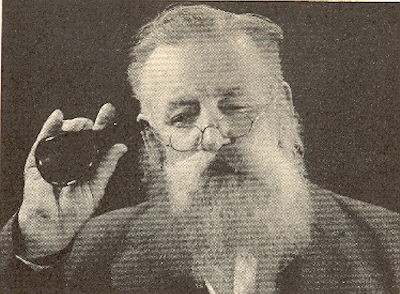
    ear trumpet 7.jpg

    October, before it had

    a name. Still, though, a month of

    low iron skies and protracted

    sulks and cold rain and bursts

    of crisp radiance that never

    lost their ability to

    dazzle and surprise.

    A flash of revelation

    even as the hammer fell:

    We will miss this world

    when it’s gone, or

    when we are.

    Same difference.

    The crow, I’ve been told,

    spoke first in the New World,

    gave the truth its first

    utterance. And the truth it

    spoke was as blunt as

    it was timeless: Hey,

    numbnuts, it said.

    Hey, hey.

    Look here.

    Listen up.

    Here I am,

    and there

    you are.

  • Go Ahead And Swear Him In

    Hey, Presidential wannabes, it’s time to cry uncle. You’re all toast.

    Chuck Norris: King Maker

  • Fractured Jib-Jabbery Of The Usual Sort

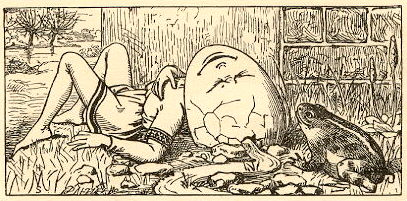
    broke humpty-2.jpg

    Snapshots from a drive home from work while listening to the new Ween album, which is fantastic if you like Ween, and I do:

    Three shiny balloons trapped in the branches of a tree above a baseball diamond.

    A long strip of aluminum foil tumbling like an acrobatic hallucination down the middle of LaSalle Avenue.

    A shirtless man wearing a sombrero and laughing ecstatically while trotting along beside a prancing little dog outfitted (I’m guessing against its will) in a purple vest.

    An old woman, holding a little girl’s hand at a street corner, bending down to clearly hiss something in the girl’s ear, and then whacking her on the head with what appeared to be a Bible.

    A fireman dozing off in a lawn chair in front of a fire station.

    An awkward young woman alternately lurching and tip-toeing along on roller blades.

    A teenage boy sucking a hickey into his girlfriend’s neck at a bus stop bench.

    Mormons on mountain bikes, poking through things at a garage sale.

    A pitiable spectacle involving an ancient hunchbacked man and a microwave oven he was apparently trying to carry home.

    Two hearses lined up at the entrance to a senior citizen center.

    A man I recognized as my old friend Clammy Reese, wearing threadbare golf togs and toting a bag of clubs, standing at a busy intersection with a sign that read: “Indulge me, why don’t you? Winter’s coming and green fees ain’t free. God bless you, I guess.”

    A sandwich shop with this modest slogan painted on the window: “The Best Sandwiches We Know How To Make –That’s A Promise!”

    Hundreds of geese in a supermarket parking lot, from the looks of things holding some kind of meeting, probably having to do with a planned trip south. Do geese in fact fly south for the winter? I don’t know why they wouldn’t.

    An inexplicable billboard: “Music is Not a Priority in Unhappy Lives.”

    An morose-looking young mother watching her two children burying themselves in the playground sand, and thinking (or so I imagined): “Deeper.”

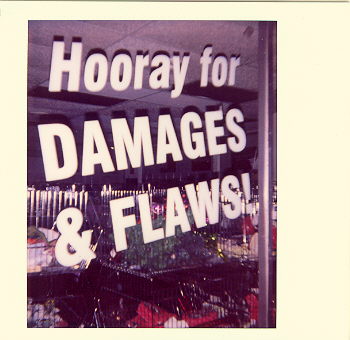
    hooray for damages.jpg

  • Questions

    masksnap.jpg

    What are the essential songs for a first-rate jukebox?

    If you were to find yourself locked up for the rest of your days with a trio of fourteen-year-olds and a bunch of musical instruments and amplifiers would you join the band or bash out your brains with a tambourine?

    Have you ever heard clearly conspiring voices outside your bedroom window at four a.m. and felt yourself utterly devoid of curiosity or alarm?

    Was there, I often wonder, a great pioneer of profanity? Who coined all those marvelous curse words, or first used them in a pejorative sense? I’d like to make that asshole’s acquaintance. I’d love to have known that fucker. I’d be proud as hell to shake that shitheel’s hand.

    Chandler or Hammett?

    Chaplin or Keaton?

    Cary Grant or Jimmy Stewart?

    Fitzgerald or Hemingway?

    Basie or Ellington?

    Frank Sinatra or Tony Bennett?

    Rolling Stones or the Beatles?

    Charlie Watts or Ringo Starr?

    Replacements or Husker Du?

    Howard Hawks or Preston Sturges?

    Wodehouse or Waugh?

    Spring or Fall?

    Audrey Hepburn or Grace Kelly?

    New York or Paris?

    Sherman or Grant?

    Sam Phillips or Phil Spector?

    Lewis or Martin?

    Williams or Dimaggio?

    Mantle or Mays?

    Leonard or Duran?

    Mitchum or Lancaster?

    SCTV or SNL?

    Maurice Sendak or Dr. Seuss?

    Baseball or football?

    Beethoven or Bach?

    Mozart or Mahler?

    Joe Strummer or Mick Jones?

    Costello or Presley?

    Milton or Dante?

    Nancy or Sluggo?

    Pepsi or Coke?

    Cat or dog?

    Now or later?

    Friend or foe?

    Yes or no?

    This or that?

    Who or who?

    What or what?