Blog
-
Judging a Book by its (Back) Cover
I’ve been taught to trust blurbs about as far as I can throw them, which is roughly about as far as I can throw a book, which is not very far, because I am quite weak, my muscles haveing been described as sauce-like. In fact, the word blurb seems related, if only alliteratively, to the word blog – maybe both should be regarded with about the same amount of seriousness.
"Long ago," writes writer Stephen Dubner in his "Freakonomics" blog, "I used to think [blurbs] mattered a lot. Then I changed my mind, thinking that blurbs don’t signal much about the quality of the book, but at least they signal something about the quality of the author’s friends or acquaintances who were willing to blurb the book." He goes on to describe a situation where a book’s editor offered to write a blurb for Dubner, and simply attach his name to it, for his convenience. (The link goes to that article.)
Rob Walker, who writes for the Times Magazine, states in an addendum to the "Freakonomics" piece that "the real audience for blurbs isn’t really consumers at all – it’s bookstore and particularly chain bookstore buyers" who want the imprimatur or well-known artists to hopefully help sell the name of lesser-known artists.
Fair enough, but I still don’t like the idea that I’m buying my books from people who stock their shelves based on anything but a novel’s actual merit. (Go used or go home, baby.)
Despite the apparently widespread knowledge that blurbs are basically useless, they appear on the back of every book, and I can’t for the life of me ignore them. Sometimes they’ll even dissuade me from buying a novel.
There are books that rely on their blurbs: Anything by James Frey, at this point.
Books that self-consciously make fun of the blurbing tradition (from Dave Eggers’ A Heartbreaking Work of Staggering Genius):
"This is a blurb. It conveys no information about the book whatsoever, no useful account of its contents, nor any serious comment as to its qualities. Authors like getting blurbs because they indicate that the author is an amiable and well-connected fellow; other authors like giving blurbs because it’s free advertising for their own work. Editors and publicists like blurbs because blurbs help legitimize their own generally rather timid publishing decisions. You, the reader, are not exactly ill-served by this process – it is, at worst, a harmless display of vanity and insecurity – but if you’re looking for a reason to buy and read this book, you’re better off relying on the advice of other readers whose taste you share, or what minimal sense of the writing herein you can glean by standing here and skimming through the pages." – Jim Lewis
And books for which blurbs are superfluous:
"Nabokov writes prose the only way it should be written, that is, ecstatically" – this quote, that is, John Updike’s, is affixed to the back of every Vintage Paperback edition of Nabokov’s books.
Hot New Authors are often tapped, it seems, to blurb books by Slightly Less Hot New Authors. In the last couple years, I’ve been seeing current NYTimes darling Gary Shteyngart’s name on the back of what seems like every contemporary novel. Shteyngart’s own work (The Russian Debutantes Handbook, Absurdistan) might be described as ‘exuberant,’ and his blurbs, likewise, are notable for their exclamation points. The guy practically redefines hyperbole. What’s interesting is, it seems he’s wholly unaccountable for his opinions – what’s most important is getting Shteyn’s name on that back cover, not what he says. While emphatic, his blurbs are also generic. And some of the books he blurbs are actually kind of mediocre (according to other critics, not just me).
Just a couple examples (I don’t want to name the actual books, because some of them are in fact good):
"[ ] can’t write a boring sentence, and the English language is the richer for it."
"[ ] has written a novel that is – sentence by sentence, idea for idea – peerlessly brilliant. Here is a supreme, mature novelist at the height of his powers. Take me to the hospital. My jaw has dropped."
So I was delighted to find that someone shares my opinion.
"I finished Sam Lipsyte’s Home Land which Gary Shteyngart calls ‘genius,’ " writes Stephen Schenkenberg, who edits St Louis Magazine. "Um, maybe a bit much. I really liked Shteyngart’s first novel — even bought it for my cousin in the X-mas gift swap — and he was very funny and lively and smart on ‘Fresh Air’; but how you can call Lipsyte’s book ‘genius’ is beyond me."
(Finding corroboration about irksome blurbers is hard to do!)
Completely ripping off Mr. Schenkenberg, and also in homage to him, here’s a little activity. I’ve got some blurbs, with links to the actual books. See if you can guess which book each blurb describes. Wheeee!
"One is never far from a phrase that feels so acute and so true that it seems to be expressing an essential truth of the soul hewn out of primordial psychological matter."
– the London Times"A page-turner in the most expansive sense of the word: Its gripping plot pushes readers forward…[ ] is a reader’s writer, with sentences so cozy they’ll wrap you up and kiss you goodnight." – The Chicago Tribune
And finally, one book, two quotes:
"One of the few books I have been able to read in recent years." – William Burroughs
"A terrifying and marvelous book." – Roald Dahl
-
IFP Turns 20 and Chris Osgood Makes Good
SPECIAL EVENT
IFP 20th Anniversary Party
I don’t know about you, but I can peg a film geek from a mile away.
It’s kind of like gaydar, except for filmmakers. The look often
entails square framed glasses, a ratty baseball cap, possibly a beard,
and if you get close enough, an air of over-confidence along with an
over abundance of knowledge pertaining to any given genre of film and
the ability to talk about it for hours on end. Luckily, I
find this endearing and clever. And luckier still, Minnesota’s
independent film scene is positively bursting with creative activity,
more so than ever before – thanks in part to the wonderful resource
that is IFP.
Now in its 20th year (hence the 20th Anniversary theme), IFP has been
assisting and supporting independent filmmakers, photographers and
screenwriters in their quest for filmmaking glory. Tonight’s swanky soirée
at the Varsity Theater will include a live auction, special musical
guests, and of course, film. Choose to go to either the 8pm party with
all the rest of the riff raff, or rub elbows with the elite at the VIP
dinner at 6pm.
6pm VIP Dinner, 8pm Party, Varsity Theater, 1308 4th Street SE, Dinkytown, $250 Dinner, $35 Party
LECTURE
150 Years of Music Making by the River
Who knew a lecture could be so rockin’? Tonight get schooled by Chris Osgood, co-founder of Twin/Tone Records and legendary front man of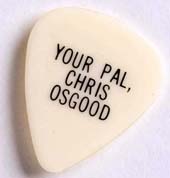 Minneapolis seminal punk band The Suicide Commandos,
as he talks at length about the Twin Cities music scene. Osgood is the
unofficial "Godfather of the Minneapolis music scene", and for good
reason – not only does he have the personal street cred to back up the
title, but his professional track record
is one of epic proportions. From Minnesota State Arts Board appointee
to his current gig as VP of Organizational Development at McNally Smith
College of Music, Osgood is certainly qualified to teach you a thing or
two. Listen as he weaves the vibrant history of influential local
musicians and movements throughout the ages, from 1950s folk music, to
Bob Dylan, Prince and Babes in Toyland. You must register to attend, as space is limited.
7pm, Minneapolis Central Library, Pohlad Hall, 300
Nicollet Mall, Downtown Minneapolis, Free, RSVP Required by calling
612-630-6155 or by clicking HERE
SPECIAL EVENTMovies and Music in District del Sol
When I was in high school I used to roll with many different crowds,
most of them unsavory in one way or another. The West Side of St. Paul
was the stomping grounds for a particularly rowdy gang of Latino thugs
I somehow found charming in all their butterfly-knife
carrying, weed smoking ways. Under their rough exteriors lurked a sort
of ingrained wisdom, warmth and level of respect that you don’t come
across every day. The West Side itself mirrors that description. Maybe it’s something about familia, maybe it’s culture, but definitely it’s community – and this weekly summer series
in Castillo Park proves it. Each week, the event explores different
cultures through art, music and movies, and tonight celebrates Africa
with a mask-making art activity by Stepping Stone Theatre, the
energizing sounds of Marimba Africa, and a screening of The Gods Must
Be Crazy.6:30pm, music at 7:30pm, Film at Dusk, Castillo Park, 149 Cesar Chavez Street, West St. Paul, Free
-
Bruno Making His Rounds
Okay, so the above pic is not Bruno, but is the same (Morkie) breed. Could be a cousin. Or future ladyfriend?
Yes it’s true: I am obsessed with Bruno the new family dog but not
for the reasons you may think…At first the house seemed calm and picture-like.Well that was last week. Now….not so much. Our new, little under-2 lb. Morkie is driving me crazy…After realizing that I have a job that requires me to be at an office and not playing at home–there was no choice today. Bruno was coming to work with me, his Grandma.
Don’t get me wrong: After we dropped off his Mom at her work
the car ride was fine. That is until his Mom got out of the car and it was just the two of us…This dog has not made a peep since we got him. He has used his potty
pads and has slept through the night really well. So what the hell happened?Yip! Yip! Yip! at the top of his little lungs for the entire 30 minutes in
the car while I was trying to keep my composure. When my kids used to "Yip" the pacifier worked wonders, but there is no pacifier for puppies!I turned the music to a station I figured he may like (WLTE) and kept my voice calm. But I soon got to the office and was greeted at the door by one of my office mates with a, "He is so cute! Can I hold him?"
"Yeah you can hold him as long as you want. Are you busy for the next 3 hours?"
In and out all day long, Bruno has been greeted by everyone here at
Jacobs Trading with love and kindness—the only person who is about to lose it is ME!How on earth did I agree to this deal of my daughter having a new puppy? One she promised she would take care of all day? And here I am trying to catch up on e-mails and phone calls in between him finding pieces of styrofoam that I didn’t know existed, finding spots that have hidden wires and, worse, using his puppy pad from a distance and spraying my new rug.
OY–Warning to all parents and grandparents–when the child you love
begs and pleads for That Puppy…be very careful before you grant her wish or you could end up like me.Ahh, he is finally sleeping…Back to work! 🙂
-
Story of the Sea
Thirty seconds is my guess. The generation of 20-something over-stimulated technophiles has notoriously short attention spans, fitting snugly within the confines of rapidly flashing images in 30-second commercials, mind-numbing YouTube videos, maniacal iPod shuffling and ever shifting favoritism to "bands of the hour." But some musicians have managed to cash in on our generational ADD. Girl Talk is the best example. The Pittsburgh-based king of sampling weaves together furious seconds-long bursts of the best and worst dance hall hits to create songs sounding like a schizophrenic radio station that can’t decide which Top Ten number to play. The result is a schlepped-together creation, and a serious copyright nightmare, that stands on the legs of others instead of its own two feet.
In contrast, Minneapolis foursome Story of the Sea takes on this similar fast-paced blitzkrieg approach in a more intelligent, and listenable, mode. The music is overwhelming. At the July 18 Triple Rock show, the waif-filled audience simply stood and stared, wondering where the band would go next. Story of the Sea may be the very definition of genre-hopping. The music consists of blips and blurbs meshing, coercing, exploding and sinking below the surface, breaking through, thrashing, smashing and ultimately fading away. One moment they fill the room with psych drone– a millisecond later they resonate with guttural fervor. Then the music is melodic, then angular, then it stabs through with jagged dissonance and seeps with interludes of grunge. Story of the Sea splits and reassembles genres like Mary Shelley’s monster and builds an entity just as fantastic.
But this isn’t a band to watch. It’s a band to listen to. Story of the Sea appears wholly disinterested in lively distractions. It is literal shoe-gaze with no banter or audience interplay. Onstage the four are talented statues, barely acknowledging the existence of anything but their epic sound, this heavy, heady obelisk. Rarely, a thin grin emerges on their faces when they can tell it’s really working. Still there is an enormous presence. Drummer Ian Prince is the ultimate beat blaster with a sound that seems too massive to come from his rig. He is the hidden weapon that ties down the band’s constant, frantic diversions. He is the pace that grounds the intricate but stable fortress of guitars as they swoon, intermingle and coalesce.
Story of the Sea is indeed a strange machine. Shucking trends, the band is the misfit inside the Minneapolis scene. Yet it is one of the city’s top contenders. I recently sat down with Ian Prince, brother of singer Adam Prince, bassist John McEwen and guitarist Damon Kalar to discuss its encapsulated mischief.
Erin Roof: Are there any brotherly rivalries?
Ian Prince: Not really, no. We have very different personality types.
ER: What are they?
IP: I’ll give you an example. [Adam] is three years older, and he had a paper route, which I could not wait to get a paper route. He broke his ankle, and I had to take over for his paper route. And people–when we were kids–people thought we were twins because we looked so much alike. And he used to do such a bad job. The route was after school. When he would do the paper route he would go after school and watch TV and deliver the papers a couple hours later. And I was so gung-ho I would do it right away after school. All these people thought I was him, and they nominated him as paperboy of the month. And he totally took the credit for it. Somebody from the paper came and took his picture and interviewed him. They asked him what his favorite band was. I remember his favorite band was Def Leppard. I was just like ‘Go fucking figure.’ That’s the story of our lives, basically.
ER: When is your new album coming out?
IP: We don’t have an actual date. Fall-ish.
ER: Could you explain the difference between this record and the first one?
IP: The production is different. The first one was really kind of blown out.
John McEwen: Real glossy.
IP: [The new album] sounds like you’re a band in a room, instead of in an arena.
JM: We also got Damon in the band. We were a three piece before. So getting him in the band added that whole new element that we had written for but hadn’t actually played live.
ER: Why did you decide to add another person?
JM: The songs were always kind of written for four pieces. All the recordings had four pieces. The songs actually sound the way that we thought they would.
ER: Damon, how did you feel about stepping into this already established band?
Damon Kalar: I was just pumped. I heard that they were trying people out, and I jumped out of my seat. It’s so exciting to think about this because I’ve seen Ian playing around a lot, and it’s always been unreal. Adam was pretty good about talking to me about what he wants me to play, what he hears. He’s very specific about the parts he wants. Something I really appreciate is direction. These guys already had a great idea, and it translated easily.
ER: Describe your sound. It’s very genre-hopping and difficult to describe.
JM: We never really go into songs thinking we want a song to sound exactly like this, or we want it to sound exactly like that. It’s really whatever feel is on the mind. We like to do a lot of pop things. Really poppy bands or more math rock.
ER: What are some of the bands you like?
JM: None of us really listen to exactly the same thing. All of us have a different collection of music that we listen to.
IP: Adam is the primary songwriter. He’s into old pop– Roy Orbison and stuff like that.
JM: He also loves Britney Spears, really strange things.
IP: He’s a sucker for a pop song.
ER: But you’re not pop at all.
IP: I think ‘cause we grew up on not really punk, but post rock type stuff, so we have that angular element. They really are somewhat pop songs, in a nutshell.
DK: I wanted to be in Pearl Jam. Really. I loved grunge. If there was a type of music that influenced me the most, it was that, like Pearl Jam, a little Sound Garden, a lot of Alice in Chains.
ER: Do you think you, as a band, fit into the Minneapolis scene?
DK: I don’t know.
JM: We try to pick good shows. We try to make it a show that everybody wants to go and see. We play with bands that we really like. With a scene, there’s so many different ones. Scene is kind of a tough word.
ER: I don’t see anyone here trying to do what you do, which is why I asked the question.
IP: We definitely try to pick oddball shows, where there’s an acoustic guy and a pop band. There isn’t necessarily a scene that we fit into.
JM: There’s so many bands that fit into so many different scenes. We try not to be in one of those.
ER: I think you’ve accomplished that.
JM: Well, I hope so. If we’re not playing for new people all the time, then what’s the point?
-
Art Cars!
Prelude: A friend–and faithful supporter of this blog–recently told me to consider taking more risks online. So, following this piece of advice, I offer you an essay about cars, hoping not to step on fellow blogger and serious car enthusiast Chris Birt‘s toes. A disclaimer: apart from driving them, I am not "into" cars. I think of them as gas-guzzling necessities that get me from point A to point B in case those two points are too far apart to bike. Still, I can’t help feeling curious about cars, the ways they enthrall people’s imaginations, their cultural significance, the changes their–for lack of a better word–mystique is currently undergoing as a result of the economy, oil prices, etc., and their relationship to art.
The other day–to use that aristocratically vague and suggestively intimate phrase the New Yorker Magazine‘s Talk of the Town is so excessively fond of–I attended a workshop on professional development for artists, sponsored by the Tremaine Foundation and capably organized by the College Art Association and Springboard for the Arts. The insights offered up for grabs were many, ranging from "New York is no longer number one in the art world" to "networking is out." Instead of networking, a rapt audience was told, we are supposed to build community, to share authentic relationships with one another–relationships whose authenticity ideally blossoms–for artists, that is–into inclusion in a show or, even better, a solo show. Community, from this rather jaded point of view, becomes a tool for allowing us all to do business together more pleasantly, to feign friendliness when truly we all understand whose eye we need to catch and whose verdict on whose work will make a difference in the long run.
Do I sound suspicious of this vision of community? I am. Community, any decent dictionary will reveal, is based on the notion of a shared vision or shared interest. Sharing this interest, or passion, or vision does not require us to act the same, speak the same, pretend to be the same–but it requires sharing, that is, a common goal rather than pure and unadulterated self-interest. For those involved in the arts, the greater, shared, common goal could translate into advocacy for the arts in general and ingratiating self-interested authenticity in particular. A devoutly capitalist compromise seems entirely possible. But what this vision of art as community still leaves out are those who may share the interest in art and yet feel excluded and alienated from this community.
Of course, some communities thrive on precisely their exclusivity. Consider, for instance, the commerce-driven kind of tribes who are drawn together by their shared attraction to a carefully designed brand and, equally important, their ability to afford said brand. Economic resources function as gatekeepers, and entry is allowed only to those who demonstrate they can afford to belong. Other communities rely not on economic but cultural capital to police their boundaries. Money won’t fail to impress but the hushed tone of expertise, the authoritative whisper that requires you to lean forward and crane your neck in order to absorb the proverbial pearl of wisdom should not be underestimated.
When it comes to art and the community gathered in its name, where are the boundaries drawn? Who is allowed in, and who, in turn, is alienated and excluded? Who is art for? The self-proclaimed connoisseurs who come–if not with a background in art history or a degree in art school–with money or the amateur’s literal love for oil paint and creative expression? Is it for those who make art, regardless of whether anyone will ever see it? And what is the role of community in these complicated cultural negotiations of who gets to count, who is allowed in, and who has to remain on the outside?
In creative circles, invoking and, in some way, shape, or form, involving community seems to serve a specific function: "Community"–it does not seem to matter much which one–has the power to give even the most reactionary body of work a dull cutting edge and, of course, that most sought after commodity–"street cred." But even the most well-meaning artists seem to stop short of actually bringing these communities whose experiences they mine in workshops, or visually, in photographs, to the galleries and museums. So yes to the quasi-anthropological appropriation of others’ stories and images, a welcome spice to invigorate a possibly languishing artistic practice–but no, we won’t go as far as inviting them–those eternal others–into our hallowed halls, become part of our community, our creative club. (I recognize and apologize for my over-simplification here for the sake of argument.)
The annual Art Car Parade in South Minneapolis offers a welcome reprieve from the air-conditioned, educated exclusivity of the conventional art space: cars, fashioned from the quirky to the outrageous, cruise through the streets–around Lake of the Isles this year–to finally assemble at Intermedia Arts on Lyndale Avenue, where the artists and the curious get to mix and mingle, chat and laugh, wonder and enjoy the general outrageousness of the objects on display. Here is individuality whose expression does not exhaust itself in pricy customization; here is community, too, because the people who make these cars share a passion, a vision, and they are all too happy to talk about it.

Polar Bear Car, July 19, 2008
Art cars, then, circumvent the typical self-selective audience of gallery goers and connoisseurs. They make art accessible in the most basic, democratic sense: on the street, to everyone who happens to pass by. They are fun, too, frivolous at times, and nonetheless cannot help being political: either overtly–this year’s polar bear car drew attention to the threat of that species’ extinction–with strategically placed bumper stickers–"I want an electric car"–or indirectly, by rejecting the conformist, conventional avenues for expressing individuality on wheels.
Intermedia’s showing of Harrod Blank’s 1992 documentary Wild Wheels added even more depth to the experience of appreciating the art cars, their makers, and the community that forms around the shared impulse to create this iconic American object anew. (A case in point: the 1960s Cadillac, chosen for its cultural significance, with ornaments that include a plastic Snow White figurine and pink flamingos on elongated fins, speaks to the opulence of American culture, as its creator proudly explains on screen.) The motivations of the artists interviewed in the film range widely, from the sentimental to the pathologically religious, from a keen understanding of audience–and wanting to appeal to a broader audience than your typical gallery crowd–to a tentative understanding of class politics in the art world and the viable alternative community these cars create.

Art Car Detail, July 19, 2008
Yet unlike most art objects, these cars are functional, which ironically hampers their status as art: in Wild Wheels, the driver of a Volkswagen Beetle, covered with small, oscillating light bulbs, recounts that no one, not even Lloyd’s of London, is willing to insure this work of art. "If it is worth as much as you value it at, you should not be driving it,"
; is–loosely paraphrased–the insurance company’s stance. Do art cars belong in museums, then? Interestingly, visitors to both the Walker Art Center and the Minneapolis Institute of Art can encounter cars–or parts of them–in the galleries, safely housed in the white-walled spaces designated to hold what’s precious and dear to the experts of the art community.The MIA’s car, a 1936 Czech Tatra T87, is housed in its 20th-century design area. In a 2006 article in the Star Tribune, William Griswold, the then director of MIA, described the car as "a great access point for the infrequent museum visitor." Visitors, said Griswold, will "see and understand this object, which will lead to understanding others." So apart from the artistic and historical value of the car’s design itself, what makes this art object compelling is its familiarity and accessibility.

Hans Ledwinka’s 1936 Tatra T87 at the MIA
Dave Hickey, who, somehow, despite his MacArthur genius grant, still manages to pull off the enfant terrible shtick of art criticism–quite convincingly, too–makes a similar point in his memorable essay, "The Birth of the Big Beautiful Art Market." Cars–customized and pin-striped and hopped up–served as the lingua franca of his American boondock education (Hickey’s terms, not mine). Cars offered a universal language, accessible to anyone who cared to look and listen to the roar of the engine. Entering the art world with its putatively refined aesthetics and insider mentality felt "just like coming home," says Hickey. His conclusion? The two markets–or communities, or culture clubs–aren’t that different, once you start peeling back and sanding off the layers of lacquer. Or are they?
While car culture not only offered cool rides, it also provided young Hickey with an education in aesthetics and meaning making–and I quote: "We knew these cars and knew what they meant; and what they meant, over and above everything, was freedom." These cars, then, were a means to voice dissent from the factory models, a way to let loose and re-imagine what a vehicle could look like, could signify, could be. This culture club was not limited to art galleries; instead, cars cruised the main drag, raced on the highways, and generally served as the embodiment of their owner’s particular brand of cool. "Not limited to galleries" also meant no self-selecting audiences, no institutionalized spaces for display, and no exclusivity based on social class or education or any other of those markers we rely on to claim and bestow cultural capital. Finally, an obvious point: these cars worked.
While both Griswold and Hickey see car culture as immediately accessible to the American collective consciousness, the meanings these cars transport for each of them are ultimately quite different: the cars of Hickey’s reminiscences mean freedom, speed, the open road–that old American dream. Griswold would probably not object to such associations either but he wants the Tatra’s audience to appreciate the lines, the design, the details, too–in order to move on to more complex and more sophisticated objects. The Tatra, while a gorgeous object in its own right, becomes a lure for the "NASCAR crowd," as the Star Tribune puts it, not shying away from cliché. Thus the Tatra comes to serve as a stepping stone to higher distinction and sophistication, an entry point into a different, perhaps more exclusive kind of community.
A few steps closer to downtown Minneapolis, Richard Prince’s muscle-car hoods grace the walls of the Walker. As Nancy Spector astutely observes in her essay on Richard Prince, entitled "Nowhere Man," "the car offers testosterone-ridden dreams fueled by a desire for escape, pure velocity, and the romance of the road." All of Hickey’s ingredients for attraction are here: the speed, the romantic dream, and, curiously, the desire for escape. From what? Prince himself explains his choice of painting substrate like this: "It was the perfect thing to paint. Great size. Great subtext. Great reality. Great thing that actually got painted out there, out there in real life. I mean I didn’t have to make this shit up. It was there. Teenagers know it. It got ‘teen-aged.’ Primed. Flaked, Stripped. Bondo-ed. Lacquered. Nine coats. Sprayed. Numbered. Advertised on. Raced. Fucking Steve McQueened."
As an appropriation artist (and I define "appropriation" as taking and using something as if it was yours–even when it’s not), Prince likes the previous life of the object. It offers him a handy subtext to work with, fodder for presumably potent allusions. But isn’t there a difference in appropriating from other artists–fine artists, such as De Kooning, in Prince’s latest work, or commercial artists, who produce the ads and fashion shots Prince recycles in his earlier work–and from the shared obsession of a community of outsiders to the art world? And who gave the object "life" in the first place? Again, we encounter the discomfiting quasi-anthropological mining of others’ experiences, passions, and visions for an ultimately self-interested artistic goal. When Spector describes Prince’s Hoods as revealing "the poetry of process" in ever increasing levels of abstraction and applauds his mastery of Bondo as an aesthetic element–does anyone else wonder why we do not appreciate the original as much as the derivative, appropriated work? Could it be because there is no original to appreciate? Is it because the whole point of appropriation art is to topple the reign of originality? Or because those kids who played so shrewdly with the meanings of their cars do not fit into the art community easily–despite the affinities between car culture and the art world that Hickey diagnoses?

Art Car, Missile Launcher, July 19, 2008
Back to Intermedia, where the ingenious makers of their art cars spent Saturday evening hanging out with their rides. Ostensibly less concerned with the slick version of cool that Hickey’s buddies bought into, these art cars are funky, quirky, expressive. Some of them are classics–the bone car, the astro-turf car, the car that’s covered in CD’s–and some of past years’ favorites were sorely missed. (But does anyone remember the lobster car? I believe it came from Texas-schools of fish and lobsters lip-synching and shaking their stuff to Queen’s "Bohemian Rhapsody"?) This year’s favorite: a patriotic missile launcher with a fabulous crew, clad in red-white-and-blue, outfitted with missile-shaped dildos to match the giant "Number One" missile on the van… ready to roll down Nicollet Avenue this fall in the Liberty Parade.
 Crew Member of the Missile Launcher Art Car, July 19, 2008
What these speculations about cars, communities, and connoisseurs boil down to is one final question: What kind of community do we want art to inspire and to foster? An exclusive, snooty one, where only certain people are made to feel welcome and whoever does not fit the mold exactly is shamelessly condescended to? Or a space where we encounter not only the work on display with open eyes
and minds–but each other as well? If we want art to be socially significant and accessible, is it not of paramount importance to build community across the divides of class differences? Kudos to Intermedia Arts for hosting this event, and giving this colorful, funky community a place to meet, celebrate, and cherish the wonderfully strange things people do to their cars. -
A Midsummer Night's Festival in the Park
FESTIVALS
Midsummer
Festival
Come party with The Center for Independent Artists at this
creativity-fueled neighborhood festival tonight! Fun for kids and adults alike,
the Midsummer Festival is not your average art fair;
with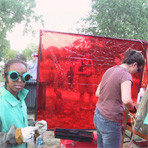 Afro-Cuban art and drumming performances, welding demos, a creative
invention exhibit, a make-your-own-t-shirt studio, fire dancing, live MC’s from
Hope’s Art of the MC, free ice cream and tons more. Don’t forget to stop by the
Artist’s Yard Sale where you can snap up deals on useful wares such as art
supplies, books, and original artwork, or simply bring a picnic and set up camp
for some great people watching. If anything, tonight is the perfect opportunity to get your friends and
fam some hands-on art time doing something that truly embodies the term
"independent arts".
6-9pm, Bancroft Meadows Park, 42nd & Bloomington,
South Minneapolis, Free
SPECIAL
EVENT
Aquatennial Torchlight Parade
Make an
appearance at this annual tradition, now in its 69th year, tonight
on Hennepin Ave. Join the tank-topped and flip-flopped masses as they line the street in
anticipation of this grand event, which will play off the theme, "Always There,
Through the Generations", an homage to the 150th b-day of our fair state. Many
would agree that summer in MN is synonymous with baseball, so who better to
Grand Marshall the parade than the Minnesota Twins? Representing the past will be
Twin’s great, Tony Olivia and representing the future will be the feisty
youngsters of the T.C. Bears, Minnesota Twins RBI and Rookie League Programs.
Show up early to secure a primo viewing location because you definitely won’t
want to miss the long cavalcade of sparkling floats and energetic performers –
all honoring our lovely land of 10,000 lakes. The parade starts at the Basilica
and ends at 5th and Hennepin.
8:30pm-10:30pm,
Hennepin Ave, Downtown Minneapolis, Free
DANCE
9 x 22 Dance Lab
Every 4th
Wednesday of the month, the Bryant Lake Bowl is taken over by grace,
experimentation and exploration. Named after the dimensions of the BLB’s small
stage, 9 x 22
Dance Lab features three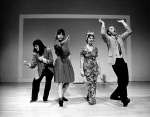 choreographers of various style and skill level each month. Get an up close and personal view
into the world of choreography as curator Laurie Van Wieren takes you on a journey through
each piece, giving the audience and choreographer alike the opportunity to react
and delve into the meaning of each individual work. Known as a place where pros
and newbies alike can present their latest work in an informal setting and
receive valuable feedback, 9 x 22 Dance Lab is the perfect Wednesday night
destination for those who have always wondered where inspiration for this
amazing art form comes from. Featuring SUPERGROUP, Judith Howard, and Charles
Campbell.
7:30pm, Bryant Lake Bowl Theater, Lake & Bryant Ave,
Uptown, $6-$10 (pay what you can)


