Tag: art

  • The Nester

    In an effort to seek out and engage multiple voices and viewpoints from the local arts community, we occasionally will present on The Thousandth Word postings by "Vicious Guests" — that is, writings by various artists, curators, guest critics, journalists, art experts, art lovers, and other essential members of the arts community who have a story to tell. Michael Fallon presented the first "Vicious Guest" piece, by Gabriel Combs, last month.

    Brennan Vance is an artist that lives and works in Minneapolis.

    — Andy Sturdevant


    "Where there is the stink of shit, there is a smell of being." –Antonin Artaud

    Part One

    IN THE LATE 1950’s, the Educational Testing Service (ETS) achieved rapid success when its brainchild, the Standardized Aptitude Test (SAT), was suddenly demanded by more than 25 percent of America’s high schools. This success forced the ETS to move its main offices from a cramped but lovely brownstone in downtown Princeton, New Jersey to a gaudy corporate office park in one of the town’s surrounding suburbs. My grandfather was one of the few dozen employees who had to pack up his office downtown and move outward over the sprawl of ’50s suburbia, watching his colleagues mutate from a handful of familiar faces into a few hundred nameless strangers. Regardless, the expanded ETS established itself as the nation’s premier institution in the effort to "standardize" America’s youth.

    Not long after the migration to the new building, the first of the Nests appeared in the third-floor men’s bathroom. My grandfather, sitting at his desk just down the hall from the lavatory in question, recalled the befuddled expression upon a male colleague’s face when returning from there. The colleague, nearly inarticulate, struggled to describe his sighting of a structure built of toilet paper inside the bowl of the bathroom’s only stall, atop of which someone had shat. My grandfather and his coworker shared a look of curious disgust, but both quickly returned to their paperwork and dismissed the incident as a one-off prank.

    But a few days later, the same structure reappeared. Then again, a week later. And again, ten days thereafter. At report of the fourth and fifth sightings, enough gossip had spread throughout the third floor that curiosity in the male employees finally peaked. By the time my grandfather could make it to the bathroom to behold this mysterious and perverse object, a small crowd had already gathered. Men had convened by the sinks, stifling giggles about the smell, attempting to maintain their professional demeanor while making playful accusations as to who had committed the act. Being a man of discretion, my grandfather decided he wanted no part in this puerile spectacle and turned to leave. But someone at the door clutched his elbow, whispering, "No, you need to see this."

    Pushing back the aluminum stall door, my grandfather peered towards the head, cautious. The bowl was full, nearly to the seat, with toilet paper that had absorbed the bowl’s water, forming a thick, pack-like papier-mâché. The sheets had been laid one-by-one in a concentric pattern, spiraling endlessly around the interior of the porcelain oval and thrusting upward into a mountainous structure. At the formation’s peak was a perfectly circular impression, not carved from the structure as an afterthought, but masterfully assembled as part of the intended design. In this hollowed-out crown, a pristine heap of human shit rested, deposited precisely as not to smudge any of the structure’s snow-white surface. The shit coiled into a serpentine conical shape, as though dispensed from a soft-serve ice cream machine. Under the glow of the ceiling spotlight, it glistened.

    My grandfather shuddered with a mixture of awe and abhorrence, as if he had happened upon the work of an ingenious serial killer who precisely and beautifully arranged the carved bodies of his victims. But he couldn’t turn away, standing there fixated by the object’s gruesome beauty and absurd lunacy. Morbid curiosity having been satisfied, the other men finally returned to their offices, but not before giving the indescribable objects a name, Nests, and the supposed madman a clever moniker, the Nester. My grandfather was the last one out, disturbed both by what he had seen, and perhaps more so by the empathy he felt.

    Over the following weeks, as the third-floor offices continued to achieve skyrocketing SAT sales, so too continued the anonymous work of the Nester. Sensing the situation was rapidly escalating out of their control, the professionals of the third floor at first hoped that their passive resolve would lead to the problem finding its own solution. They decided against defecting from their native bathroom — escaping to the second floor merely to piss would be letting this terrorist succeed in his quest for chaos. But after nearly three months of random yet persistent Nester strikes, the tension between coworkers finally snapped. Paranoia flooded the third-floor offices like an oil tanker spill. Harsh glances shot through doorways, accusatory mutterings bounced off cubicle walls, condemnatory thoughts stewed everywhere. Men were hesitant even to be seen near the Nester’s bathroom, so as to avoid the suspicions of their colleagues.

    At last, nearly at wit’s end, they finally took their concerns to the top: Human Resources. The case was heard, a resolution was made: an investigation was to be conducted. During open building hours, a security officer was to be vigilant in the bathroom at all times. A logbook was to be kept. Individuals would be summoned for questioning. The maintenance staff (those unfortunate souls who had to shovel out each Nest and repair any damage to the plumbing system) gave a collective sigh of relief. Everyone was eager to aid in the capture of this shit-mongering anarchist.

    My grandfather, again refusing to partake in this juvenile spectacle, curiously observed what insecurity the Nester had inspired in the otherwise conservative, confident and civil professionals of the ETS. Only hours after the resolution was announced building-wide, my grandfather entered alone into the third-floor bathroom and found what was to be the last Nest ever built. He gasped as he strode into the stall, and stared once again into the strangely illuminated porcelain bowl. Looking over his shoulder, he took a few curious steps closer.

    Hovering there over the bowl, my grandfather felt an insatiable curiosity seize him like an obsessive-compulsive tic. Succumbing to the urge, my grandfather extended his hand in the direction of the black, horseshoe-shaped seat. He just had to know. Quivering, he pressed his palm softly on the plastic.

    It was still warm.
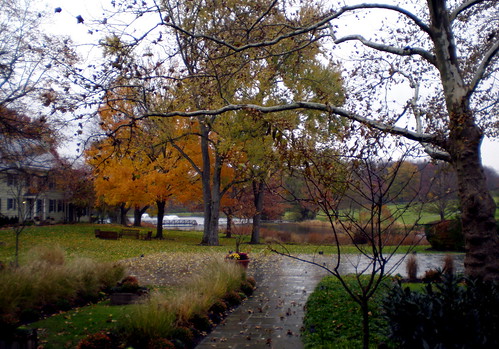
    Above: ETS’s corporate campus in Princeton, New Jersey. Photo by Mike Skliar.

    Part Two

    THE NESTER’S TRUE IDENTITY was never discovered. The risk of public reproach and humiliation likely became too strong. The investigation ended as soon as it began and life amongst the flummoxed professionals returned to normal. The situation was soon reconstituted as office lore that could, without fail, conjure a hearty laugh. The Nester quickly became Princeton, New Jersey’s best party joke.

    But now, fifty years later, I share this story out of love, not irony, judgment or for the purposes of a good chuckle. I share my grandfather’s forbidden curiosity. If it had been myself in that just vacated bathroom, poring over that final mound of paper and shit, I would have touched that seat as well. We have the
    unfortunate tendency to chalk up the uncouth behavior of lunatics as inhuman, beyond our moral sympathies. Rarely do we take the opportunity to express empathy and explore the motivations that lead to their extreme actions-motivations that tend, alas, to be lacking in more conventional artistic endeavors.

    For me, an artist who struggles to find sincerity in what I feel is an egregiously masturbatory arts community, the Nester’s tale affords an unexpected source of inspiration. In contrast to the excessively self-conscious, contrived, Jerome hero-pimping, gallery culture-obsessed status quo that plagues the Minneapolis art scene, the Nester’s habits provide a guide for a more authentic approach towards creativity. If we allow ourselves to see them as creative gestures, these Nests are a shining example of how we can cure ourselves of the disease of "artiness" and the thumb-up-each-other’s-asses culture that seems to follow art everywhere it goes. If the inhibiting quality of art is the curse, then I feel the Nester’s disturbed yet earnest approach towards creative statement is the spell-breaker.

    Though the Nests successfully transcend normative art practice, they also fit tidily into our prevailing definition of art: (1) They had a clear aesthetic— note the precise and painstaking effort in their construction; close attention is paid to concerns of composition, color, form, craft. (2) They constituted a performance—a routine was repeated ritualistically; the relentless disruptive nature of this ritual made clear that these Nests were meant to say something. (3) They were constructed for a desired audience—the Nester most likely imagined his colleagues needed a wake-up call of sorts; he chose to rattle his audience through a mix of dismay and perplexing beauty, forcing issues of anal-fecal psychology and paranoia that corporate office environments rarely encounter. (4) The Nests made a social statement–presenting his shit in a regal, pristine manner, the Nester possibly intended to subvert the pompous attitudes present in his office culture by forcing his viewers to confront a human reality that somehow causes us so much shame and embarrassment.

    Artists have done themselves a great disservice in needlessly construing creative expression into the larger-than-life mythologies, brainwashing doctrines and pseudo-political advertisements that comprise the clusterfuck that art is today. We’ve created a framework for art that warps our hearts and minds into believing that art requires authority (galleries, museums, academia); precepts (formal aesthetics, airtight intellectualism); and high culture (icons, award ceremonies, magazines). We’ve convinced ourselves that art is an austere discipline and not the boundless, soul-searching siphon that can dredge out our deepest and most authentic creative desires. Unfortunately, art is just as much about popularity, ego, money, class, idolatry and condescending intellectualism as it is about using modes of creativity to purely and earnestly explore ourselves and our relationship to the universe. In fact, I feel art is rarely used at all for the latter.

    Ideological powerhouses such as Dada or Fluxus (to name only a few of many counter-cultural, "anti-artiness" movements) have attempted to counteract problems of bourgeois convention and sterile traditionalism in art. But these types of ideologies simply aim to redefine the culture, the space and the vocabulary of art practice/critique and not to radically subvert these inherent problems by stepping outside of the larger art context; this is merely rearranging chairs at the same table. We’ve trapped ourselves in a box that may allow mobility within its walls, but makes it damn near impossible to share our creative impulses outside the heartbreaking realities of a terribly defective art world.

    The Nester succeeded in truly subverting the accepted contexts of artistic creation by refusing to acknowledge or engage such contexts. Sure, he showed some recognizable aesthetic concerns in creating his Nests, but never did he try to peddle them as art, nor did he invite consideration of them as works of art. In fact, the opposite occurred; most viewers thought that they’d stumbled upon the irrational dealings of a perverted lunatic. The Nester used creative means to construct something poignant and oddly beautiful outside accepted artistic boundaries. The bathroom was not a gallery, the viewers were not critics; there was no didactic above the toilet explaining in plain language what the artist intended. There were no critical blog posts written about it (until this one, half a century later). Photographic documentation was not preserved in hopes of revisiting these Nests in a retrospective exhibit in the Walker’s Target Gallery.

    Undoubtedly, these Nests satisfied a neurotic urge as much as a creative one. But the Nester did succeed in engaging the problems of his community and letting loose some wild irrationality within himself. What is more pure, more human than that? Let us take that sort of model as a springboard for our own creative practice, while removing ourselves from that crippling context of art which, in all honesty, has very little do with creativity.

    Please don’t get me wrong: I’m not suggesting that people go clog some toilets to proclaim their creativity. Rather, I am suggesting that we draw from the Nester’s example the conviction that we can and must treat our own creativity with the dignity it deserves. We need to stop making art that relies upon a toxic art world, to stop making art that tries to find a way into Artforum, and instead finds a way into the deeply transformative creative passion that burns in each of us.

    Being artists in Minneapolis, and not New York, Los Angeles or Berlin, we have an especially unique opportunity. Few artists I know actually profit from their creative endeavors, in fact most of them even stretch themselves thin financially just to be able to create and share their work. There’s little money for artists here. Barely any. So few of us actually rely on our personal art endeavors as a form of income that commercial viability should seem inconsequential to this community. If this is the case, if we have no financial obligations for tolerating this quasi-bourgeois scene we’ve created for ourselves, why do we all strive so hard to conform to it? Since most of us are losing money on this deal anyway, why do we not reevaluate our artistic motivations and radically transform how we approach creativity.

    I suggest we ask ourselves some new questions. What do we want to get out of life, out of art? How can I use the latter as a means to achieve the former? We should attempt to create from a place where these types of question guide us, while refusing to indulge an arts scene that is, for lack of better term, shit to begin with.

    To Frank.
  • One Day, One Night, Saturday's Alright

    AMONG THE GREAT unanswerable questions that haunt our city is this one: Why is there a giant, crappy K-Mart superstore sitting in the middle of Nicollet Avenue?

    For a city that is second-to-none in making catastrophic urban planning blunders, surely the decision in the late-‘70s to plop down a strip mall in the middle of one of the city’s most-used thoroughfares ranks as one of the most nearsighted. It has essentially created two different Nicollet Avenues in south Minneapolis: the fun Nicollet Avenue north of Lake Street that is full of bubble tea, brownstones, MCAD students and Asian fusion restaurants; and the crappy Nicollet Avenue south of Lake Street, where you go to drop off U-Haul trucks and test drive your new car tires to find out how well they deal with potholes.

    It’s on the latter Nicollet Avenue that Art Of This Gallery is located. While I shouldn’t write the neighborhood off as completely charmless – the Mexican place across the street isn’t bad, and there’s a great little vintage shop next door – the stretch of Nicollet Avenue the gallery is located on at 35th Street is pretty featureless. It’s a lot of vacant lots and generic mid-century beige boxes. Of course, it’s these sorts of unremarkable neighborhoods that afford the best opportunities for imaginative use of space – before the 1970s and 1980s, the Warehouse District was a gritty, post-industrial nowhere, and before the 1990s, Northeast Minneapolis was a sleepy, vaguely ethnic enclave with some terrifying corner bars and some very charming churches. Both these areas were full of pretty cheap, open, modest spaces that gave young emerging artists and curators room to try anything they could think of. Perhaps this slice of the southside, choked off from the cosmopolitan delights of Eat Street by bad urban planning, will spur similar practices in this decade. That’s how these things work. The practice of making contemporary art is so informed by real estate that they probably ought to teach land-use regulation in art school right between color theory and Joseph Beuys appreciation seminar.

    Art Of This, a sort of odd name choice I always assumed must be a tribute to Peggy Guggenheim’s Art Of This Century, was started a few years ago near Powderhorn Park by a few local artists, and recently relocated to its present Kingfield location. Art Of This is, like the neighborhood in which it sits, modest – a storefront, a few hundred square-feet of open space, a basement with a bar and a small movie screen. But it’s hard for me to think of any gallery space in the Twin Cities that has so consistently in recent years devoted itself so wholeheartedly to recklessly passionate all-over-the-map programming. Perhaps the word "reckless" gives short shrift to the obvious planning that goes into each show, but every show I’ve seen there since the beginning of the year has been at the very least thought-provoking, and at best totally thrilling and strange and confounding in a way that makes me feel like I’m not quite living my life to it’s full potential, if that’s not, um, overstating the case too terribly.

    Even the shows that don’t completely work (I wasn’t a big fan of the Jo Jackson/Chris Johansen exhibition, for example) aren’t for lack of trying. Art Of This succeeds largely, I think, because whatever is happening in the space is always about the artist – the gallery is very neutral and unadorned, completely blank and with no architectural or design-related distractions, but it’s small enough to impose potentially-interesting logistical restrictions. Some contemporary art spaces, especially located in reclaimed buildings, can either give the artist a lot of leeway in providing interesting distractions to play off of, like odd fixtures or textures. Others are large enough in scale to impart a kind of monumental quality to work that may not totally deserve it. Art Of This provides neither of these qualities, physically. It’s the classic "clean, well-lighted place," as the art critic Dave Hickey memorably named his 1960s-era Texas gallery.

    This summer, the gallery has been using the space to positive effect to forgo standard multi-week programming in a series of what they’re calling One Nighters, a series of one-night-only openings that blend visual art, performance, video and anything else the artist brings to the table. There’s something appealingly ephemeral about this sort of undertaking, and maybe even a wry little dig at gallery-going conventions – who goes to shows after the opening night anyway? Like the Ramones used to say about their setlist, if you don’t like one song, you just have to wait around for two minutes and there’ll be a new one. You don’t like a One Nighter, there’ll be a completely new one soon enough. And regardless of whether or not you like it, you’ll certainly be moved to consider your values as they relate to art, which is something a worthwhile exhibition, large or small, will always do.

    Case in point: I wandered into Golden Energy, Heartland/Hardland‘s recent One Nighter performance-cum-thrift-shop-freakout, and after ten minutes felt half like a confounded old man (I believe my esteemed Vicious Circle colleague Michael Fallon had a similar reaction to their work recently), and half like it was time for me to strip down to caveman underwear and go running through Kingfield yelling lines from Wild in the Streets at the top of my lungs. How many recent art openings can you say that for? We can debate in the comments below whether inducing complete sensory overload is a valid aesthetic technique or not, but that night at least, I was sold.

    There’s several more planned for the rest of the summer and fall, including this upcoming Saturday night, August 16. A small group of Minneapolitans and Madisonians calling themselves the Rotarians Society, who seem to position themselves somewhere on the ideological spectrum between Mad Men and the International Order of Friendly Raccoons on The Honeymooners, will be making a presentation about a project they’ve been working on called "Tate Fabrication." It begins promptly at 7:30pm, and seating is limited.

  • The New Dada

    Part the first — History Is the Past


    History is something that happens to other people. -Anonymous


    WELCOME STUDENTS. I’d like to begin today’s seminar with a pop quiz. (No groaning, people!) Please take out your Bluebooks and answer the following two-part question:

    1. Identify the following historical era: In the early years of a century, at the end of a long era of prosperity, there occurred a contentious generational baton-pass between an older, tradition-minded generation (often called the "Civic Generation," but also sometimes the "Greatest Generation"), to a younger generation noted for being insecure, disillusioned, and "lost." That new century’s dreams for continued prosperity and peace had been ended by a brutal war that, while at first very popular, was later deemed the deceitful, wool-pulling act of a reactionary leadership bent on preserving a dying world order. The resulting atmosphere of destruction, death, disappointment, and demoralization defined the history of an entire generation.

    2. Identify the movement that was birthed of this era, and describe its location and surrounding circumstances: Out of the era’s despair and dismay, a group of young artists and writers gathered in a place of refuge and began venting their anger at the times in the best way they knew how: through art. Making use of new communications technologies (which often became a subject of the work), the loosely linked group took to questioning the meaning, and subverting the value, of what had been held sacred by the generations previous. The resulting art was often obtuse and insensible, but it also captured the underground anger of an age and shocked an otherwise apathetic public.

    Everyone got your answers? Good, let’s check em.

    Question 1: This era occurred circa 1916-1923, and is sometimes dubbed the years of the "Lost Generation." The war was World War I — a.k.a., the Great War — and the reactionary leaders were the last, blind rulers of the old Empires of the 19th century.

    Question 2: The place of artistic refuge was Zurich, Switzerland; the recent communications breakthrough was the rapid expansion of cheap printing methods on newsprint, and the art movement came to be called dada.


    (A little bit of dada from back in the doo-dah…)


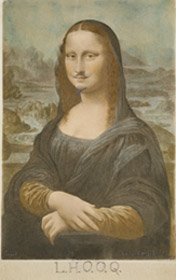
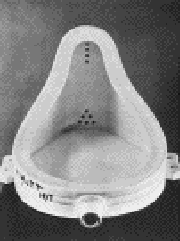
    Dada, the 20th century’s greatest and perhaps earliest art movement primarily intended to shock the established order, was birthed of war and its aftermath. Dadaist artists and poets, who comprised a wide range of styles and approaches — such that it’s difficult to identify any single dada style — were connected via a sense of protest and discontent and by their use of mild obscenities, scatological humor, obscure visual puns, nonsensical language experiments and imagery, and blasé gestures. (Think Marcel Duchamp’s Mona Lisa moustache, called properly "L.H.O.O.Q." (1919), or his flat-footedly presented urinal called "Fountain"). (Note: The title "L.H.O.O.Q." is a wry and baudy pun in French, because read aloud it makes a sentence, "Elle a chaud au cul," which, translated, means, "She has heat in the arse." )


    The group’s primary goal, then, embraced by young artists around the world and across the ages, was to outrage and repel the public (read: the established elders of the time). Today, history suggests the dada movement is key to understanding the sense of meaninglessness of the post-War era.


    Part the second — History Is the Present


    History is the present. That’s why every generation writes it anew. But what most people think of as history is its end product, myth. -E.L. Doctorow


    OF COURSE, AS WITH ALL GOOD HISTORY LESSONS, I suggest there’s also a second, alternate, partial-credit answer possible to today’s pop-quiz.

    That is, the advanced students among you might have noticed that another era also fits the historical description above. Just substitute, for instance, in your answer to question 1: the Iraq War for World War I; the Bushies for the great old oligarchs; the malaise of now and the current generation for that of the early 20th century’s "lost generation" — et viola, what’s old is new again! (The only question that remains is with the impending death of older, newsprint-based information systems where can one find a movement of artists seeking a place of refuge from all the turmoil today and a method to express their discontent?)

    But you don’t have to take my word alone on this connection between then and now. Other commenters have suggested that the current conditions are similar to what created dada. Tyler Green, for example, reviewed a retrospective of dada at the National Gallery in 2006, and wrote: "[Dada] is a celebration of the power artists have to portray horrors, as well as a celebration of the voice they have in condemning the circumstances that produced those horrors. On view in Washington at a time when our nation is questioning the Bush administration’s conduct before and during war in Iraq, it is a rare — very rare — instance of an exhibition at our National Gallery of Art bumping up against the news of the day."

    Certainly, there has been lively activity among political-minded artists in recent years. The 2006 Whitney Biennial was filled with young artists venting a variety of grievances through artistic gesture. (It’s a personal hypothesis of mine that this show’s curators — Philippe Vergne and Chrissy Iles — had hoped to evoke the energy and subversive qualities of dada in their curatorial choices; as to whether they succeeded in any way, well, I’ll discuss that in a moment…) Even well-established artists — such as Mel Chin (in recent sculptural objects suggest makeshift humvee armor, for instance), Jenny Holzer (in recent paintings based on declassified government documents related to the Iraq War), and Siah Armajani (in a recent public monument that conflated Fallujah with Guernica) — have gotten the political bug of late.

    As Enrique Chagoya said in a recent issue of Art in America dedicated to political art, "I have noticed many more artists dealing with political content since 9/11. The world changed after that ominous day, and the topics are more urgent and global than ever. Just look at how many issues are making us anxious in our country and in the world: political and economic corruption, global warming and our dependency on fossil fuels, the rise of xenophobia, ethic cleansing wars, discrimination toward women and minorities, etc. — the list could be really long."


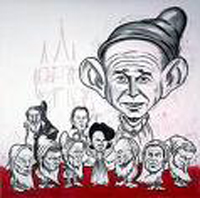
    (Recent image of the Bush administration by Enique Chagoya)


    Still, the current generation’s political art up till now has been greatly lacking in something, some je ne sais quoi, or magic if you will, to capture a wider audience. Mostly it’s been dull and dry and deadpan and rote, lacking spark and inspiration — or the power to spark imagination in others (and thus win them to a cause). In my view, it’s
    a great disappointment that in this day and age of so much to protest and rail against, there appears to be no movement among artists that has any of the depth and quality to upset, confuse, question, and subvert like the dada movement of old.

    So where, I ask you students of history, is the New Dada?


    Part the third — Nothing Is More Delightful Than to Confuse and Upset People


    Nothing is more delightful than to confuse and upset people. People one doesn’t like. What’s the use of giving them explanations that are merely food for curiosity? The truth is that people love nothing but themselves and their little possessions, their income, their dog. -Tristan Tzara

    SO, THUS BEMUSED AND DISTRACTED by my own ideas and preoccupations about the current times and its art, a few weeks ago I received a cryptic, and unsolicited, email from a sender I did not know — a guy named Alex, who apparently is a regular a reader of some of my more obscure web-based arts writing. The email included only a weblink, and no other explanation; no text, no greeting, nothing at all of an explicatory nature. Of course, being an incurably curious sort — especially when it comes to online offers and links of uncertain provenance — despite my better judgment I clicked through the message to the other side. And what I found was an inscrutably low-tech-looking, clunkily typographed webpage with, again, no explanation beyond another link, this time to a pdf file of a document written by one Alexander Lane — thus solving one mystery (who this "Alex" was), but leading to another (what did this guy want?).

    The essay, which, frankly, could have been written by a failing high school sophomore English student (who had never learned how not to use passive voice), was a rundown of a recent panel discussion at the New Museum in New York, "Net Aesthetics 2.0," which examined the phenomenon of something called "Internet art."

    Now, I consider myself a fairly open-minded guy, and somewhat youthful and accepting despite my advancing years. But like any busy contributor to the national economy, between you and me, I was getting peeved by all of Alex’s obfuscation and crypticism. Still, against my better nature, I dug in and tried to make sense of this essay, painfully as it was written (and painfully as it was presented), and as a result I learned the following nugget of gold: Apparently, a lot of artists are using the Internet to make art these days.

    Also, I learned, many of these artists often participate in something called "surfing clubs." I had never heard of such, but, according to another essay I dug up (via a couple of testy email exchanges with Cryptic Alex), a surfing club, as defined by Marcin Ramocki, is, apparently, a communal blog, usually run by artists, that may have several characteristics. These characteristics include: an internal dialectical and syntactical logic and narrative flow; a disregard for audience expectations in favor of its own infrastructure; a tendency toward semiotic and conceptual "games"; a connection to the act of "surfing" the Internet to find random materials and referents; a self-awareness of certain cultural codes inherent to the internet (among the most common being "Minimalism," "slacker art," "rock music," "youth culture," "programming language," "cute, extremely ugly eighties colors," "beauty for beauty’s sake," "porn,"and "video games"); and a tendency to evolve and change quickly (as per the culture of the Internet).

    The art done on these blogs is, I learned, at first glance rather off-putting and inaccessible, perhaps much in the same way Dadaist art and poetry must have been for the older generation of the time. It is raw, blatantly youthful, full of noisy, and seemingly random, disjointed imagery and gestures. The work denies any clear interpretation, and it is often repulsive and off-putting, confusing, upsetting, and resistant to clear explanation — just as Tristan Tzara may have preferred.

    In fact, it seems, the extra-credit answer to question 2 could be that the Internet is both the place of artistic refuge and the recent communications breakthrough for artists seeking to vent their frustrated modern spleen. And, it seems possible, that in this Internet Art movement we may well have the perfect analogue to the greatest protest art movement of the last century. That is, this cadre of young, disparate, unaffiliated, and angry online artists, who have found on the Internet a place to voice their underground discontent, may be the earliest wave of the New Dada.

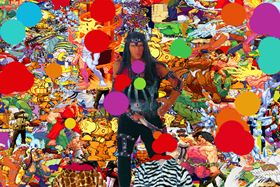
    (Sample of art from a "surfing club" weblog based in Minnesota)


    The part in which I AM conclusory (or, at best, partially conclusive) — CHoosing Instead to Provide Links (with explanation) to Samples of This Internet Art Phenomenon (both local and national), So You Can Judge for Yourself

    WITHOUT FURTHER FUSS, below I present some practitioners of the obscure art of the Internet — from "surfing clubs" both national and local — for you to make your own call (as to whether these measure up to dada, or else seem something altogether different).


    National Surfing Clubs/Internet Art Groups

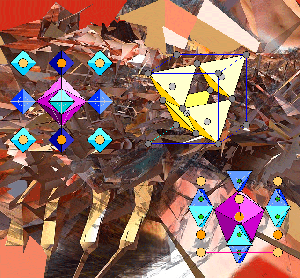
    (Art by Tom Moody, from Nasty Nets)


    Nasty Nets — Apparently this group began posting in 2006, and is credited with being first to coalesce a growing movement of artists interested in online blog art. The community is relatively small, comprised of artists, curators, and activists/bloggers pushing boundaries (in the manner of Dadaists of old), and in fact questioning whether what they’re doing is art at all.

    Loshadka — has existed since May 2007. The first post on the site, extant during that first month, says everything about the site’s aesthetic and m. o.:


    PWN

    everything

    billy you’re gay right?
    admin;

    2 Comments »

    1.
    yesyesyesyesyes
    Comment by billy — June 22, 2007 @ 7:41 am

    2.
    gives me a pwnr thinkin about it
    Comment by prawnstar — June 28, 2007 @ 5:08 am


    Spirit Surfers — A much more clean, graphic-designy, and less frenetic site than some of its competitors, Spirit Surfers is no less obscure and obtuse – nor biting and incisive — for all the cleanliness. One of my favorite posts on this site is Tim Skirvin’s documentation of the building and destruction of a scale lego model of a Star Destroyer (from Star Wars). It’s particularly poignant that the Star Destroyer was destroyed by a cat named Tulip.

    Double Happiness — Click on this site, and you get a frenetic soundtrack mixture of sounds from 1980s uber-soundtrack of Top Gun, hip hop music, and a 1-800 infomercial. Plus, chocolate chip cookies with bacon
    , Google maps to pizza places in Poughkeepsie, and an image of the Hulk having standing sex with Wonder Woman.


    (Another sample of Internet Art)

    Heck, with Internet Art, you just never know what sort of visions you’ll see — nor how obscure and obtuse they will be.


    Minnesota-based Surfing Clubs/Internet Art Groups

    Here are some locally-based attempts at Internet Art, though (*please note) it is often difficult to know precisely where such "surfing clubs" are located. This is because the artists often eschew their very identity, including their names, locus, origins, and so on, when they get involved with such sites.

    The Shitizens — A mishmash of local artists hip to national Internet Art trends, this site also seems to be one of several efforts by a local artist/blogger named Hollingsworth J. McTubbins. Check out the silly whip fetishism in this fun post.

    Hardland/Heartland — A group of artists who seem to do a bit of everything (including old analogue art exhibitions, online stuff, zines, happenings, poetry, manifesta — and everything in between); you probably shouldn’t miss whatever they’ve got hidden up their proverbials.

    Hooliganship — These guys really seem to love, for whatever reason, the whole "cute, extremely ugly eighties colors" thing. The organization of the site is a bit tighter, and less fluid, than some of the others of their ilk, but still the artists involved seem just as dedicated to the eccentrically obtuse aesthetic as any of them.

    Lords of Apathy — These guys seem particularly sex-deprived, but then what do I know about modern art anyway?

    And, well, you get the picture. I’d love to hear if you come across any more of these artistic endeavors — both national and local — or if you have any opinions about this art. Submit any thoughts, comments, suggestions (as long as they’re not cryptic) to the comment section at the end of this post.

  • Dried Blood and Dandelion Wine

    (Header image credit: "Conversation with Death" by Gabriel Combs)

    In an effort to seek out and engage multiple voices and viewpoints from the local arts community, I will present in my space on The Thousandth Word occasional postings by “Vicious Guests” — that is, writings by various artists, curators, guest critics, journalists, art experts, art lovers, and other essential members of the arts community who have a story to tell. The first such story, by 36-year-old local artist Gabriel Combs, is presented here. If you would like to propose a future “Vicious Guest” post, please contact me (Michael Fallon) at: thousandthword(at)gmail(dot)com.


    Dried Blood and Dandelion Wine

    By Gabriel Combs, a "Vicious Guest" (edited by Michael Fallon)

    I GOT THIS IDEA THE OTHER DAY to do dandelion paintings.

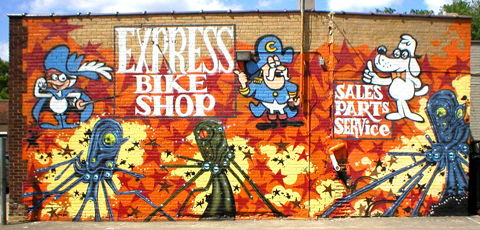
    I was waiting for the 21 bus to go from the K-Mart on Lake Street to Selby and Dale in Saint Paul, where I was supposed to pick up a check for a recently completed mural for a bike shop. Before leaving the studio, and probably because I’d been overly stressed of late about having no actual living space, I’d smoked a couple of onies of low-grade pot I’d found on the street (stuffed in the celophane of a cigarette pack). It had been raining while the sun was shining when I found the pot, and I witnessed a rainbow that day that no one else seemed to notice. The pot helps push back most things – other than art ideas, that is. It’s better medicine than most prescriptions.

    On the 21 bus, freshly high and scrubbed clean (as clean as one can get from a bucket; I hadn’t had a shower or bath in two months), I felt I was trapped in a video game, grabbing the subconscious shade of green through plastic. I pushed the bar on the back door of the bus and heard a Nintendo sound effect of achievement. The dandelion is a common wildflower that goes through an easily recognized metamorphosis. It’s often called a weed, though not by the National Audubon Society. It came to mind that I could do a mural-sized aerosol painting of a dandelion after it had turned white and was about to blow away in the wind so it could start its cycle over again. I’d find a decaying area of our lofted city and do several aerosol paintings on the big vertical walls of some urban squat or another. It would be a good job for me and would add something to the landscape.


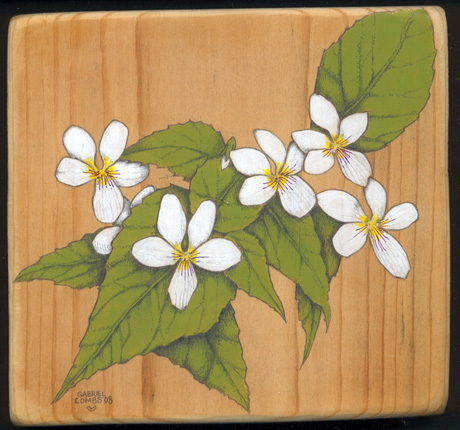
    ("Canada Violets" by Gabriel Combs)


    In early June, I was sitting in the downtown Minneapolis jail for getting drunk and making a fool out of myself. I was being a little too honest and a little too much of an ass – probably from all of my recent despair and loneliness – so I ended up in a cell upstairs at the jail. I’d chosen isolation away from the general population of the jail, a choice that gave me only an hour of cell-free time a day. The cell hadn’t been cleaned, and some other man’s "possessions" were still there on the eating table, caked with his dried blood. I started sporadically reading a book of Sherlock Holmes stories and taking in my surroundings. In one spot there were some clumps of human hair. In another, there were some letters and jail papers. The last man appeared to have been reading and writing in Spanish, but he was listed as African-American on the papers. He was a couple years younger than I.

    I was wearing orange jail clothes. Since I didn’t know how long I’d be stuck in jail, I stashed two stub pencils in the only place they weren’t likely to look for them – in a space between a bar and the round seat at the table. This was the only design flaw in the cell, from a security standpoint. Everything else was simple geometrical shapes with no lips, overhangs, or ledges that could conceal as much as a cigarette. Nothing could conceal my mind and ideas, however. I had been analyzing the psychology of the cops – which was the good one, which was the bad – just from their passing words of weather small talk. Saving the pencils meant I could draw if I ended up in jail very long. I was interested in reading though, and I wished they’d switch the library cart. I must’ve seen three or four other carts on the handcuffed walk to this room. Last time, they had To Kill A Mockingbird, and I would’ve liked to read that.


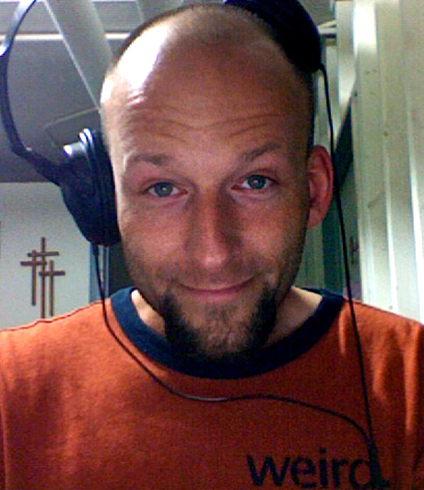
    (Photo of Gabriel Combs taken on the night of one of his recent arrests.)


    Two baloney sandwiches and an apple came in a brown paper sack, but I couldn’t eat them because my jaw was fucked up from the night I mouthed back to three guys. They beat me up and then called the cops on me, probably because I got back on my feet and produced a pair of bolt cutters to chase them off. They left out the fact that they’d beaten me up to the cops. On my first day out of jail, I didn’t get my studio keys or wallet back for four days. They blamed a computer problem for this. The internal affairs forms were useless when they had a faulty machine. I also had a sketchbook that was in police custody from when I got arrested in May. They were throwing the book at me, I guess, ignoring their profit margin on crack dealers, because the sketchbook was supposedly a graffiti book. It isn’t graffiti, of course, but there was no arguing.

    On the outside, pressed to figure out how to get back to making art, I thought fast and remembered the owners were remodeling an apartment in the building where I rented my basement studio, so I could ask them for a key to copy. I then went to the hardware store to get keys remade. The guy looked pretty sideways at me, and I couldn’t blame him. I was unshaven and full of anxiety about the repercussions of going to jail twice within a few weeks. I was fortunate to find this place and rent it for just $190 a month, considering I had an eviction on my record. I’d found the space on Craigslist, and the owners seemed OK with the idea of my using it as a painting studio. I sometimes slept in the studio when I couldn’t find a friend’s couch to sleep on. It was pretty clean for a basement, though there were plenty of spiders, silverfish, and common house centipedes.

    I had a $30.25 check that the jail gave me, which their bank wouldn’t cash because I didn’t have an ID (it was in the wallet they couldn’t give back to me). Luckily, my regular bank is downtown, and they know me, so, despite my embarrassment, I went there to get my money. All was well now, because I had enough paint and art supplies for the time being – plus, some food, my phone, a toilet, and time to think.

    I stayed sober through most of June just because I couldn’t deal with the panic attacks. On the Internet at the library, with new keys in my pocket but still no identity, I saw a friend who was driving by, and I had a coke with him and talked about my situation. As an artist, he’d been close to the same situation on occasion. I told him I was feeling scarred and rejected by society, especially since I’d spent my entire life trying to make things better in the world by making art.

    A week later, I was back drinking, fighti
    ng the sense of impending doom because of the upcoming court date. I was probably facing further incarceration for long enough that I’d lose my studio, humble as it was. The studio isn’t a home, but it’s a place to make art and to keep my art stuff and slight private personal possessions safe. I’m burning the candle at both ends now – at least until I say to hell with it and throw the every damned thing in the fire.

    I sometimes can’t take the worrying about it all. So what, I think, if I lose two drawing tables, an easel, and various stashes of oil and latex paint? So what if I lose some sentimental objects I’ve kept safe from harm for thirty years? I’ve always lived just as chaotic a life as this, but it’s been securely enveloped in a series of locked doors. I’ve always had an official address, and I’ve embraced the trappings of society – a job, a social life, and a bank account that was refreshed every two weeks but always remained a few dollars short at month’s end. There were no frills, just a one-room efficiency, a bike for transport (until it got totaled), no cell phone but a stripped down landline, a little net access, and a bit of liquor every now and then.

    It wasn’t much, but it was more than I have now. Still, I make more art now.

    When I lost my last job two-and-a-half years ago and I was facing financial desolation despite a frugal lifestyle, to make ends meet I copied an idea from printmaking. I would make a complete series of paintings – each similar to, but different from, each other – whenever I had squeezed some paint and the colors and ideas were out and fresh. I’ve sold over 400 pieces of art since – for prices ranging from 99 cents up to, recently, just over four hundred dollars (my all-time record). I take endless dumpster-diving missions, and I pick up any scraps of real wood I can find, along with scrap-metal from discarded appliances. The tools for getting this metal – including the bolt cutters that maybe saved my life – resulted in a charge of "intent to commit a crime." One of my favorite things to find is dresser drawers, the dove-tailed kind especially — although they usually need to be sanded first. I make my paintings ready-to-hang by stringing them with copper wire from dead appliance motors and screws from everything I find. Masonite scraps, familiar to many artists, are another valuble find.

    Two-and-a-half years ago I simply decided to make a run at this artist thing, and I’ve been inventing it – rather than just talking about it – ever since. My old friends see me coming and treat me like I’m homeless, which I am, but at least I am fulfilling my dream. They’ve got the same old complaints, and I have as much apprehension about coming into contact with them as they do me. I also have callouses turned to blisters and back again from the struggle to make art, which they don’t.

    They’ll go back to their homes, partners, and steady incomes. They’ll drive to a nice vacation spot this summer, while either I sit in jail or I toil away at my art, working toward selling my one thousandth piece.

    (Bike shop mural by Gabriel Combs)

    At the bike shop on Selby and Dale in Saint Paul, the shop owner paid me more than the price we agreed upon, saying "I can’t possibly pay you enough for your time." The bike shop folk loved the mural, and so did the area residents, which is a confidence builder for someone who, despite the shit he talks, basically feels like everything he paints is shit.

    If I lose the last few items I own and my studio, I’ll remain as vital as before – if not more so – as that’s what this thing is. Being an artist is not a fashion statement that passes with the season; it’s not something that hinges on gas prices. Art is something that combines with the culture to establish roots that intertwine with and break up the cement of society so the wildflowers can grow.

    Art breaks up a false foundation and replaces it with dirt. I wonder if it’s really possible to make dandelion wine…


    Editor’s note, 7/12 — Gabriel Combs posted this message on a community forum board (in regards to his court hearing on 7/10):
    evidence proved sufficent for the
    judge. free, no fine, but if i get in trouble again i’ll go down for
    *all three* arrests. thanks for all the good energy i received going
    through this. i still have to do some work with the restoritive justice
    center, and get my black book out of jail along with some other
    possessions. the turtle thats in that book must be really pissed by
    now, wondering how come i have’nt busted him out yet.

  • Serious Art

    Here’s a truism of modern art: Every new generation of emerging young artists is convinced it will reinvent the culture. And, strangely enough, they all go about this reinvention pretty much in the same way: By making a bunch of meaningless noise. Think of Tristan Tzara here, and his poems that go nowhere. Think of Jackson Pollock’s random splotches and drips. Think of the long and ambling filmic experiments of Warhol’s Factory. It’s not surprising, then, that the upcoming show “Serious Art” at First Amendment Arts of work by young artists Michael Gaughan and the group that calls itself Hardland/Heartland traffics in the realm of the bizarre and incongruous. Even the PR material are in on the act, abecedarianally describing the show as, “absurd, barbaric, concerning, despicable, entertaining, flippant, gregarious, half-baked, intellectual, jarring, knowledgeable, ludicrous, mellifluous, non-sensical, outlandish, perplexing, quadrangular, ridiculous, subversive, typical, urban, verbose, whimsical, xeroxed, yawn, zzzzzzzzzzzzzzzzzzzzzzzzzzz boring.” What this means, likely, is a colorful and head-scratching aggregation of colorful drawings, collages, paintings, installations, hand-made books, music, and fashions.

    The Serious Art opening party, which includes musical performances by Gaughan and members of Hardland/Heartland, takes place on Saturday, July 12, 7 – 10 pm. Admission is free. First Amendment Art is at 1101 Stinson Blvd (in basement rooms A & B) in Northeast Minneapolis.

  • The Paintings Have Been Drinking (Not Me)

    Travel back with me, if you will for just a moment, to those happy, halcyon days of the year 2001. Oh, what a time to be a young American artist it was!

    The world waited breathlessly for the final bombshell in Matthew Barney’s Cremaster film cycle to drop (spoiler: Gary Gilmore did it!), and your hipper, richer, better-looking friends were cashing in their trust funds and moving en masse to some sort of Italian-speaking suburb of Manhattan called Williamsburg. Fashionable young men were rapidly perfecting the art of ironic facial hair, and their female counterparts had finally harnessed the unstoppable power of the knee-high boots/vintage skirt/wrinkled Mogwai t-shirt combination.

    Oh, what a time to be a young American artist it was!

    Amidst all of this excitement and bustle, your humble correspondent was an apple-cheeked 21-year old BFA candidate in Louisville, Kentucky, learning the twins arts of oil painting and quoting Foucault in the course of casual conversation (the latter being a skill set I still have yet to master). Like the rest of my newly-legal art school peers, I typically spent one or two Friday nights a month out viewing challenging video installations and half-baked performance art in the upstairs loft of a decrepit Clay Street warehouse or a little Frankfort Avenue storefront (the former being a favorite target of the Louisville Metro Police Department for repeatedly violating local noise ordinances).

    What was it that brought me out to those openings, weekend after weekend? Was it the thrill of newness? The excitement of being part of a community? The chance to hobnob with successful young emerging artists? The opportunity to meet prominent local gallery owners eager to display my crappy paintings of cigarette butts?

    Well, sort of. But not entirely. Truthfully, I was there mostly because these spaces usually served free Falls City Beer at their openings. I expect many of my peers were also there for the same reason.

    Now of course this isn’t the only reason I went to art openings in college. I was there to see some art, too. But if you’ve been involved in the art world in any capacity, you know this scenario well. It’s not Louisville, but maybe it’s Northeast Minneapolis, maybe it’s Lowertown St. Paul, maybe it’s Chelsea, maybe it’s whatever the arts quarter of your college town was called; but wherever it is, you know it.

    This is one of the first magical lessons of college: dude, they totally have free beer at art openings.

    If it’s not free beer, it’s free wine. And if you’re lucky, it’s free liquor. If it’s not free, it’s cheap. And if it’s not cheap, your friend working the bar will slip you a cup anyway. The point is, if you have an artsy bent and like to have a few drinks in you, there’s no better place to be than an opening on a Friday night. Openings and alcohol go hand-in-hand, like Gilbert and George, like Andy and Edie, like Jeff Koons and the feeling of wanting to punch Jeff Koons in the face.

    I began thinking about this after some rumblings in a few art blogs last month following the arrest of New York gallery owner Ruth Kalb during an opening at her gallery in the East Hamptons. The charge was violating liquor laws and entertaining without a license. Normally the goings-on of the Long Island art world have little interest to me personally, but this is really a universal theme. How many art openings have I been to that have been shut down by the cops for this very reason? Not a lot, but certainly a notable handful.

    Moreover, how many openings have I been to where someone got a little too drunk on the house wine and wanted to start a fight outside about the relative merits of shooting digital vs. Super-8? Or where the gallery owners had to kick someone out for sloshing their drinks a little too close to the artwork? Or where the aftermath of the night’s festivities was a catastrophic scene of discarded beer bottles, crumpled plastic cups and sticky spots on the floor? More than a few.

    Then again, there have been the many times when I’ve thanked the booze-soaked ghost of Jackson Pollock that I had a little cup of wine to look at the art with. Openings can be awkward, stifling affairs. People go to openings to see art, sure, but they also go for a multitude of non-art related reasons.

    People go to openings to see who else will be there. People are there to impress their friends and confound their rivals.

    People are clustered in unnatural little conversational groups – you’re spending a half-hour talking to that sculptor whose name you never remember, an adjunct professor you once had, your younger brother’s fiancée and that girl that works at the co-op, all at the same time. None of them have met each other. They all expect introductions.

    People are nervous. People want to look good because they may be photographed by The Minneapoline and get their pictures on the Internet. People want to look good because their ex-girlfriends will be there with their new, hotter boyfriends.

    Galleries can be stuffy and overheated in the summer and drafty in the winter, and a lot of the time it’s impossible to even see the art, much less form a coherent opinion about it because people are so crowded around it. If there is music, the music is loud and you have to shout over it. Even worse, the music may quite possibly be "experimental" in nature.

    You often have to seem smarter and/or cleverer than you may actually be.

    Needless to say, a little beer or wine in this context can be a godsend.

    It gives you something to look busy with if you’re by yourself, and gives you a little bit of impetus to talk to people with whom you might not otherwise think of much to talk about. It’s a scientifically-established principle that alcohol makes you smarter, or barring that, at least more confident about seeming smarter. Standing in front of a canvas with a little cup of wine in your hand feels right. It feels natural.

    From the gallery’s perspective, it can be helpful, too. It draws people in, for one. Healthy attendance numbers look good on those grant applications. If it’s a commercial gallery, a little libation gets people in the mood to buy. If the alcohol is donated, the gallery can even cover some additional costs in the process. No huge profit margins, obviously, but enough to make it worthwhile.

    I talked to the directors of a few Minneapolis galleries to get their take on the subject. Was serving alcohol at openings worth it? The general consensus, of course, was a qualified "yes." But within that consensus, there were a range of opinions. Everyone I spoke to wished to stay anonymous, for obvious reasons, so you’ll have to use your imaginations.

    There are some legal issues involved in serving alcohol, of course. Obviously, you can’t sell it without a license. Actually, legally, you can’t really even serve it without an entertainment license (you can read all the statutes yourself to your heart’s delight here on the city’s website). What you can do, though, is suggest a donation, and so this is the way most of the gallery
    owners I spoke to went about things. A lot of it really seems to be semantics – most galleries you’ll go to will have a posted sign asking for donations, and that covers some of the liability, anyway. Everyone was careful to stress that they run a clean house as far as underage boozing, outdoor drinking and slopped-out jerkiness are concerned. Young-looking types get carded, people aren’t permitted to wander around the street outside waving their beer bottles, and troublemakers get the boot. This generally keeps police and city inspectors away. As one owner pointed out, the cost of a license is a piddling little amount compared to attorney’s fees. Another even went so far as to regular hire off-duty cops to keep everything nice and legit for larger, more heavily-attended openings.

    Legal issues aside, there are also the behavioral and trash disposal issues. Most owners here, as well, had specific strategies for making sure people have fun without landing everyone in the drunk tank or the Broken Bottle Fight Injuries Ward at HCMC. Openings occur for a specific and set amount of time, end before the neighbors start complaining, and filter out collectively to neighborhood bars afterwards so people have somewhere to go and finish the conversations they started. Everyone I spoke to recycles bottles and plastic.

    Basically, all gallery heads reported back to me that their crowds, though they do love the beer and wine, are pretty reasonable, intelligent people that aren’t there to bankrupt the gallery, start fistfights or urinate Phillips vodka on the video art set-ups. Mostly they come to see art, meet up with friends, and generally have a good experience. The setbacks are far outweighed by the benefits. An art opening is, in the end, about the art – if it was just about boozing, all of our local gallery runners would be nightclub entrepreneurs instead. This is as it should be. Because let’s face it: Minneapolis, to her eternal credit, has much better galleries than it does nightclubs.

    So enjoy your beer and/or art this weekend, and just make sure the empty bottle makes its way to the recycling bin.

  • Augustus F. Sherman: Ellis Island Portraits, 1905 – 1920

    A revealing and fascinating set of images snapped by an untrained eye have been making the rounds through museums around the country and finally makes a stop at the Minnesota History Center starting July 4. "Augustus F. Sherman: Ellis Island Portraits, 1905 – 1920", a photographic series of newly arrived immigrants taken by an Ellis Island registry clerk gives viewers a compelling perspective on turn-of-the-century America and the diversification that has become a staple of our country’s past.

    The exhibit runs through September 21. Tickets are $10 for adults, $8 for seniors and college students and $5 for children aged 6 – 17. The cost is free for children under 5 and MHS members. The museum is open 10 a.m. to 8 p.m. Tuesdays, 10 a.m. to 5 p.m. Wednesdays through Saturdays, noon to 5 p.m. Sundays and 10 a.m. to 5 p.m. on holidays and Mondays through Labor Day. The Minnesota History Center is located at 345 W. Kellogg Blvd. in St. Paul. For more information, visit www.mnhs.org.

  • Oh Man, Look at Those Cavemen Go!

    On my first pass through the 2008 Carnegie International, the massive, just-mounted edition of the 112-year-old international art survey that runs through next January at the Carnegie Museum of Art in Pittsburgh, I eighty-percent hated the show. It started with the forced theme, "Life on Mars"–the first time ever that the show has had a separate title and theme–which seemed just a tad mundane for this event. Then it went to the somewhat annoying tagline questions listed on the marketing materials associated with the exhibition: Are we alone in the universe? Do aliens exist? Or are we, ourselves, the strangers in our own world? Is there life on other planets? (What’s this got to do with art?) And finally it passed to the bulk of the art itself–works by 40 artists from 17 countries–which had little to do with any of the upfront hoohah.

    But the hate pretty much stayed upfront. Some time before I finished my first walk-through two hours before it’d begun, I realized my initial impression was misguided. Beyond the buzz and spin, I came to appreciate that there were some eccentrically personal, intriguingly revealing, and beautifully intimate moments in this show. And so, once I much more slowly and purposefully passed through the exhibition a second time, I ended up eighty-percent loving the work in it. Having come to understand what these artists were quietly attempting to do–and not what the curator wanted us to think they were doing–I was occasionally enraptured and captivated by these artists’ eccentric visions and their personal and intimate practices.

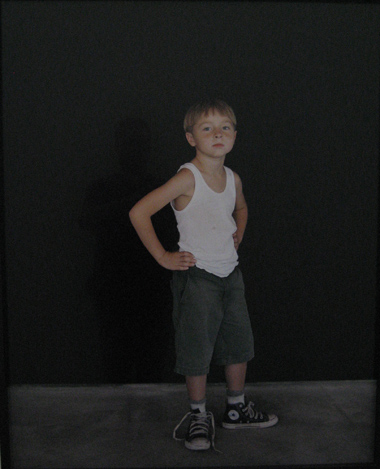
    It’s tough to pinpoint a single moment or work of art that changed my outlook on the International, my response being more of a dawning revelation than anything else, but there’s no better artist in the show that I can think to mention than Los Angeles-based photographer/filmmaker Sharon Lockhart. Her work, a series of revealing, full-length portraits of children, each between 8 and perhaps 12 years of age, was tucked in a narrow hallway back behind an elevator and near the Carnegie Museum’s film auditorium. These were titled as a composite body of work Pine Flat Portrait Studio (2005), after the community where the kids lived and which the artist had visited to make the work. The setting for each photo was spare–black backdrop, gray concrete floor–but something about the positioning of the subject–pictorially, emotionally, and narratively–lent volumes of meaning to each image. These kids were rich characters, worldly wise and emotionally mature far beyond what they should have been. Their expressions, so raw and open, unguarded and direct in confronting our gaze, not only nearly leapt from the picture plane to grab the viewer but revealed personality types that reflected our adult awareness of the world back on us. Each of these images is much the same in presentation, yet each is wholly unique. Just to describe three examples, in one a Tom-boyish dark-haired girl stands, mouth set firm, hands folded onto her hips as if she’s just finished washing the dishes, in a slightly amused, just-show-me-the-money sort of pose. It’s the look of the girlfriend you’ve just disappointed for the umpteenth time. Another boy stands with a worried look, one uncertain hand resting on hip like a college professor’s, and one leg forward and slightly twisted in the eternally ennui-laden pose of the artist (the paint stains on his baggy jeans are a give-away). Still another, smaller boy with short hair and gritted lips, his wiry muscles showing through his tank top, has mounted his hands defiantly on his hips as if to dare you to knock him off. Something you said must have really pissed this guy off.


    Lockhart’s images are all fascinating character studies, but the value of this work is not in seeing kids reflect the souls of troubled adults. Rather, it is in several secondary realizations. The fact that these are kids is always, meaningfully apparent beyond their surface poses. One of the tough boxer kid’s high top sneakers are untied, for example, revealing the childlike vulnerability and innocence beyond his defiance in an almost heartbreaking way. The cynical girl–hard-set as her look is–still walks in summertime bare feet and wears a shirt with a sparkly butterfly embroidered on front. These sweet, sometimes sad, always intimate portraits reveal worlds to us about the spirit of our times–the ways a troubled culture can affect even the youngest among us–and give us pause to think about our own lives. (Other portraits include a tense young blonde girl in a "Freedom" t-shirt, a precocious boy with a fake tattoo on his art that someone drew in ballpoint pen, and another boy in camo-shorts with a toy rifle hoisted over his head). We end up questioning, while looking at these kids, and because these are kids, in a deep way something about our own vulnerabilities and susceptibilities in a world gone slightly mad. This is like finding catharsis from the Depression-era Little Rascals, if those kids had been, in keeping with our own modern depression, slightly bipolar rather than full of madcap mischief.

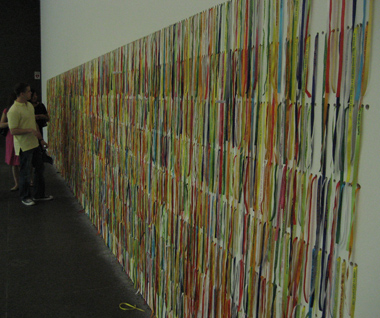
    The best work in the 2008 Carnegie International reflects intimate, eccentric, often uncertain moments even as it hints at deeper and vast problems in the society. This is art of the resigned, pitiful shoulder-shrug variety, not of the noisy (and perhaps useless) hammer-thud variety–such as what was on display in such blustery recent shows as, say, the 2006 Whitney Biennial. Many of the personal and intimate gestures of these artists are designed, in fact, to spill out over from the private mind into a public realm, perhaps like pond ripples or a zen butterfly’s wings flapping or other suitable metaphor. Rivane Neuenschwander’s "I Wish Your Wish" (2003), for instance, is a mass of brightly colored, foot-long ribbons stuffed into rows of holes that have been drilled into the gallery wall. On each ribbon is printed a wish, such as, "I WISH I COULD CHANGE SOMETHING." Visitors are invited to take a ribbon and asked to wear the ribbon on a wrist until the object falls apart, at which point (according to a Brazilian tradition) the wish will come true. Visitors are also asked to write down a new wish on a slip of paper and push it into the vacated hole that held the ribbon. The new suggestions will be printed on future ribbons. In this way, via a perfect circle of wistfulness and want, the people will speak their concerns, and then other people will make the sacrifice necessary to make those wishes come true. There’s something sadly beautiful about such a self-feeding circle of wish, even though, of course, it’s an entirely useless gesture in practical terms. Still, futile as it likely is, it seems just as good as any other system anyone’s ever devised to change the world. Same goes with Mark Bradford’s act, in a seeming homage to the futile efforts of New Orleans flood victims to find assistance from someone, anyone willing to help, of placing the words "HELP US" on the roof of the Carnegie Museum–presumably so the Martians can send us succor.


    That’s the thing about "Life on Mars." The work in it tends toward the useless, beaten up, or pathetic, and it is beautiful because of these aspects. Rosemarie Trockel makes useless, mock sleek-modernist furniture out of ceramic materials that, while inviting in look, is in reality hard and heavy and unpractical–a mockery of a person’s desire for comfort. Manfred Pernice creates a half-finished public works presentation of a mock highway br
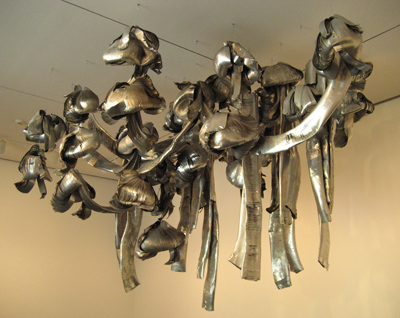
    idge project, replete with half-painted vitrines, a highway diorama strewn with empty coke cans, pathetic photocopies haphazardly tacked to the wall, and a video monitor that is stuck on the start screen. Marisa Merz has made a lumbering, duct-system gone-awry, hanging sculpture out of pieces of old aluminum. It nearly fills a gallery space with a rough, hard-worn, and utterly useless beauty, looking like something pulled from the rubble of a collapsed modern high-rise. And Thomas Hirschhorn presents a survivalists’ grotto that has been created out of cardboard, packing tape, aluminum foil, and spraypaint seemingly by a group of twelve-year-olds.

    All of these things revel in their failed attempts to make something meaningful, useful, and helpful. Indeed, their very poignancy comes from the very failure of the human hand to make something worthwhile.


    There’s much more work in this show that, while not perfectly in keeping with my this theme of pathetic-but-beautiful human imperfection, is touching just for being somewhere between the small scale of human failure and the vast scale of preternaturally perfect. Vija Celmins’ small Night Sky paintings walk a line between uncomfortable human obsessiveness, and an absolute representation of the sublime abyss. Up close, the small touches and daubs of gray and off-gray paint on a blackish background fall apart into a tense battle with compulsion (each of these small works take multiple years to complete), while just a step or two away they seem perfectly realized visions of the ultimate beyond. Ranjani Shettar’s "Just a Bit More" (2006), meanwhile, is just as obsessive. Comprised of five net-like sheets of what look like green and blue beads connected by thread, on closer inspection these turn out to be hand-rolled and dyed daubs of beeswax the artist has fashioned herself. The surface effect is akin to seeing sea spray from a crashing ocean wave suspended in mid-air, but a viewer’s realization of the work the artist put into this evokes the harder, more humble notion of the common labors of humans to survive by hand fashioning tools like fishing nets. There are other instances of a human push-pull in this show: Haegue Yang’s beautiful geometric origami figures animated on a high-tech high-def computer screen to morph and merge into each other; Richard Wright’s massive gouache wall mural of a thousand directional triangle shapes spanning in curved grids from floor and onto ceiling; Richard Hughes’ strange wall painting of colors on top of each other that are then pulled back like torn wallpaper to reveal layers of color underneath in random patterns.


    The only down-note for me in the Carnegie International was the quality of the painters included in the show. Most of these five or six artists seemed, likely in keeping with the pathetic human quality of the rest of the show, to be very unsuccessful at their medium. Their painting in general lacked any real expressive craft, approached in a senselessly slapdash way–like a candy-color Francis Bacon, or a less self-aware Richard Pettibon, or a glorified children’s book painter. And, of these, only Paul Thek’s work was variously poetic and rigorous enough to overcome its lack of technical skill. Still, in the end, loving eighty percent of any show is certainly about as much as you can expect, especially when it’s a show as varied, as heavily marketed, and as highly anticipated as the Carnegie International.


    To learn more about what the curator for the Carnegie International was thinking as he organized the show, follow this link to "The Man Who Fell to Pittsburgh," a Q&A discussion between Douglas Fogle and Michael Fallon.


  • If you don't like this blog then you are a BOOBIE

    photo by Jessica Hegland,

    Hair by Jon Richards. Make up by Leilani Baker, Make up Artist Goddess.
    Wardrobe from Melly’s Closet of Phases: Dress-BADGLEY MISCHKA-purchased at the DAYTON’S 2day warehouse sale during my lunch break at KSTP TV. Price for me to know and you not! Shoes: don’t have a clue because someone stole them from me when I took them off to dance at some random club downtown.

    I am so sick and tired of people making fun of people they assume do not have an appreciation or sophistication for the FINER THINGS IN LIFE. I have had the great PRIVILEGE of traveling to places most people only dream of, eating food that makes my mouth feel like it’s having a big old party in there, and best of all, seeing beautiful ARTWORK every day. So what is my problem?

    I am sorting through a lot of "things" right now that are valuable and deciding what I should do with them. I am in no hurry to sell anything, but I am in a hurry to make sure the right people are given some of the great privilege that I have been given all of my life so I can put the same smile on their faces that they have put on mine.

    So when I recently met with "X" and expressed my frustration and confusion over starting this process, I was given that "look" of disgust when I was talking to her about ART. Apparently, being the unsophisticated person that I am, I was not using proper "Art Speak" while I was talking.

    Who made this random person the "Chief of Art Speak"? I will tell you who did. SHE did. And since I am now "Chief of the things that I have been blessed with," that gives me the right to say that she can go take a flying leap, and I hope that her perfect hair looks the same wet as when it’s dry. I am guessing it probably looks more along the lines of something a bunch of rats would enjoy calling home.

    Insult after insult, I sat there and took it like a trooper, and then I got in my car (paid for with my own money) and went home and looked around my house, appreciating even more the beautiful ART that my husband and I have.

    As to the kind of ART that we enjoy looking at every day, it consists mostly of My Mother’s artistic genius.

    The so-called valuable pieces that Mrs. "Snotty Butt" would love to impress her Clients with will be given to people in my life who DESERVE the choice as to whether or not they want to hang the work on their walls or sell it on E-Bay.

    I found it beyond comprehension that I was being frowned on because I was not B.S.ing my way with small talk and essentially saying what comes natural to me. In other words, I was being Melinda Jacobs, the person who wakes up the same way every day with hair that is starting to gray from wasting MY VALUABLE time on phony baloneys.

    So, where the heck am I going with this?

    Remember, blogging — thank god — is still one of the few ways that we can ALL express the person who we really are without a certain code of conduct. That is why I love it. In fact, I am passionate about it! It’s ART to ME.

    What is beautiful to you, what wakes you up in the morning and gets your heart pumping, your energy going… that feeling of Passion is truly your choice. And if someone tries to diminish that or hurt you, just because they think they know more than you or are better than you, here is my suggestion:

    Next time you get "the look" for being authentic and being yourself, look that person straight in the eye and say "Boobies." It has done a lot for me in being able to weed out the phonies and reel in some treasures of pure gold.

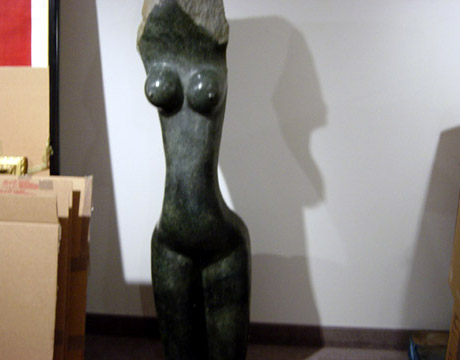
    Enjoy the picture of this statue that I have sitting in my office. That is a piece of ART that may have dollar signs on it, but to me it’s not only a metaphor of my life but a priceless one in so many ways.

    By the way, it’s for sale.
    (I am kidding.)

    —Melinda Jacobs

  • Nurses, diesels and douchiness

    (Pictured. Douching device (not to size). May also be used for urea replacement in your diesel. Read below).

    Do me a favor. Take the snarky tone of my blog (is it? oh, is it? please!) and put it aside for a minute. I mean create an Obama and the Preacher (aka bigot) wall between my blog and what I am about to say.

    I might have been wrong about diesels.

    Someone acutally convinced me last night that the new 60mpg Jetta will never be for weasels. I now think I agree.

    In fact, I am not totally certain that stateside diesels will pollute the air any more than their non-diesel counterparts. I also realize you could compellingly prove that their emissions are as pure as Michelle Obama’s intentions. And I like the Mercedes Bluetec. I also like nurses, and talking to them in the hospital when I am not really sick.

    Yet I continue to be dogged by the MIT alumnis (my Dad and others) who say that you really cannot completely teach an old dog new tricks. Proof of this is Audi/VW’s DSG. It was touted as better than Ferrari’s paddle-shifting 18 months ago and now it is being panned as more clunky than cool.

    Even if they really have made a bijon freis hunt like a bloodhound why do you need to replace the urea in a new diesel every 10,000 miles?

    Urea. Right. Sounds like piss.

    Finally you can take ALL the empirical evidence in the world to show me that Diesels are 100% weasel-free and I would counter with this elegant observation:

    Can you see Maserati or Ferrari in the same sentence as "diesel"?

    If I must live and write in pedestrian fashion, as I frequently do, then I want a bike and a normally aspirated Benz.

    This is life, I am sure, as nature intends.