Year: 2005

  • The Decaying System

    teeth (Custom).jpg
    There are a few gaps in our health coverage.

    I went to the dentist this morning for my semi-annual cleaning and check up. Sometimes I go 8 or 9 months between, mostly because of my schedule and his. But I always go eventually, and sooner, rather than later. I’m glad I can afford it.

    I had a quack dentist when I was a kid, and he made things a lot worse for me in my middle age. Luckily, the dentist I have now is excellent, although not cheap. I estimate it’s cost me about $20,000 over the last 15 years to repair the damage wrought by too many sweet cereals and that earlier charlatan.

    Just last night I was reading the latest New Yorker. Among the dearth of Target ads this week was a story by Malcolm Gladwell, one of my favorite New Yorker writers, and the author of The Tipping Point and this year’s Blink.

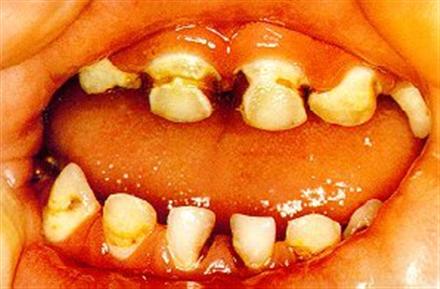
    The story starts with a clinical, albeit horrid, description of the beginning of tooth decay, they segues into a description of our health care system in the United States. Gladwell does a particularly good job of scrubbing away the faulty logic that those who would keep things as they are use to maintain their advantage.

    Read it. Then floss. Then think about the sort of country we live in where the executive of the local health care giant makes over $100 million per year, and over 40 million Americans have no chance to protect themselves from physical and financial ruin under our current system.

    The brush and floss again to see if you can get the taste out of your mouth.

  • Down Pat

    futbol (Custom).jpg
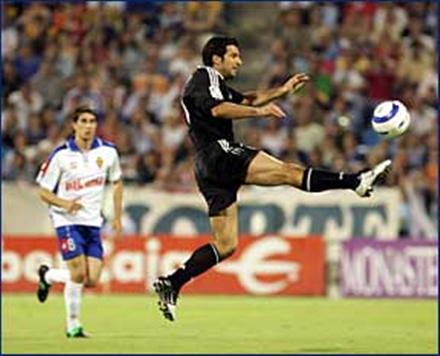
    THIS is football

    Everyone who’s got a brain, and there are damn few of us left, is not even that upset about Pat Robertson’s calling for the assasination of Hugo Chavez. That sort of boorish behavior by Americans is pretty old news, after all.

    In case you haven’t been paying attention, Robertson and his ilk are all for the revival of that odd mixture of overt theocrats and covert murderers who once dominated Latin American politics.

    Yup, let’s overthrow the legally elected government of Venezuela. After all, it worked so well for us in Chile. (Remember Pinochet? He’s the one now being tried for crimes against humanity.) And how about El Salvador, where our boys murdered Bishop Romero while he was saying mass, raped and murdered a van full of American nuns, and dragged 12 Jesuit priests out of their beds one morning and shot them all in the head? All that in the name of putting a stop to godless Communism (today, read godless Islam.)

    Of course, most of the victims were Catholic Christians, instead of the good ol’ American Evangelical Christians, so they probably had done something to deserve it, such as speaking out against the army’s murdering of the campesinos…or, even teaching them to read.

    But, I didn’t want to belabor this. What I did want to belabor is something I read about in the Sunday Strib sports section. This was a story about the assault of some American pro football players who pissed off the wrong Germans.

    It seems a bunch of American football players went into a Dusseldorf club, didn’t receive the adulation they are used to getting on First Avenue, spit on a bouncer, and left. To nobody’s surprise, except the Americans’, the Germans didn’t like this much and responded with clubs and various other weapons.

    Duh.

    I’ve spent some time in Germany. I’ve lived in Italy and Spain. And, if there’s one thing I’ve learned for certain, it’s that 98 percent of all American tourists walk around these countries as if they owned them. Most make no attempt to speak the language at all, not even to the point of learning that beer is cerveza and wine is vino. Or that please is por favor, per favore, or bitte. Not that hard.

    But, we’re used to being the big dogs with the dollars. It hasn’t sunk in yet that the Euro is galloping ahead of the dollar in value every day. This, thanks to our government’s assumption that we’re too big to actually pay our own way in the world and that everyone else will gladly lend us the money we’re too decadent to tax ourselves to pay for the Iraq war. When we act like the big shots we think we are, the home towners somehow resent that Americans don’t even seem to acknowledge that they aren’t in Kansas any more.

    In contrast, I’ve never been treated rudely in a foreign country. (Well, almost never. I have been to Paris.) But I can order beer in five languages and can carry on a conversation about football (the kind you actually play with your feet) in two and a half.

    Strangely, people seem to respond nicely when you are making an effort to understand them, instead of getting pissed off when they don’t undertand you.

    When you call yourself football players, or call for killing their president, they somehow find that rude. Go figure.

  • Istanbul, Turkey

    Annie, a student at Wheaton College, in front of the Blue Mosque in Istanbul, Turkey.

    By Annie Belz

  • Sweet Spot

    Stepping off the light-rail train at Minneapolis’ Midtown/Lake Street station, you’re surrounded by a menagerie of pastel glass panes, seemingly hovering in midair on the elevated platform. For a tiny second, it feels as though you’re exiting the famed El in Chicago, though this station is newer and tidier than any stop on the Loop—the pavement isn’t yet pocked with black chewing gum. Elevators and concrete stairwells dump riders onto a streetscape that is at first reminiscent of the Jersey turnpike, but varied urban life bustles just a few steps beyond the Hiawatha off-ramps. To the west, there’s the Midtown YWCA and a host of thrift stores, like Savers and the ReUse Center. To the east lies a cluster of ethnic restaurants and big box retailers.

    With the train came the expectation of change to this stretch of Lake Street, which has a sprawling, gritty feel. So far there’s not much evidence of upscaling, or even the addition of a newsstand. (Aren’t all train stops supposed to have newsstands?) In 2006, however, the Lake Street Reconstruction Project promises more greenery (already, trees and a grassy walkway have been added to the Hi-Lake shopping center), as well as attractive pedestrian light fixtures, all to improve the intersection’s curb appeal. Nevertheless, it’s hard to imagine this neighborhood becoming posh.

    On the contrary, this is a stubbornly practical, economically accessible place. Most of its shopping centers were planted in the 1950s and sixties and, despite various cosmetic improvements, look it. Everywhere, families are out acquiring the necessities of life. From the light rail, as well as the 21A bus line, mothers and children stream toward Target and Rainbow Foods. They cross vast parking lots, and pass Schooner’s Bar, before swooshing through automatic doors.

    What’s most unique about Hiawatha and Lake is the way in which its malls interplay with smaller storefronts and restaurants—not to mention the varied ethnic mix of patrons. From the Cub Foods parking lot, just across from the Target parking lot, you can see the rainbow-colored flag soaring above Patrick’s Cabaret, a longtime venue for performance artists of every stripe. Nearby, the East African Gift Shop and Grocery is stocked with injera bread as well as Laffy Taffy. And along 27th Avenue, lined up one after the other, there is La Casa de Samuel Mexican restaurant, Midori’s Floating World Café (a sushi and tea bar), Curves for Women, and Al Qudus Halal Meat and Grocery.

    Back at the train station, an African-American woman chases her daughters—both braided and pigtailed, one in her Girl Scout khakis—toward the platform. A teenager lugs his BMX bike up the stairs. An elderly Asian man, his canvas bag bursting with groceries, opts for the elevator. Within two minutes, north- and south-bound trains whisk them all away, depositing a new cast of eclectic Lake Street characters in their place.—Christy DeSmith

  • Show & Tell

    It’s hard to explain—it was just something I slid into,” said Andy Rempel. He was describing his job as a fashion stylist, which is akin to defining style itself. After all, what is style? Rempel offered an explanation. “I think of it as playing with ideas of what’s appropriate and expected,” he said. “You twist things, not to offend, but just to have fun. Maybe you have a gown that’s appropriately appointed with jewelry, and then the shoe is a little off. Maybe it’s the color or height, but it’s something to make the whole look a little awkward, uncomfortable—not normal.”

    His own ensemble on a recent steamy day was a good example. He had paired standard Gap cargo shorts with a cream-colored football jersey, notable for its Playboy logo, layered over a pale blue T-shirt. And his shoe—a louche version of a loafer from Dolce & Gabbana, in brown leather and denim patchwork, worn sans sock—did indeed make the outfit. It was an astute mix of upscale, average, and downmarket. Naturally, Rempel has his favorite boutiques, but he also loves thrift stores. His favorites are Everyday People, the Unique and Savers thrift stores in Columbia Heights, and the Goodwill in Roseville.

    Ultimately, Rempel said, style is a matter of fit, both with one’s personality and one’s body. “Especially here in the Midwest, women need to take a good look at their bodies and figure out what works.” He targeted ill-fitting bras as the most common fashion faux pas among women: “Ladies need to run, not walk, to the closest good lingerie department and get properly fitted!” In general, women buy clothing that’s too tight, but Rempel also sees slender types in baggy sweatshirts who “think tight clothing is sexual, which it doesn’t have to be.”

    As a tip to avoid potentially regrettable purchases, Rempel recommends getting opinions from other shoppers, not friends or sales clerks. “A friend doesn’t want to hurt your feelings, but strangers who aren’t trying to make a sale—they’ll tell you the truth.”

    There was one last, mystifying issue Rempel was able to clear up. Who pays full price? He smiled. “A lot more people than you think.”

    —Julie Caniglia

  • We're Holding Our Own

    The autumn moon looks too far away, an amber porch bulb draped in a tattered shroud of moths, all but a handful of stars faded into the weave. Buoyed up on the breath of the lake, frail whispers of wood smoke foretell the winter. Out on Superior the lights of a freighter ride the horizon.

    It’s disquieting the way those distant lights sometimes just wink out. One moment you’re tracking them, the next they’re gone—extinguished by a wave, by the arc of the earth, a trick of the eye. Cabin light thins out over the landscape. Ship lights simply disappear. “Damn it, Marlee, slow down,” Pete shouts, smacking his club of rolled-up newspaper hard into his palm.

    It’s obnoxious, actually, the way she plunges ahead like a twelve-year-old on a school picnic, bounding over ankle-breaking rocks in the dark as if this were a warm and sandy beach, disregarding the headlong cliff and the bone cold water below.

    “Hurry up,” she shouts back, skimming across the stones, a growing bundle of dried sticks cradled in her arms.

    Out beyond the sheltering curve of light from the cabin window, he’s feeling his way, each foot holding out for an oath of stability before committing to every new step.

    “Marlee, wait for me,” he shouts after he’s lost sight of her. “I don’t know this place well enough.”

    “I’m right down here, Pete,” she laughs, suddenly there, below. Her voice lingers above the tiny sparking of her lighter.

    “Hurry up, let’s get this fire going. I’m chilly.”

    Hand on foot, she guides him down a mossy rift in the rock face.

    Down here Superior thrums hard against her granite cup. Down here the bedrock flows in solid continuation of the waves. Down here the stone is smoother, forever giving itself to the water.

    In the week following the funeral, in the days of sheltering love, the shore stayed warm long after the sinking of the bloated August sun. It cradled their bodies while she wept, while he held her and tasted her tears, while embers burned to cinders and the lake eased away the hard edges of her sorrow.

    “You’d better treat my daughter right, Peter,” Marlee’s father said one translucent morning last spring when he still knew who Pete was, when he still recognized his own daughter.

    “Or I’ll climb out of this bed and kick your ass.”

    The two men shared a laugh. Pete knelt beside Carl, held his hand, and gave his promise.

    “Give me the newspaper,” she says, crouching over her little teepee of sticks, sparking the lighter beneath the cup of her hand.

    “I still remember the first time we came here,” he says, grinning, crouching down beside her, caressing her leg.

    “Give me the newspaper,” she says. “I’m cold.”

    “Have a sip of whiskey. It’ll warm you.” He presses his flask into her hand.

    Orange tendrils flicker around brittle black paper—a tiny storm rising under a canopy of twigs— then smolder and die.

    “More paper.” She drops her lighter at his feet. “Get it blazing.”

    “Take a drink. It’ll warm you up.”

    “That’s a dangerous myth,” she says, drinking, wiping her lips.

    Another miniature thunderstorm expires on the stone, despite high hopes and heroic blowing. Smoke disappears into the lake’s misty breath.

    “What really happens is your blood vessels dilate, and your heat escapes more quickly. You feel warmer only because all your body heat is right up at the surface.”

    Superior is awfully deep. The bottom is tiled with a thousand broken vessels. Some are still sinking into the shifting sand. One night they broke up on the rocks, or burned, or welcomed in the water. Then they went under like coffee cups in the sink. Some just disappeared. A few have never been found.

    The toothless mouth of night draws tight around the shore. Behind another tip of the flask, Pete peers up toward the cabin with its golden glowing window, bathtub, fireplace, big soft bed. The newspaper all burned up, the night growing damp and chill, Pete sparks the lighter against blackened bark again, again, then lays it to rest.

    “Let’s go back, Mar,” he says. “I don’t think this is turning out so well. I’m getting cold. We can make some coffee.”

    “We’ll warm each other up,” she whispers, turning a girl’s face to his and kissing his jaw. “I’m not ready to go back,” she says.

    Shirt and shoes in a damp little heap, Marlee lies stripped on the cold stone. Pete kneels beside her, laying his hands on her trembling body. Over the dark edge beside them, Superior pounds at the shore.

    “Treat my daughter right,” her dad had warned. Under different circumstances Pete would be pleased to oblige, but right now the rocks are cold and hard on the knees, and it’s beginning to drizzle.

    “I really don’t think this is going to work out, Mar.” His eyes are dry, beginning to burn. “Let’s go in.”

    “I just want a fire, baby.” She shivers, alone.

    “Let’s go back to the cabin.” He rises to his feet and offers his hand.

    “We’ll get a fire going in the fireplace. The bed is nice and soft. Come on, I’ll warm you up enough to last a lifetime.”

    She sits up, elbows on bare rock, grief darkening her face. “I’m not going back.” She’s crying now.

    “I need to be out here. Why can’t you give me that, Pete? Stay out here with me.”

    Marlee drops her head back over the edge and offers salt tears to the lake. The porch light moon is gone. Pete can’t see her face, but he can feel her body shudder.

    “I’m not sure this is going to work out, Mar,” he says beneath the hush, hush, hush of the lake.

    Sometimes there is no squall, no crashing waves. It just works its way silently in, and the cargo soaks it up. Nothing to notice except you’re riding a little bit lower. Nobody recognizes how serious it really is. Then something shifts, and Superior claims you, and you’re just another coffee cup at the bottom of the dishpan.

  • Fashion As It Happens

    Minnesota’s climate may not be conducive to driving Vespas, Stellas, Lambredas, and the like, but the local affection for geek-chic certainly is. That’s why Scooter Du, the annual parade and convention for vintage scooter enthusiasts, is such a happening affair. We crashed the party to get pointers on cultivating the look, and found inspiration in sleek, mostly suede, and very scooter-friendly footwear, as well as jackets blasting logos and patches. Buzzing around while we took it all in were the evening’s true stars: motorized splashes of powder blue, burnt orange, and mint green, laden with mirrors, accented with racing stripes, and lovingly coated with high-gloss wax.

  • Cabin For the Uncommon Man

    "Log cabins are a dime a dozen,” said Richard Olson, lighting up yet another Marlboro. “We looked at some of those. They were junk. They were put together by amateurs. Some of the logs had separated; you could see right through them. All these trees here, tip some of them on the side, and you’ve got a log home … logs, logs, logs.” A suggestion is put forth: Is a log home in the woods, well, redundant? “Yeah,” he agreed, clanking his spoon around in his coffee cup, “something like that.”

    Richard was sitting with his wife Debbie on the patio of their cabin in the woods, a couple of miles from Ely. This is certainly no nostalgic log structure, but rather a striking example of modernist simplicity and Scandinavian restraint. It’s actually a one-level ensemble of buildings: a garage and a two-part cabin, composed of a square and a rectangular form, all dressed in a very un-cabin-like blue-black stain. Situated across the patio from one side of the living-room end of the cabin is a white brick “unchimney,” or flueless outdoor fireplace—a design signature of the home’s architect, David Salmela.

    When the Olsons bought the cabin, on a wintry St. Patrick’s Day six months ago, they had never heard of Salmela, despite his international reputation and local celebrity. They certainly would not have considered themselves design aficionados. Nor were they necessarily the kind of buyers that Salmela and developer Brad Holmes, from Gilbert, Minnesota, had in mind. (Holmes has built sixteen of Salmela’s residential designs over the years, including Ravenwood, photographer Jim Brandenburg’s compound at the edge of the Boundary Waters Canoe Area Wilderness.) Yet Richard and Debbie Olson’s immediate attraction to the cabin speaks to the broad appeal and understated artistry of this simple, small, and modestly priced project.

    The Fergus Falls couple discovered the cabin while searching the Internet for a vacation home; it was the first of five to be completed in a development owned and planned by Holmes. Richard Olson drove over, had a look, and purchased it immediately. “I didn’t analyze it when I bought it. I just liked it,” he said. “When you drive up to this place, it says, ‘I’m separate and distinct from the surroundings.’ I like that it’s different. It’s not something everyone has.”

    Lake access is not something every cabin has, but it’s an amenity many second homeowners in Minnesota automatically associate with “cabin.” The Olsons, however, prefer their wooded seclusion. “We can drive out of here in any direction and be on the water. There’s water all over here,” Richard pointed out. “But if you’re on the water, you’re next to someone. It’s like living in an apartment. There’s no privacy.”

    Unlike the other cabins he looked at, Richard continued, this one is “solid, well-built. You could tell that the minute you walked in. The place is super insulated, with all the latest technology. Everything is done correctly, the way houses used to be built.” He also enjoys the novelty factor of Salmela’s architecture. “Everybody that comes in here says, ‘Wow.’ An old guy picked up my lawn mower the other day and said, ‘I had no idea this was down here. What is this?’ I had to explain it all to him. He just shook his head. He’d never seen anything like it. That’s what I like about it.” Built in 1995, Ravenwood is a cluster of living, working, and studio structures, which Salmela designed to accommodate the needs and desires of Brandenburg, arguably the country’s foremost living nature photographer. In the book Salmela Architect, published earlier this year, author Thomas Fisher describes this six-thousand-plus square-foot complex as “an ancient Scandinavian village, forgotten deep in Minnesota’s northwoods, as if the past had taken a quantum leap forward into the present.” After building Ravenwood, Holmes was inspired to take a somewhat entrepreneurial approach to residential development. He wanted to undertake a project in the Ely area that involved smaller, year-round homes—homes that would be designed by Salmela without input (or interference) from clients.

    “I wanted to enjoy building something with just me and David,” said Holmes. “The way he uses light with all of the windows, you feel like you’re outside among all those beautiful trees when you’re inside. David knows how to do that in every project.” Holmes purchased a wooded property outside of Ely and divided it into five seven- to nine-acre lots. He then planned to build the cabins one by one, in his spare time. He asked Salmela to design a low-profile dwelling that “looks like it’s been there in the woods for a hundred years,” he said. “Everybody wants those huge log cabins. I told him, ‘Let’s try something different.’” Salmela agreed. The architect drew up the cabin design, which totals fewer than a thousand square feet, and in exchange, Holmes built wardrobes and cabinetry for Salmela’s own home that are similar to those in the Ely cabins. The Olsons bought the prototype cabin for $195,000; a month later, a younger couple bought the second for $185,000 (it’s the same plan as the first, but flipped, and it has no built-in furniture or exterior stain).

    With its lap siding and a wood truss projecting from beneath the slightly peaked metal roof, the Olsons’ cabin recalls houses lined up along a picturesque seacoast in Norwegian travel brochures. The trio of structures—the garage and the two cabin components—were all built using fourteen-foot trusses. The garage is large enough to accommodate racks of canoes or a sauna, while the main living/dining/kitchen space is a modest fourteen by twenty-four feet. A wood-plank walkway connects the garage to the living space. Visible outside the floor-to-ceiling windows is the patio, with its pergola and unchimney. The other “wing” of the cabin is situated off the kitchen, where a long corridor links a series of simple, square rooms—sleeping quarters, bathroom, and laundry room.

    This compound-like arrangement is found in much grander manifestations throughout Salmela’s work, from Ravenwood to the planned community of Jackson Meadow, outside Marine on St. Croix (which Salmela designed in collaboration with the Minneapolis landscape architecture firm Coen & Partners). In his book, Fisher describes the arrangement of homes, garages, fences, and walkways in Jackson Meadow as “recalling the small yards of historic towns”—an effect present in his Ely cabin design, albeit on a much smaller scale.

    The cabin has other Salmela markers, as well, such as a string of square windows marching along the exterior of a long, narrow form, which is also found in the Jackson Meadow homes, the Wild Rice Restaurant near Bayport, Wisconsin, and at the Jones Farmstead near Nerstrand. Another characteristic is the blurred distinction between inside and out. The feeling of being outdoors while inside the home is such that the Olsons can watch fires in the unchimney from inside the cabin, as well as from the patio.

    While Salmela’s work has a distinctly modern feel, it’s far too traditional, despite being occasionally whimsical, to fall into the modernist camp. “This is what I perceive modernism to be today,” said Salmela, sitting in the office he keeps in his 1920s home on a hill in Duluth, surrounded by awards, publications, models, and drawings. “It’s the warmth of things you’re familiar with, like forms and materials, and the planning and efficient way a structure goes together. It doesn’t have to look super modern, like the minimalist things done to prove they’re really modern. I’m trying to use common sense about how something goes together. These cabins are so easy to build, so simple when you look at them on paper, that you can’t perceive there’s anything really unique about them.”

    The architect tore a length of tracing paper from a roll and started sketching squares and rectangles. “See, it doesn’t look spectacular,” he said, “and the chimney isn’t very high.” At twelve feet, unchimneys at the Ely cabins are shorter than the monumental versions at the Wild Rice Restaurant or the Golob-Freeman cabin, also known as “Two Black Sheds,” on Madeline Island. “But when you start to build, this becomes quite dynamic.” The forms, windows, and walls are both functional and visual devices, he adds. The metal roof, wood siding, and outdoor fireplace recall the vernacular of the northwoods. Salmela alludes to his own heritage in suggesting that the cabin “looks like 1960s Finland. It’s really a very pure, straightforward, mid-modernist era structure, with no pretension.”

    For Salmela and Holmes, the cabin is also an experiment in creating ready-made architecture. All a buyer needs to bring are the essentials of daily living: bedding and towels, groceries, kitchenware, clothes, sports gear. Included with the cabins are appliances and cabinets, a built-in couch (whose angled cushions, when flipped, make a guest bed), a wood dining table (the Olsons bought their own chairs), slate floors, and built-in beds and wardrobes. “Traditionally, cabins are a lot of work,” Salmela said. “Here, everything is already done for you, and in a more sophisticated way.” Of course, there’s also the added cachet of purchasing a cabin designed by a noted architect, one whose star continues to rise, without paying an architectural fee.

    And the wooded, lakeless setting? “Canoers don’t need to be on a lake, because if you’ve got your canoe, you can go anywhere you want,” Holmes says. “We figured not being on a lake wouldn’t be a problem.” Buyers of the cabins, Holmes and Salmela concur, would get out their boats every day, venture to a different lake to paddle, then return home to read, relax, work, and have a fire. These expectations imply a certain type of buyer, as well. “The concept, from my standpoint as a designer, was to create an affordable, environmentally sensitive, development, with a simple, modernist set of structures that satisfy the needs of people living outside the area, within a natural setting of woods—versus being on a lake—that becomes a statement in itself,” said Salmela.

    However, the five-cabin development, as originally envisioned, may not become fully realized. A few months ago, a man from the Twin Cities called Holmes about purchasing one of the lots. “I told him I’m not selling, because I’m doing five cabins in there,” Holmes says. But the caller was persistent. “So I threw out a ridiculous price and he didn’t blink an eye. I didn’t know what to do. I guess in the long run, money talks.” The lot’s buyer hasn’t decided whether or not he’ll construct a Salmela cabin. “It’s the lot on the far end,” says Holmes, implying that he minimized the potential for the development’s disruption. “The other four are still grouped together.” Nevertheless, the sale threatens the pair’s architectural experiment.

    “It’s a neat idea,” Salmela said of the Ely cabin development, “but the odds of it succeeding are a long shot. It’s necessary to have a continuity to complete these things. If you break it, you can’t repair it. That’s the experiment. Brad knows he needs to keep an integrity to the project. But does he have the perseverance? If we can’t get beyond the two cabins, then we say the notion was good, but it was a concept that failed.”

    Then there are the Olsons, who don’t fit the yuppie environmentalist type of buyer that Salmela and Holmes had in mind. Richard is a gruff, gravel-voiced, chain-smoking retired business representative for the Machinists Union. Debbie works as a bookkeeper in a plumbing store. They don’t own a canoe or kayak. They’re not likely to bring laptops or copies of Dwell (which recently put a Salmela home on its cover) along on weekend visits. And in an artful pile of rocks behind the unchimney, Richard has “planted” bouquets of silk flowers, a decorative statement that Salmela calls a “major violation.”

    Richard was quick to justify his décor. “My wife hates them. But I’m colorblind, so to me it’s colorful.” Besides, he added, the floral facsimiles won’t be there forever. “We’ve got stuff planted,” he said with a huff and a sigh. It’s entirely possible that the fake flowers are a sign of Olson reveling in his own irreverence, making use of his relentlessly wicked sense of humor in a place he was immediately attracted to but had never imagined living in before—a place he now appreciates on a deeper level, especially after reading up on architecture (including Fisher’s book on Salmela) and spending the summer there.

    The Olsons clearly are enamored with their cabin, which is otherwise free of decoration inside and out. Debbie tells of waking up to deer peering through the floor-to-ceiling bedroom window and her delight in low kitchen cabinets that don’t intrude on outdoor views while preparing meals. They keep their eyes peeled for foxes and chipmunks. And they love firing up the unchimney; Richard especially enjoys the reactions from visitors who’ve never seen the cabin. “Strangers came in one day to buy something I was selling and thought the unchimney was a giant refrigerator!” he says. “People don’t believe it will work. But it does work. It works beautifully.”

  • The Life-Giving Secret of Bees

    The long, pointed whisker stands out sharply from the undulating mass of curious bees beneath the Plexiglas. Next emerges a lonely ear. And finally the whole, unmistakable outline of the tiny skull: a common field mouse. It is completely lacquered in something dark, sticky, and resinous. Just three days earlier, this little skull—not much bigger than a quarter—rested in the rather undignified open-air coffin of a petri dish atop the desk of Marla Spivak, a University of Minnesota entomologist and a national leader in honeybee research. Spivak—trim, suntanned, short-haired, and outdoorsy in a way more revealing of her work in the hives than in the hallowed halls—discovered the mummified skull in one of her bee colonies on the St. Paul campus about a year ago. She fished it out for a closer look.

    An experienced beekeeper would recognize right away what had happened: A mouse had gotten into the hive, and it was killed. But rather than letting the intruder fester and breed bacteria and potential disease, the bees covered the corpse with something called propolis.

    Propolis, or bee glue, is resin that bees collect from the leaf buds and bark of some trees. Though relatively unfamiliar in the United States in all but a handful of co-op grocery stores, apothecaries, and health-food shops, it has been used in folk medicine since antiquity. Propolis has long been credited with healing powers by people throughout Eastern Europe and parts of South America, where it is widely used for a host of minor health and skin ailments. In those areas, propolis products are as commonly available as are echinacea and chamomile in the United States.


    But the mouse mummy captured Spivak’s imagination. “It was just so weird, I couldn’t stand to get rid of it,” she told me. So this bizarrely hygienic partial cadaver remained, perfectly preserved, through five seasons in Spivak’s Hodson Hall office. There, it bore distant and unlikely witness to the thrilling frenzy that ensued when, over the course of last year, an interdisciplinary team of university researchers, working with Dr. Phil Peterson of the medical school, synthesized and wrote up their remarkably promising findings from dozens of lab trials testing propolis against HIV. “Actually, it all started about five years ago,” said Spivak, “when Dr. Genya Gekker, who was working with Phil Peterson on lab trials with various substances against HIV, came down with a cold.”

    Gekker, originally from Lvov in the Ukraine, grew up using propolis to fend off life’s bothersome viral miseries. And she might have picked up a propolis-based remedy from the Wedge, or from Present Moment Books and Herbs in South Minneapolis. But instead, she went to the Minneapolis farmers’ market looking for raw propolis. There, she visited Bob Dressen, owner of Cannon Bee Honey and Supply, who was selling his wares, including propolis.

    “For several years we would have requests for propolis from Russian immigrants,” Dressen told me. “Finally, I brought some to the market packed in two-ounce plastic bags and I thought, Now I’m ready for them.” Dressen says he doesn’t normally have raw propolis on the display table. “We do have capsules displayed and ready for sale, but the raw propolis isn’t that appealing. We do sell it when it is asked for. The raw propolis I sell comes off of the hives’ bottom boards, which I clean in the spring. Other propolis I gather is from the scrapings of hive bodies, and this is sent to processors to be made into other propolis products like chewing gum and toothpaste.”

    With a little alcohol, Gekker extracted a tincture from Dressen’s raw propolis, and began treating her cold. And that’s when the unbidden thought struck: We’ve never tried propolis on HIV. Gekker set up the trial, and it worked. Propolis killed HIV.

    “The testing went on for about three years. It was difficult work,” said Phil Peterson, who heads the university’s Division of Infections Diseases and International Medicine, and co-directs the Center for Infectious Diseases and Microbiology Translational Research. As a clinical investigator, Peterson has been especially interested in infections of the brain. “And HIV attacks the microglia of the brain—that’s where the virus grows when it gets in the brain cells. Its other main targets are T-lymphocytes, specialized white blood cells that effect immunity. And we found, lo and behold, that when you put this propolis in a cell culture system, it has potent activity against the virus in both microglia and T-lymphocyte cell cultures.”

    Spivak supplied the propolis samples for the many lab trials that followed Gekker’s first serendipitous test. Every propolis sample the team tried (sourced from three sites in Minnesota, three in Brazil, and one in China) killed HIV in lab cultures. Even better, the propolis also appeared to at least partially inhibit HIV’s ability to enter cells—an elusive and sought after property in potential HIV treatments.

    Perhaps best of all, propolis is a cheap, natural substance. “We know that of the forty million or so people affected by this virus, ninety percent of them are living in the developing world, where they can’t afford retroviral drugs at ten thousand dollars a year,” said Peterson. “Propolis, by comparison, is available for pennies. And it’s been used with relative safety for medicinal purposes for five thousand years, since Biblical times at least, all over the earth. We know it has activity against many bacteria, fungi, viruses—it’s a warehouse of antimicrobial activity. Because of propolis, a beehive is one of the most sterile places on earth. I have much greater respect for bees than I ever did,” he said. “They’re very clever beasts.”

    Gekker and Peterson, with some input from Spivak, wrote up the results of the HIV-propolis study last year, and it will be published this fall in the Journal of Ethnopharmacology. But a propolis-based HIV therapy is a long way down a steep and twisting road. Cheap and natural propolis from the co-op cooler is more like a prototype, or a proof of concept. Science needs more detailed evidence.

    “There are major obstacles,” said Peterson. “Propolis is very potent in regard to its anti-HIV activity, but would I recommend that people take it for HIV? No. Because you have to see that it works in humans. You have to see whether, when taken orally, it’s absorbed and works against the virus in a live person. And in order to do that, you have to address safety, and this batch-to-batch issue. With the FDA, batch variability is not going to be tolerated. Think of the challenge with propolis, when the bees collect it from all these different trees. There are at least three hundred compounds in propolis, and maybe as many as a thousand. So we haven’t really pursued it, because we’re not set up to identify the needle in the haystack.”

    Peterson was referring to the arduous process of identifying and isolating the active HIV-inhibiting component or components in propolis. “Right now, we don’t have the right people to pursue it. I’m not a separation chemist or a medicinal chemist. Over in the school of agriculture they have a lot of terrific scientists, but no one with the particular skills we need for this task. You could say the project is on hold. We’re in a position right now where we’re trying to figure out the best strategy to take.”

    With any luck, the journal article will spur some fresh excitement. “My hunch is that other people are going to take an interest. Certainly there’s been work with propolis itself, looking at the various aspects of it, especially in the field of ethnopharmacology. But I’m sitting here in the Center for Infectious Diseases and Microbiology Translational Research, and, as the name implies, our goal is to translate this stuff into the humans who suffer these diseases. Our mandate is to pursue answers to the questions.”

    At the current pace, it will be years before someone who is HIV-positive might walk into the pharmacy and fill a prescription for a new drug based on this team’s pioneering propolis research—if it gets that far at all.

    Meanwhile, as the gears of medical research grind laboriously onward, Spivak is turning her attention back to the source—the bees. She’s focusing on the function of propolis in the colony. What exactly is this mysterious substance, anyway? How does a bee locate a source of propolis? How does that bee recruit other bees in the colony to collect more of it? If it can kill HIV in human cells, what good might it do for the bees themselves? Such questions take on considerable weight in light of the well-publicized scourges that have afflicted U.S. honeybees for the last several decades. Few people realize that our honeybee population has dropped by half since 1950. Lately, it’s the Varroa mite—a vicious beast about the size of a grain of sand—that’s been wreaking havoc on commercial beekeepers’ stock. In the past few years, these mites have gained resistance to the only two effective conventional chemical treatments. Spivak estimated that losses in the winter and spring of 2005 slashed the number of honeybees in Minnesota by up to a third.

    The national picture is similarly dismal, and “dismal” is not too strong a word considering that honeybees are responsible for the pollination of about one-third of all U.S. food crops. The main thrust of Spivak’s work is to preserve the honeybee population by breeding honeybees that can fend for themselves. “I think it’s sad that these bees have become so utterly dependent on humans to administer various forms of chemical management.,” she said. “They’ve lost the skills they need to fight for their own survival.” Since 1993, Spivak and her assistant, Gary Reuter, have been painstakingly breeding queen bees to propagate a new strain of bees with the genetic instincts to protect themselves. They carefully select and breed queens who demonstrate the “hygienic” genetic traits that will promote survival. It’s simpler than it sounds. Basically, a bee with the right hygienic tendencies will literally sniff out and eradicate (by eating or hauling out of the hive) diseased and mite-infested brood in larval cells before the colony suffers major damage. Spivak’s program is no quick fix—but over time, her specially bred bees have been proving their merit in a variety of working apiaries.

    Now Spivak wonders if or how propolis might be used to further her honeybee cause. Could manipulating propolis somehow help fight deadly bee infections and parasites? Spivak finds early signs encouraging, especially when checking into variations in propolis from other hives. For instance, she found that one tropical propolis sample was as effective as a conventional antibiotic in lab trials against American foulbrood (the most dreaded bee disease of all, until Varroa mites were inadvertently introduced into the U.S. in 1987). “Our local propolis didn’t work,” Spivak said, booting up the computer in her cool, cinder-block Hodson Hall office. “But this tropical stuff did. Here, this is the tropical sample next to the antibiotic.” On the monitor are images of two petri dishes, each with an essentially clear circle surrounded by dots of defeated bacteria; the tropical propolis attacked the bacteria as aggressively as the chemical pharmaceutical.

    Would propolis exist if not for bees? Scientists aren’t sure. That’s because it’s not clear whether propolis is unadulterated resin simply collected and stored by bees, or whether the bees somehow transform it—perhaps via glandular secretions—during or after the gathering process. “We have so many questions,” said Spivak. “We know the bees use propolis to seal cracks in the hives, and for other purposes—like embalming invaders—but there’s a lot we don’t understand. And it’s challenging, because propolis is not like nectar or pollen, which the bees are collecting all the time. Propolis is different. They don’t collect very much of it, and not all of them are that interested in it.” She sighed.

    “This is behavioral research. If you want to observe bee behavior with propolis, then you have to induce them to collect it repeatedly and reliably to get sufficient data, right? And how do you do that?” Spivak explained that the matter of observing propolis collection for behavioral research is entirely different from collecting propolis for human health studies. To collect clean, pure propolis for human use, commercial plastic traps are used in full-size colonies. But these traps simply don’t work well in small observation hives. “That’s the question I was wrestling with when a visiting beekeeper from Mexico said, ‘Put a cadaver in the hive. The bees will embalm it in propolis.’ Of course! I thought immediately of my mouse skull, which was already embalmed, but I thought, ‘Why not? Maybe they’ll keep working on it.’ ” Spivak asked a graduate student to return the mouse skull to an observation hive on a scorching Thursday morning in late July, just as she finalized her presentations and loaded her car for the drive to the summer meeting of the Minnesota Honey Producers Association in Fergus Falls.

    Three days later, on a sweltering Sunday morning, Spivak was back at the bee lab, checking to see how the bees were reacting to Thursday’s uninvited guest. Specifically, she wanted to see if they were adding more propolis. This colony lives in a hive inside an observation shed near the bee lab on the U of M’s St. Paul campus. Spivak and I crowded together into the shed—about the size of an outhouse but blessedly air-conditioned—looking for the skull. A few bees zigzagged around us. “Don’t worry about them,” she said, pressing in to get a closer look inside the colony. Suddenly she pointed. “There it is. That’s the whisker, right up there.” Her finger rested on the upper left corner of the Plexiglas plate. “Hey, look, they’re really interested in this guy,” she said. The bees appeared to be concerned about the mummified mouse head—which was at first hard to see amid the bees, but which became obvious once Spivak identified the resin-coated whisker. Several worker bees crawl over and around the skull again and again. “I don’t think they like it,” said Spivak. “Hey, wow, look at that!” She pointed again. “They’ve added more propolis to the ear. And look here: The whole bottom part is attached now to the frame. It’s stuck down with propolis.

    “Well, that’s cool,” she said, laughing. “That’s very cool.”

    Chances are, if you see a honeybee in your garden today, it’s because some beekeeper within a mile of your home is keeping that bee alive with chemicals. The once-thriving feral bee population in the United States was composed entirely of descendents of the first honeybees—the ones that went native after escaping from hives hauled over by colonists in the 1600s. But feral bees were pretty much wiped out in the 1990s by Varroa mites. “There essentially are no feral honeybees left in the United States,” said Spivak. “There’s some talk of a comeback, but it’s hard to know where that will go.”

    When it first arrived, the docile European honeybee, Apis mellifera, adapted well and thrived in North America. Escaped swarms took off as far as the Great Plains, often outpacing colonists on the trek westward. Feral honeybees couldn’t cross the Rockies, but by the 1850s they were shipped into California. So ubiquitous was the honeybee that the Native Americans called it “the white man’s fly.” Many of the farm crops that now depend on honeybees for pollination have also been imported since colonial times. Today, pollinating insects are responsible for every third bite of the food we commonly eat—including apples, blueberries, broccoli, cauliflower, cherries, cucumbers, melons, pears, pumpkins, soybeans, squash, and cranberries. Indirectly, pollinators affect the dairy industry, too, since alfalfa and clover—both insect-pollinated—are important components of dairy cattle feed.

    Insect pollination begins, as does most of life, with hunger. As the bees forage among flowers, gathering food in the form of nectar and pollen, they spread the pollen (which, like propolis, they carry on their back legs) from one flower to another, thus promoting cross-pollination and increasing production of fruit and seed.

    Maybe early colonial beekeepers recognized and appreciated the good luck of this inadvertent pollination all along, or maybe they didn’t, but at some point, people caught on and started placing beehives purposefully in fruit orchards and gardens. From there, the management of honeybees slowly evolved to what it is today: a specialized commercial activity that still produces most of its revenue through honey sales—worth an estimated 250 million dollars annually—but deriving an increasing proportion of income from contracted pollination services. As the general bee population declines, pollination services may face even greater demands, especially in California, where hundreds of thousands of acres of almond trees greatly depend on honeybees for pollination.

    All this pollination means a lot of bee migration, which is actually nothing new. The earliest beekeepers in ancient Egypt followed the blooming flowers by floating their clay-covered wicker hives down the Nile on reed boats. (They also used propolis to embalm the bodies of the pharaohs, a trick they presumably learned from the bees.) In the U.S., many beekeepers migrate their bees—and frequently their families—thousands of miles across several large-scale migration routes in pursuit of both nectar and pollination work.

    The coordination of beekeepers, farmers, and consumers through pollination, crop management, and honey sales is no less strange and complex than the bee dance itself, and it offers a fascinating glimpse into the delicate partnership between biological science and market process.

    To a common city slicker, Sundberg Apiaries looks just like any other farm. There’s a house, some fields and outbuildings, a swampy undeveloped area, and a large pole shed with a few semitrailers parked beside it. There is also a patch of lawn with an impressive collection of antique cars. You wouldn’t guess it was a bee farm by driving by, unless you slowed down to read the faded blue metal sign hanging from a slender post on the roadside.

    Situated in Fergus Falls, three hours northwest of the Twin Cities on Interstate 94, Sundberg is a large commercial beekeeping business, managing seven thousand hives. The main honey house is across the road from an expansive cornfield. In the third week of July, these wind-pollinated cornstalks stand high and shimmer in the heat, providing a picturesque backdrop for the bumper-to-bumper cars and pickups flanking Sundberg’s long dirt driveway.

    Tonight is the barbecue social for the hundred or so members of the Minnesota Honey Producers Association who are gathered in Fergus Falls for their three-day summer convention. Twice each year, this group comes together so members can connect with others involved in this unusual work. Formal presentations are held in town at the Best Western, where throughout the convention Spivak has been networking with the beekeepers who’ll attend her slide-show presentation tomorrow morning. The association donates ten to twelve thousand dollars annually to Spivak’s research program. Spivak, in turn, donates twenty inseminated “Minnesota hygienic” queens from her breeding program to the association. Spivak’s queens, with their desirable genetic traits, have the influence to change behavior in the hive. On the open market, they’d sell for two hundred and fifty dollars apiece. Here at the convention, they are auctioned off for cash, which is funneled straight back into association’s general funds. Eventually, it funnels out again in the form of the association’s annual grant toward Spivak’s research. In essence, Spivak’s queens are given freely to the beekeepers in return for the financial support the university has received from the Minnesota Honey Producers for decades. “I started donating the queens in 1997,” Spivak said, “when the beekeepers asked what they were getting for their research dollars. Somehow, I knew the right answer wasn’t ‘research.’ ”

    But donating the queens also furthers Spivak’s work, since it enables her to propagate and monitor her selectively bred bees in working apiaries. Generally, that has gone well. Dave Ellingson and Darrel Rufer are two outspoken beekeepers who’ve been working with Spivak’s bees for years. Neither Ellingson nor Rufer suffered large-scale losses during this last devastating spring season. “It’s been mostly good,” said Spivak about her queens in the commercial apiaries, “though not always. There have been some disasters.” That kind of straight talk has, after twelve years, earned Spivak the beekeepers’ respect. “It’s taken time,” she admitted. “They weren’t sure at first that I could do this.”

    Spivak says the afternoon’s roundtable discussion on pollination at the Best Western was especially good. But after this year’s tough hits, there’s a certain din of commiseration in the buffet line as the beekeepers inch up to the Elmer’s Texas Bar-B-Q and au gratin potatoes. Spivak lets the rush die down while she guides me through the Sundberg honey house for an abbreviated tutorial on the extraction process.

    Everything here is a little sticky. Evenly spaced along the inner wall of the large room are vintage posters splattered with countless years’ worth of all things bee. Faint line drawings of various beekeeping tasks are explained in brief captions such as “Weighing packaged bees for shipping and shaking swarm into hive.”

    “Wow,” said one beekeeper passing through Sundberg’s extraction room with a cold beer. “This equipment is getting ancient.” What would a more modern system look like? “Basically the same, just newer,” said Spivak. Both the process and the equipment used for honey extraction are remarkably simple, and largely unchanged since the first wave of mechanization. In simple terms, the frames of honeycomb are freed of their wax seals, then loaded into a cylindrical chamber and spun at high speeds until the honey is extracted by centrifugal force. The honeycomb remains intact for reuse in the hives, and the extracted honey is sold to commercial food producers across the country for use in cereals, baked goods, barbecue sauces, and, of course, jarred honey. At one time, all honey was packed by the same beekeepers who produced it. But in the years since World War II, specialization has set in, and most bee farms no longer package their own honey. Darrel Rufer’s bee business experimented with packaging in the eighties, and, as he put it, “That just wasn’t my deal.”

    “Darrel is a character,” Spivak confided. “He’s colorful and outspoken. That’s why I like to have him using the hygienic bees in his apiaries. If he thinks it’s working, he’s going to spread the word and he’s going to be heard.”

    Broad and darkly tanned with gray hair and a mustache, Rufer was dressed in a leather vest thickly decorated with Victory Bikes insignias. His father kept bees not far from Fergus Falls, in Tintah, Minnesota. “The best bee country in the world used to be right here, in the Red River Valley,” he told me. Once carpeted with clover and alfalfa, Rufer’s childhood stomping grounds are now heavily planted with other crops—corn, soybeans, barley, and potatoes—meaning less clover and less bee pasture. These days, his main focus is not honey or pollination, but selling bees to other apiaries. “We sell queens all over the country,” he said. “They’re daughters of Dr. Spivak’s artificially inseminated queens, and they have the traits we’re looking for. Dr. Spivak and I have been testing her stock in my apiaries for three years now. The goal is to use less chemicals, softer chemicals.” He stopped short and looked toward the horizon. “Beekeeping,” he concluded, “was a lot easier in the past.”

    So it was. And as a result, beekeeping as a way of life has dropped off substantially since the 1950s. At first, the shift was fueled by the transition to an industrial economy and the loss of land to subdivisions and highways. But in recent years, price competition from imports teamed up with the spread of disease and parasites in a double whammy that’s driving a lot of U.S. beekeepers out of business. Between 1976 and 1990, the estimated number of commercial beekeepers in the U.S. dropped by almost half, from 212,000 to 125,000. And things have only gone downhill from there.

    Bonnie Woodworth, a petite blond woman with a perfect manicure, presides over the North Dakota Beekeeper Association. Bonnie married into beekeeping in 1972, and since then she’s seen all manner of unbelievable change in the bee business. “It used to be so easy,” she said. “You had feed, labor, and trucking. Now we spend more on medication than on feed. Just keeping your bees alive is an insurmountable task. If you let your guard down for one minute, something will take you out.” Bonnie has watched the number of new beekeepers entering the field dwindle and disappear. “It’s too hard a life, it’s back-breaking work, and then there’s the moving back and forth . . . as far as the money, well, there is none. It’s just not there.”

    Woodworth said the bee business she owns with her husband practically went broke last year due to Varroa.” We lost more than half our bees and had a bad honey crop,” she said. “It was disastrous, just disastrous.” Furthermore, Bonnie is truly saddened by the onslaught of imports and imitations sidling up next to the real honey on grocery shelves. “It’s threatening the whole industry,” she said, handing me an article on the imitations. “It’s so fraudulent. Everyone loves using the name ‘honey,’ but the actual ingredient is corn syrup instead. Do Honey Nut Cheerios have any honey in them? Very little.”

    With her very next breath, Bonnie renewed her pluck as if, by sheer force of will, she might reinvigorate an entire dying way of life. “Beekeepers are tough,” she said. “Life hasn’t been easy, but it was never boring. It takes a lot to get a beekeeper to quit.”

    That’s true. Beekeepers, not surprisingly, tend to maintain a certain “getting stung’s just part of the job” mentality. But is there an eventual breaking point? What would happen to the honey market, to the pollination of crops, to the propolis research—what would happen to it all if the last of the beekeepers quit tomorrow, and the colonies all flew free?

    “About eighty percent of the current bee population would die off fairly quickly,” said Spivak, “if beekeepers stopped chemical treatments cold turkey. But the survivors—those ten or twenty percent left behind—would propagate a whole new, tougher breed of bees with the traits they need to take care of themselves.”

    Essentially, that’s what happened in Brazil and most of South America when Varroa struck, primarily because the beekeepers there couldn’t afford chemical interventions. “Now their bees are resistant,” said Spivak as she rummaged through the bee suits, searching for one my size. She handed me a wide-brimmed, veiled hat. “Let’s adjust that,” she said. “I think it’s a bit loose.” She snugs it in a notch and we’re set to visit the hives. “You won’t be able to write with the gloves,” she warned. “But you need to take them anyway, because it’s really important that you’re comfortable. Just don’t put them on unless you need to.”

    The sun was white hot in a clear sky as we entered the apiary through the chain-link gates that enclose it. A few paces away was the university’s soccer practice field, which explained the number of cars parked along the apiary fence. “They have no idea what’s sitting right here,” said Spivak. “Few people do. But we like it that way.”

    Spivak has a smoker (it looks like the Tin Man’s oil can) to calm the bees before she opens up hives—which are actually wooden boxes painted in pastel pink, blue, green, yellow, and white to help the color-driven bees find their way back home. “We probably wouldn’t really need the smoke,” Spivak said, and I wonder aloud whether this is because the bees are in a good mood today. “These bees are always in a good mood,” she said. This morning she was checking in on some artificially inseminated queens she recently introduced to her colonies, and some from stock sent by a friend in Vermont. “He doesn’t use any chemicals, not to be organic per se, but for his own reasons. He’s sort of an oddity.” She fished around on the frame with her bare hands, oblivious to the bees crawling between her fingers. “There she is—see, she’s marked. Blue 51,” Spivak said, releasing the inseminated queen with the blue numbered tag on her back from her containment cell. “Come on, sweetie,” she cooed. “She looks great. I can tell the bees like her. She’s looking for something to eat right away, so she’s fine.”

    In one colony after the next, Spivak checked on the queens. “Blue 52 is doing well,” she said. In fact, all but one of the queens had been accepted by the workers. “Uh oh,” she said, sifting through another colony. “That’s a shame. I don’t see any eggs. I don’t think she’s here. We’ll have to go to the queen bank and make a withdrawal.” All around us, bees were flying and buzzing. One landed on the veil right in front of my eye, and stayed there for a good while. When Spivak shook the frames, there was an angry roar to which she was seemingly oblivious. Getting stung, she said, is a given. But it’s not as bad when you’re used to it, because you know exactly how much it’s going to hurt, and for how long.

    This must be true, or people wouldn’t keep bees. There are many reasons beekeeping is in decline, but stings are not one of them. “Oh, I know they say beekeeping is a dying art,” said Spivak, “and times are tough. But I’ll tell you what I think. Beekeeping will never disappear, for one simple reason: Some people are drawn to bees. There’s this peculiar relationship that exists between bees and certain individuals. It’s primal and ancient. There are rock paintings of the interaction between humans and bees in Europe, Africa, and Asia from 8000 to 2000 B.C. That’s how far back this goes. What’s the likelihood that’s going to change—now or ever?”

    Spivak has seen all she needs to out here; the heat is too thick for dawdling. But she’ll be back soon. She is, after all, pulled by the bees, with whom she undoubtedly shares the enigmatic bond she so passionately describes.
  • The Sixties—Dead By Self-Inflicted Gunshot

    The moment flickered past while I realized that the last of them was gone, the last of the sixties counterculture iconoclasts, those world shakers and rainbow revolutionaries: Lenny Bruce, Jack Kerouac, William Burroughs, Allen Ginsberg, John Lennon, Abbie Hoffman, Edward Abbey, Timothy Leary, Ken Kesey, Hunter Thompson—all gone, the last by his own hand.

    I met Thompson once, but I barely remember it. Part of it is time. Part of it is that in those days—the early nineties—the aging revolutionaries of the sixties were my mentors, my heroes, and I emulated them. The key to their genius, I thought, was their excesses, without understanding that their excesses were mostly countermeasure to the pain of genius. My memories from those years are washed with a psychoactive rose-colored tinge—fleeting, gossamer—like cheesy wedding photos.

    Hunter Thompson, like his heroes Ernest Hemingway and Mark Twain, was an American journalist turned fiction stylist, another who fearlessly made himself a character in his own myth-making, carefully fictionalizing his own persona. When Hemingway killed himself, Thompson was twenty-three, still a young, ambitious, and undiscovered writer. He traveled to Ketchum, Idaho, to see the place where his hero stood in the foyer of his home, lifted a custom-made, silver-inlaid shotgun from the rack, put the muzzle to his head and tripped the trigger. Thompson saw a rack of elk’s horns hanging outside above the doorway. He took them, a figurative torch-passing, a talisman.

    Thompson’s journey to Idaho was not unlike my own to Eugene, Oregon. In 1990, I went to the town of my hero, Ken Kesey, to find a torch. In a classic illustration of why we must be careful what we wish for, Kesey passed one to me.


    I enrolled in a novel-writing course Kesey taught at the University of Oregon. True to form, he taught by doing. His approach was to co-author an actual novel with thirteen creative-writing students. (Our experimental, collectively written book was published as Caverns, by O.U. Levon—U.O. Novel, spelled backward.) Kesey’s nature, like Thompson’s, was to up the ante, to increase the stakes, to imbue the mundane with the mythical, to inflate, magnify, and intensify.

    The motives of both writers were pure, almost childlike and naive; they were simple seekers of truth, like modern-day Huck Finns. Mix this with thirty years of fame, pursuits by police, pundits, and groupies, some jail time, and harsh literary critique. Boisterous in public, Kesey and Thompson were professional introspectives, molding myths with id and ego. As a consequence, they had to live up to their creations, which became golems that lumbered behind, pursuing and ultimately consuming them.

    I didn’t understand this when I met Kesey. I wanted fame. But Kesey certainly knew the monster pursued him. He intimately recognized my desire, “those burning eyes,” as he called them, and so he allowed me to tag along a on number of celebrity-sprinkled adventures so I could write about them. My tape deck, notebook, and camera in tow, I rode with Kesey and the Merry Pranksters down to the Bay Area for a 1991 sequel to The Original Acid Tests. Among other things, we pranked the Smithsonian Institution, who wanted Further, Kesey’s famous multicolored schoolbus, for an exhibit. We campaigned for Wavy Gravy when he ran for mayor of Berkeley. I tried to write about it all, but the articles didn’t sell. Kesey gave me a job as a farm hand at his spread in Pleasant Hill, Oregon. Generous.

    One day he called and told me that Hunter Thompson was coming for a University of Oregon Cultural Forum gig. “Bring your tape deck; get what you can get.” The fantasy was to pick up Hunter Thompson in Further, its interior tricked out like a Las Vegas casino. There would be Tiffany lamps, topless waitresses, chips, ice, Chivas Regal to complement other neurological ordnance, and a green felted eight-seat poker table—in short, everything needed to welcome the good Doctor of Gonzo and to hold an incredible high-level summit between two of the sixties’ highest minds. That was the fantasy. The reality never jibed.

    Kesey published a calendar a year later, in 1992, with Thompson’s face on a monitor at the center of the poker table with the Thompson quote: “They dragged me aboard that bus . . . forced me to drink alcohol and gamble . . . then after I won, the twisted swine stole all the money . . . ,” which is pretty much what happened.

    My role as observer put me outside the action, an uncomfortable place. I was not adding to Kesey’s story, but taking from it, energizing the monster that pursued him. Even writers that bestow immortality on their subjects—think of Jack Kerouac, who immortalized Neal Cassady in On the Road—are fashioning little golems that shadow their subjects the rest of their lives.

    Thompson’s official appearance was like a political stump speech without a campaign. Fans called out questions and comments and Thompson rambled. The Pranksters called the night after a few hours, loading Thompson onto a gurney and whisking him from the hall. Swirling behind us was a vortex of local journalists and politicians, wide-eyed groupies and students, drunks and freaks, bikers, and Mad Dog-crazed trolls out from under their bridges to toast their knight and champion, many of whom climbed onto the bus and rode out to Kesey’s farm.

    The trolls took bottles from the kitchen and faded out into the swamp in the first hour. The other reporters and students folded about 2 a.m., the groupies lying prone on the DayGlo bean-bag chairs scattered around the living room. The politicians, more familiar with madness and depravity, left shortly after 3 a.m.

    It wasn’t until after 4 a.m.—after a brief incident with an old eight-gauge shotgun with side-by-side barrels like three-foot Coke cans, a goose killer that, happily, Kesey had no shells for; after the vodka, Wild Turkey, and Chivas bottles were empty and a bottle of cheap cabernet was still hopefully half full; after Thompson had requisitioned Kesey’s old Mercury for an early morning roundup of the cows, who lowed and bawled over the roar of the over-revved engine, loud and abusive in the early-morning quiet, which also stirred the iridescent, aggressive, and ill-mannered peacocks that Thompson had once given Kesey to serve as watchdogs, which in turn riled the neighbor’s roosters, and then their neighbor’s neighbors, creating a circle of unrest spreading like pond ripples in still black waters—it was after all this that Kesey and Thompson turned to their diplomatic and cultural negotiations. I switched on my tape deck and took out my notepad.

    We sat at the Kesey’s kitchen table, which was decorated with sixties relics, baby pictures, and lurid DayGlo swirls, all preserved under layers of yellowing shellac.

    It was February 28, 1991, the day after President George H.W. Bush ordered a cease-fire pending Saddam Hussein’s acceptance of terms. The heady, triumphant end of Desert Storm. Bush rode high in the polls. The other team.

    Kesey: We really have suffered a bad blow these last few years, you know it. A lot of people fought a real battle and we thought we could beat them.

    Thompson: We were fools.

    Kesey: We were fools. We’re in for five bad years. Maybe a whole lot more, maybe fifty, maybe a hundred.

    Thompson: It feels like a long time. Sure, a hundred years.

    Then the talk turned local. The week before, the Grateful Dead had been banned from playing Autzen Stadium at the University of Oregon. A stunning thing. An insult personal and targeted, as close as you could get to banning the local team from their home field. The psychedelic mayhem that trailed the band was no longer welcome at one of the most liberal, hippie-dominated enclaves in the United States—as sure a sign as any that the sixties were finally and completely over. That President Bush’s New World Order reigned.

    Kesey: It’s all about religion. It’s not drugs, it’s religion. These people don’t want heads getting together and feeling a way that is outside the boundaries of any kind of recognized religion. That is the threat. The Grateful Dead have amassed a real bunch of followers that are following them, really, for religious reasons. They really work hard at it.

    Thompson: Jerry Garcia is the one that gets it.

    Kesey: Yeah, he is just a very, very

    enlightened guy.

    Thompson: Jerry is a hard warrior.

    Kesey: Plus, he is a very, very intelligent, hardworking man, working with the best tools he can find at this period in history. And we are privileged to run around in this same time.

    Kesey, who was standing, looked at Thompson and laid a hand on his shoulder. Thompson had just published two books in the last year, and had been getting into his usual trouble with the authorities; earlier that year, his home had been raided and he was charged with five felonies and three misdemeanors, mostly related to illegal substances and explosives.

    Kesey: And the same with you, old timer. Goddamn. You’re a real warrior, and each time I read this stuff of yours, I read it and read it, and read over it and go back to it and look at it and I’m just amazed at it. And I’m the only one who really knows how good it is, I think.

    A crowd from the barn swirled into the kitchen at this point, friends of Kesey’s. They were arguing about the poker winnings.

    Thompson: There was about forty dollars in there.

    Kesey: I had to pay that last guy eight dollars to leave.

    (Laughter.)

    Thompson: So that’s thirty-eight dollars to me.

    Kesey began to do sleight-of-hand tricks with a coin, the quarter flashing across his knuckles, disappearing from one hand and reappearing in the other. He kept talking as he performed the magic, and the group at the table fell silent watching him.

    Kesey: Someone told me, “You have to support your leaders.” And I said, “No! I ought not to support my leaders. That’s not my job. My job is to always go against my leaders.”

    Thompson: No, your job will be to go down in history as a card cheat.

    (Kesey’s concentration was broken. He dropped the coin.)

    Kesey: I would be good at that.

    Thompson: Yeah, but is that the way you want yourself known, he cheated at cards?

    Kesey: I cheated well at cards.

    (Kesey flashed the coin, making it jump from one hand and appear in the other.)

    Kesey: But I always have maintained that this is what literature and art, what everything is about. It’s about that moment when your mind goes boink. That little tiny moment of magic.

    Thompson: Magic is when you get people to think you’re doing something else than what you’re doing with your hands . . . which is just cheating.

    Kesey: Of course! Of course. But cheating is magic.

    Their bravado, this many years later, can be mistaken for vanity, or the bloviations of faded superstars. But what these men had written, and their actions, had made them targets. And they had paid the price, again, and again. In Kesey’s finest novel, Sometimes a Great Notion, the main character grows up with a sign his father nailed above his bed, “Never Give an Inch.” And Kesey never did. Thompson either. Neither of them were political; they were radical, lived radically, wrote radically, and died young. I once asked Kesey what had happened to the sixties. Why the movement lost its steam. His eyes went wide at my naivete. “They threw us all in jail. Every one of us.” I pressed on— maybe their lifestyle had brought the thing down. He took on a harder tone—teacher to student. “If you stand in the spotlight for too long, someone will draw a bead on you. What didn’t you get about John Lennon?”

    That night, Kesey continued the lesson, as the writers talked about spending time in jail, and the cost of being a critic of powerful institutions—the feeling of being watched, even when you’re free.

    Kesey: The job of the writer is to stand out there alone and hammer these things home because nobody else will do it. And most of us writers have stopped. Thompson, you haven’t stopped. Burroughs has not given a goddamn inch. But that all draws heat. They just tried to bust you for it.

    Thompson: These last ten years have seemed like a hundred.

    Kesey: More and more I feel like that is our job. We must not become partisan.

    Thompson: Who “we”? You we, me we or what? Who are we?

    Kesey: You know it’s gotten down to this. Forget what’s just, forget what’s righteous, forget all that stuff, forget everything except the survival of a certain limited small bunch of people that carry the light. So—I made a sign.

    Kesey digs through some of the posters and artwork that lines the wall. He pulls out a sign.

    Kesey: When the war came down, a bunch of people went to the Federal Building in our hometown. Usually you see them out in front of 7-Eleven. They don’t have anything else to do. They beg money and try to pick up dope. They are the peace side. Then over here on the other side are the goddamn redneck, big old bearded sons of bitches and they’re all yelling and waving the flag. So I drove by with this sign.

    (Kesey held up a STOP sign.)

    Kesey: I sat out in the middle of the street, between the two with my sign, and I made enemies of them all.

    (Thompson stabbed his long cigarette in its holder at Kesey.)

    Thompson: He’s the same bastard that tried to persuade me, on the telephone, to call up the Hells Angels. That I could make peace between the Berkeley peace freaks and the Hells Angels.

    Kesey: We came close.

    Thompson: Ahh, no. No, we got to get them together.

    (Laughter.)

    Kesey: Creativity is the only thing that will see us through. Nobody is going to see us through. The fault always has to lie with the poets. When a poet presents a really great vision, the people will follow. You cannot expect the politicians or people in the media to supply the vision. It has to be the poet’s domain.

    The writers talk more about heroes and villains, dying hopes.

    Kesey: But we’re not going to move things like I thought we were back in 1968. I thought we were going to grab the tail of the dinosaur and flip him over on his back, and cut him open, and eat his entrails.

    Thompson: We did pretty good, though. Flipped him hard and he’s still trying to get us for it.

    Kesey: Yeah, we got him on his back, but we couldn’t put the knife in and we didn’t really want to eat his entrails anyway. We just wanted to flip him over, play.

    Thompson: Just flipping him over was fun. And surprisingly easy then. But battle made the monster hard.

    Kesey: There’s two ways you make the world work, with a whip or a carrot. We carry carrots.

    And that is where my tape and notes ended early in the morning of March 1, 1991. The carrot has become an even less effective weapon than it was fourteen years ago, and the duo’s ugly, addled prophesies have played out. Jerry Garcia died in 1995; Timothy Leary in 1996; Allan Ginsberg and William Burroughs in 1997. Kesey died in 2001. And Hunter S. Thompson, sitting in his writing chair, full glass of Chivas at his elbow, his son and grandson in the house, his wife on the phone, put a gun in his mouth and pulled the trigger on February 20, 2005. He, like his hero Hemingway, ended his life as if it were a fiction, and he the author. Last week, in a private ceremony, he had his ashes shot from a cannon at Willow Creek.

    Before I left his farm for good, in search of my own path, Kesey gave me an I Ching and some coins. I decided to throw the Ching as a meditation on this passing:

    There is no water in the lake;

    The image of EXHAUSTION

    Thus the superior man stakes his life

    On following his will.