Blog

  • A Complex Calculus: Boone's = Booty

    It’s all too rare that college presidents, a group often
    collectively known as "The Man," are celebrated on college campuses. But today,
    MPR’s
    college audience raised bottles of Boone’s
    and boxes of refreshing
    Franzia
    in a toast to the 114 college presidents, including Minnesota’s own
    Jack Ohle – president of Gustavus Adolphus, who signed on to the Amethyst Initiative. The
    initiative calls for a renewed debate on the legal drinking age and advocates dropping
    the legal age to 18.

    Of course, it’s a logical argument. Eighteen year olds can already
    cast a vote for the future of our country. They can buy a gun and go off to war
    where, if they’re lucky, they’ll have the opportunity to use high explosives to solve
    vexing diplomatic problems. They can even buy a toxic slurry of flammable
    carcinogens and stimulants
    without resorting to offering that hormonally gifted
    kid in their English class who can grow facial hair "extra credit" behind the
    dumpsters, in return for his assistance at SuperUSA.

    And yet, upon heading off to college, they have to dangle
    those same goodies in front of frat boys and McLovin wannabes,
    though at this point they’ve become wise enough to realize that they don’t
    actually have to give it up in order to get exactly what they want. It seems a
    bizarre set of circumstances, to say the least.

    Despite this three year safeguard against the judgment
    impairing joy of alcohol, a culture of binge drinking still pervades college
    campuses. So it’s unsurprising college presidents would be interested in
    bringing drinking and drunken hook-ups off the futons, twin beds and bean bag
    chairs of dorm rooms and run-down rental housing and into the relative safety
    of licensed establishments complete with bouncers and bartenders happy to cut-off a
    drunken lush or
    curb stomp the more obnoxious inebriates.

    But despite the obvious risk management benefits of such an
    initiative, not to mention addressing one of American society’s many
    hypocrisies, it’s plain to see that these officials have not done their due
    diligence on the true cost of raising the legal drinking age – the complete and
    utter destruction of the modern college experience.

    For what is college if not a place to furtively sneak
    alcohol into dorm rooms and engage in frantic slurred shushing so as not to attract the
    attention of the dread cyclopean RA? Whither stories of roommates piddling
    in shoes and crapping in dresser drawers
    as their booze-addled senses
    inform them that closets are bathrooms? How can the collegiate economy survive
    if the fake ID industry collapses?

    And most importantly – how will anyone get laid? Sure, those
    precocious few in meaningful long-term relationships will still exchange sweet
    nothings after engaging in futon-borne quickies between classes. But, as all
    the world knows, the average college freshman male is an insipid creature,
    capable neither of sustained conversation nor sustained coitus. To coax the
    fabled coed into his lair requires enticement, generally in the form of
    illicitly obtained alcoholic beverages. To lower the drinking age is to negate
    the only weapon in the 18 year old male’s arsenal.

    Do we really want to consign the future leaders of America to a
    youth of sexual frustration and disappointment? To do so is to admit to ourselves
    that yes, the terrorists, and possibly the Quakers, have won.

  • The Fairest of them All

    The Rake‘s own local Olympian. A true athlete dedicated to her calling. A hometown hero back at it again. Special oh-so-brave correspondent Kathryn Savage will be making her rounds at the Minnesota State Fair. Graciously offering to spend more man-hours in attendance than you’d ever want to, our gal-on-the-scene is primed to try just about anything.

    Hotdish on a stick, whatever. Porcupine wild rice meatballs? We can do better than that. This year’s fair offerings include plum wine ice cream and chocolate covered bacon. Now things are getting interesting.

    Propose your wildest fair desires to Kathryn in the comment section at the bottom of this page. She’ll not only take your suggestions, but she’ll carry them out with a level of enthusiasm never before seen in these here parts. Kathryn is a born and bred Minnesotan who most recently spent an extended spell in New York. That East Coast feistiness has not yet worn off and she’s ready to ruffle some passive-aggressive Midwestern feathers.

    In her own words: "’I’ll happily eat alligator and chug tequila with carnies if it makes readers happy." What more could we ask for?

    Kathryn Savage has been a coat check girl, a teacher, a film critic and
    a ghost writer. She was once Kate Winslet’s lip double in Polyphonic
    Spree music video. She is a freelance writer and a regular contributor
    to Minneapolis Picks. She lives in Minneapolis with her husband and her
    pit bull.

  • Hoang Thien Y Deli: Tastes of Vietnam

    Drive down Eat Street – Nicollet Avenue – and you can see
    the whole drama of restaurant existence in a block or two – life, death, and
    sometimes renewal.

    Last night, we headed out for dinner at one of my favorite
    Chinese restaurants, Relax (a really unfortunate choice of name), and
    discovered that Relax wasn’t relaxing, it was dead. (Sometimes, with the fish
    and crabs in the restaurant’s live seafood tanks, it wasn’t easy to tell.)

    The Relax signage was gone, replaced by signs for Pho Hoa
    Vietnamese Noodle House, and a note in the door promising that the new
    Vietnamese restaurant would be opening soon. Relax may be gone, but I will
    treasure my memories of their Peking duck.

    Just down the block,
    empty storefronts house the mortal remains of two more favorite eateries –
    Sinbad’s
    Market and Café, and the Saigon Express, which used to serve terrific banh mi
    sandwiches, steamed pork puns and assorted Vietnamese snacks and sweets. Rumor
    had it that the building would be torn down to make way for a hotel, but I
    haven’t noticed any progress on that front.

    Across the street,
    Vinh Loi, a Vietnamese BBQ and deli has a sign in its window saying that it is
    "closed for remodeling" from August 17-31. "Closed for remodeling" is sometimes
    a euphemism, but I am keeping my fingers crossed – Vinh Loi offers great banh
    mi sandwiches (the roast pork is especially good), plus a nice assortment of
    noodle soups and vegetarian fare.

    Hoang Thien Y

    But the best news from my recent tours of Eat Street is the
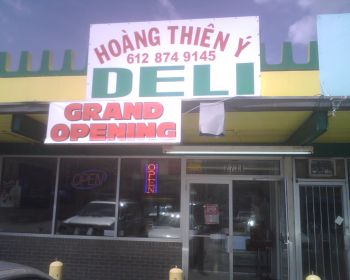
    opening of another terrific little Vietnamese eatery – Hoang Thien Y Deli,
    hidden away in the little strip mall at 2738 Nicollet – across the parking lot
    from El Mariachi and Marissa’s Bakery.
    The counter-top looked very familiar – the same rainbow display of
    snacks and sweets that Saigon express used to offer: steamed rice and pork
    wrapped in banana leaf, bright purple and neon green desserts of sticky rice,
    slender egg rolls and packets of coconut rice, and all the ingredients for
    making sandwiches, smoothies and che desserts. The face behind the counter
    looked familiar, too – it was Chee, one of the women who had worked behind the
    counter at the Saigon Express.

    But Hoang Thien Y has some added features that Saigon
    Express lacked, including half a dozen tables, and a much bigger menu, with a
    big variety of rice plates, noodle soups, salads and more. Chee recommended a
    durian smoothie – made from the notoriously stinky/ pungent/ sexy tropical
    fruit ($3.50), and the Hanoi style pork, a plate piled high with rice noodles,
    topped with succulent rolls of grilled marinated pork stuffed with onion,
    accompanied by fresh herbs and marinated carrots, cucumber and radish, and a
    pungent nuoc mam (fermented fish) dipping sauce – very light, and yet filling –
    perfect summer fare. I can also recommend the bun rieu, a savory soup of rice
    noodles, minced crab, tofu and tomatoes ($6.50).

    And speaking of delis, I noticed as I was leaving the strip
    mall that Marissa’s, across the street has added a cafeteria, offering a big
    selection of authentic Mexican fare – I haven’t had a chance to check it out
    yet, so if you get there before I do, drop me a line (iggers@rakemag.com) or post a comment below to let me how you
    liked it.

  • The Rake's Gallery Grooves Goes Typographic at MCBA!

    ART
    The Rake’s Gallery Grooves

    For those of you who missed our bonus edition of Gallery Grooves earlier this month, here’s your chance to make it up to us! The Rake, KBEM Jazz 88 and Artisan Vineyards
    join forces for yet another installment of our monthly art, jazz and
    wine party – this time taking you on a foray into the world of graphic
    design and typography at the Minnesota Center for Book Arts. Face the Nation: How National Identity Shaped Modern Typeface Design 1900-1960, curated by University of St. Thomas art history professor Dr. Craig
    Eliason, explores how politics and cultural transition helped shape modern typeface design. The exhibition includes a number of beautiful original prints, memorabilia from the printing trade, and free
    commemorative keepsakes you can hand-print yourself! Enjoy the musical stylings of Wallace Hill with the Progressive Percussion Ensemble, sip some amazing wines, and chat it up with like-minded arty folks in one of the
    most gorgeous spaces in the Twin Cities – which also just so happens to be my favorite spot to get wired on coffee and wi-fi multiple times a
    week!

    6-9pm, MN Center for Book Arts / Open Book, 1011 Washington Avenue, Downtown Minneapolis, free

    MUSIC
    DJ St. Croix with Hardland/Heartland

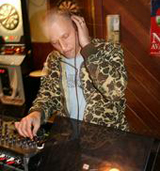
    Join the super-hotness that is DJ St. Croix
    for a special evening of funk, disco, soul, new wave and the unexpected,
    tonight at King and I Thai. Accompanying St. Croix on the turntables
    are his cohorts in art, the avant neo-dadaist artist collective Hardland/Heartland (whom I like to call the DIY Matthew Barneys
    of Minneapolis), spinning their favorite tunes in the cool, cool
    ambiance of the King and I. Max and relax with your pals while
    indulging in cocktails carefully crafted with boozy infusions of thai
    chili, lime, basil, and pineapple (not necessarily in that combination)
    and enjoying the view – because on top of having stellar musical taste,
    this crew is equally easy on the eyes! DJ St. Croix takes over the King
    and I every third Thursday of the month, so mark your calendars, and
    click HERE to download a free music mix ala Croix that will keep your last few weeks of summer soulfully sizzlin’!

    10pm, King and I Thai, 1346 LaSalle Avenue, Minneapolis, Free

    SPECIAL EVENT
    Smitten Kitten 5th Birthday

    It seems like just yesterday Smitten Kitten
    rolled into Uptown to sate the needs of the sexually challenged far and
    wide. Minus the usual creepy sex shop stigma, the lady-focused Kitten
    is still sexy and going strong after five successful years of liberating
    closet perverts and educating lovers – and winning a string of "best
    of" awards along the way. Help kick off this weekend-long celebration
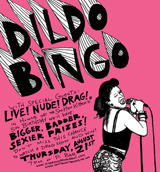
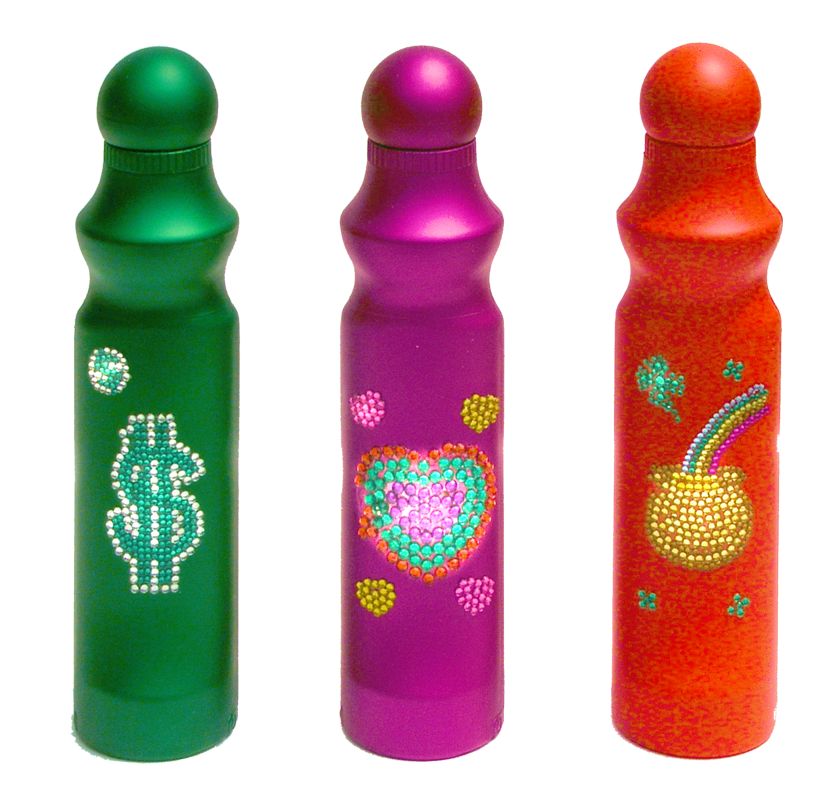
    of the Smitten Kitten’s sexiest milestone yet with, (what else?) Dildo Bingo at Pi Bar. Bust out those phallic bingo daubers and win yourself a shiny new "toy," then stick around for the Live! Nude! Drag! show,
    a gender-bending burlesque experience you’ll definitely get a major kick out
    of. The party continues all weekend with in-store events and an
    additional party on Saturday night at Pi featuring director Tristan
    Taormino screening clips from her new film. Hot!

    7pm, Pi Bar, 2532 25th Avenue South, Minneapolis, free

  • "We Choose to Go to the Moon"

    “Many years ago the great British explorer George Mallory, who was to die on Mount Everest, was asked why did he want to climb it. He said, ‘Because it is there.’ Well, space is there, and we’re going to climb it, and the moon and the planets are there, and new hopes for knowledge and peace are there. And, therefore, as we set sail we ask God’s blessing on the most hazardous and dangerous and greatest adventure on which man has ever embarked.”

    -John F. Kennedy, Rice University, Sept. 12, 1962


    ONE INTRIGUING OCCASIONAL AFTER-EFFECT OF ART is that it can, when conditions are right, be a means to break through the time-space continuum. Case in point: I was recently, upon seeing a recent work of local public art, transported back in time to the year 1962.

    1962, at its lowest, was tense, tumultuous, and treacherous. It was, of course, a year of near nuclear oblivion, but it was also a year of massive military movements across the globe in places like Burma, the Dominican Republic, the Congo, and Indonesia; military buildups in East Germany and Vietnam; a military conflict between China and India; and violent civil conflicts in the South.

    Despite this atmosphere of warfare, terror, murder, and bloodshed, or perhaps because of it, 1962 was also a year of great cultural highs. The Beatles released their first single in 1962. Andy Warhol painted his first Marilyn Monroes, Elvises, Campbell soup cans, and Coca Cola bottles, and the Sidney Janis Gallery mounted the first group exhibition of Pop artists (“The New Realists”). The Rolling Stones, James Bond, Andrei Tarkovsky (perhaps the best filmmaker no one’s ever heard of) all made their first appearance in 1962, and Lawrence of Arabia, To Kill a Mockingbird, and The Manchurian Candidate became instant film classics — notable each for the innovative story-telling risks they took. And among the great and innovative books published in 1962 were A Clockwork Orange, The Man in the High Castle, One Flew Over the Cuckoo’s Nest, A Wrinkle in Time, The Golden Notebook, One Day in the Life of Ivan Denisovich, Pale Fire, Silent Spring, and Travels with Charley.
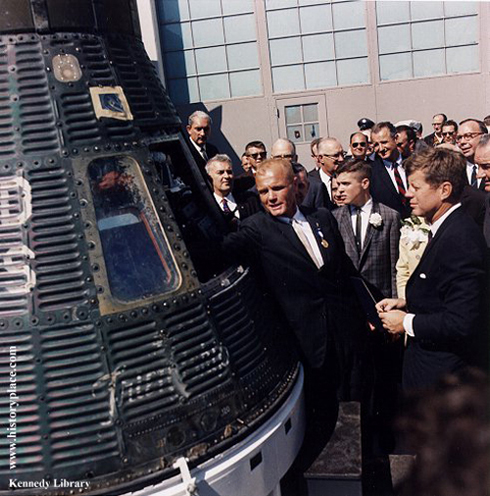


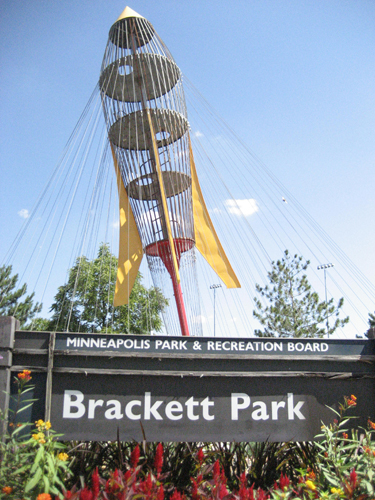
    Two events in particular in 1962 had arguably the deepest, most lasting impact on the culture — at least for the decade or two that followed. This was when John Glenn and Scott Carpenter risked all to be the first Americans to orbit the earth. A resulting national frenzy for all things space culminated in September of 1962, when the president uttered his immortal pledge — “We choose to go to the Moon” — in a speech in Houston. Suddenly, kids of all ages were learning how to make junior cadet space helmets, buying Marx mystery space ships and toy rocket launchers, and, if they lived anywhere near Brackett Park in Minneapolis, climbing up a newly installed 30-foot rocket to take imaginary trips to the stars.
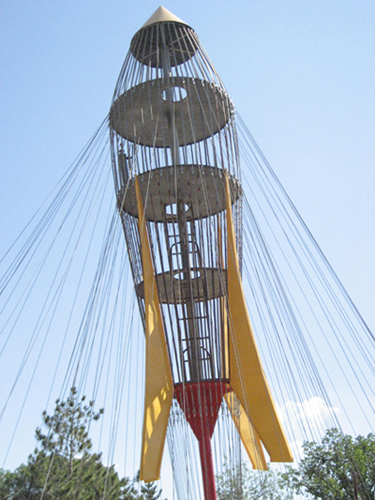
     

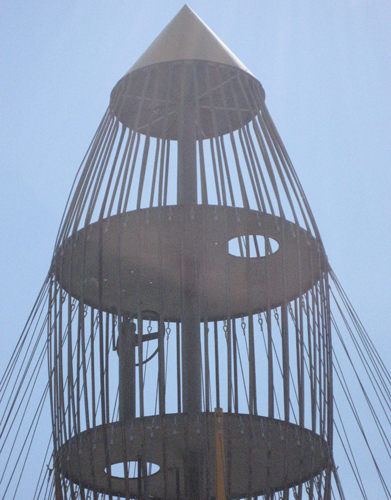
    Thanks to art, the Brackett Rocket survives to this day — nearly a half-century later — reminding us of what 1962 was about. Though I’d seen last summer’s reports about the installation of the above work of public sculpture, called “Return Journey” and fabricated in 2007 by Randy Walker, it wasn’t until I saw it recently — passing by on my way to lunch at the Birchwood Café — that I realized the old rocket that once stood in Brackett Park, and that now survived thanks to Forecast Public Art, was similar to the one I had climbed on in the 1960s and 70s as a kid growing up in California. Originally installed in 1962, according to the Minneapolis Parks website, the Brackett Rocket was “a children’s climbing structure symbolic of the entrance of the United States into the ‘space race.’” The rocket was basically a semi-enclosed, upwardly built clubhouse-like structure, with a exterior comprised of a series of metal slats that bowed out gracefully with a kind of classic raygun-like convexity. This allowed children to frolic inside the rocket while still remaining visible to parents. Entry to the rocket was gained by climbing a ladder through a hole cut into a bottom circle of rigidized (RSS.3) sheet-metal. Once inside, a child could decide how much further to climb: into a second, even larger, stage; then into a third stage, wherein lay the rocket’s steering apparatus; and finally into the final stage, the rocket’s claustrophobic, but lofty, nose cone.

    The joy of this particular piece of playground equipment — as I remember it from my own childhood playing at Victory Park in Pasadena, California — came not only because it allowed for imaginary star roaming, but because entering, and climbing, the rocket was, at least superficially, a risky act — much like the ones embraced by people like Glenn, Carpenter, Mallory, and Kennedy. You wanted to climb the rocket, because it was there, and it was the tallest thing you’d ever seen on any playground. There was particularly something frightening, exhilarating, perhaps even breathtaking, about attempting to visit the nose cone, mostly because of the height of the ascent, but also because of the likelihood that you’d bump into a kid much bigger and meaner than yourself who wanted the highest spot for himself. And there was also the fact that the thing was damn rickety. The see-through walls, the narrow ladders, the rough metal, the vertigo-inducing open walls — all implied an enter-at-your-own-risk kind of ethos that was a larger part of American life in the 1960s and 1970s.


    "Please, dear God, don’t let me fuck up."

    –Words spoken by Alan Shepard just before launch of the world’s second manned spaceflight mission; this has become known among aviators as “Shepard’s Prayer”


    OVER TIME, THE EUPHORIC FRENZY of the 1962 American race-to-space subsided. Some space missions succeeded, and other space missions failed (some spectacularly), as did other missions. Perhaps affected by these failures, the culture grew, over time, subtly more risk-averse. In the late 1990s, safety concerns shuttered, at least partially, the rocket in Brackett Park. Stories circulated at the time that an influential local parent watched in terror as her daughter lodged her head in the rocket’s slat sidewalls. “I cringe when she goes in it,” another parent was quoted in 2004, regarding her own two-year-old daughter. “Aesthetically, it’s nice, but it’s not a safe piece of equipment.” Still, k
    ids have a natural curiosity about danger that will ever go against parental risk-aversion — perhaps, in a vicious cycle, leading to ever more parental protectionism. As this story described, local kids loved the Brackett rocket up until the end despite parental fears: “Even on a chilly afternoon, it was worth the trip. From [a local boy’s] perch high above the park, the 10-year-old could grab a makeshift steering wheel and imagine soaring above the clouds… he had few complaints about the 42-year-old rocket.” But no matter; in 2004, the Brackett rocket was completely removed as part of park renovation efforts.

    The Brackett rocket, having been built before an age of seatbelts, bike helmets, child safety seats, anti-bacterial soap, children-at-play signs, toy recalls, and anything else we can think to do to protect our children (short of locking them in a padded room), was doomed. Its age was one of risk-taking of the sort that won us the space race but that took a toll on the physical body. Back then, playgrounds looked like they’d been fabricated out of the spare parts of WW II battle cruisers, and they were nearly as dangerous to youthful fingers, knees, elbows, and wrists. The Brackett rocket eventually became victim to changing cultural values that worked to remove the danger, and fun, from the nation’s playgrounds.

    The downward slide in playground design, which began in the 1980s, came about specifically from concerns about child fragility that had begun to affect trends in parenting and education. According to a 1989 story in the New York Times, parents were fixated that year on Consumer Safety Commission stats citing 15 deaths and 185,000 serious injuries on playgrounds across the U.S. With such parental watchdogs on the prowl, not only were Brackett-style rockets being examined as unsafe by well-meaning local park boards, but so were old-style jungle gyms and other climbing equipment, traditional monkey bar arrangements, swings, playground surfaces, merry-go-rounds, and any number of playground toys that had served several generations of happily banged-up kids. (Victory Park removed its rocket some time in the 1990s, while parks in other towns, such as Scott Carpenter’s home town of Boulder and the rough western outpost of Dallas, have been taking down their rockets in more recent years). Compounding the situation, playground equipment designers, concerned about increasing ligitiousness in the late 1980s, grew increasingly wary of innovating and exploring new ideas about play. Parents, perhaps due to overstressed, overscheduled lives — and worry about losing control over their children’s safety — began taking kids less often to playgrounds (even as they worked to diminish creative design of playgrounds), and schools began limiting playground time, even to the extreme of canceling recess altogether in some areas.

    What’s most ironic, of course — and somewhat depressing — about this playgound protectionism and irrational fear is it occurred just as child-development experts were becoming, according the Times article, “increasingly vocal about the importance of imaginative outdoor play for children.” The playground, explained the experts, was an “arena for physical, mental and social challenge,” a place vital to children’s development. And, according to experts, the new safe and “uninspiring” play spaces were exactly what kids needed least. “Playgrounds,” said David Belfield, a playground design expert, “by their very nature need to be challenging and risky in order to attract children to go back again and keep trying. It is fine for kids to fall over! Government intervention and our nanny state is damaging our children’s development. This will have a lasting impact as they go through life. If we are not careful, we will become a completely risk averse country to the detriment of our growth and prosperity.”

    Danger and risk-taking — especially in the relatively controlled, but unsupervised, atmosphere of the playground — is a crucial teacher of children. Putting oneself in (reasonable) harm’s way imparts to a child the importance of approaching risky problems with creativity and chutzpah and style. Again, according to the experts, “… today’s children are missing out on unsupervised play, a critical part of their mental and physical development. Incorporating risk is an important aspect of growing up. We develop from learning by our mistakes and pushing our boundaries and this has to start in childhood.” The fact is a few banged knees, twisted ankles, and split nails or jammed fingers may be among the best teachers we can have in life.

    It is all too telling — and in many ways tragic — that, today, playgrounds look less like dangerous, war-surplus scrap metal than something from the back warehouses of IKEA: all designer polyvinyl and off-centric, trapezoidal, globalist shapes meant to nestle perfectly atop a polyfill, low-impact, modern play surfaces. These plastic pre-fab products of the Euro-designer’s imagination offer about as much opportunity for real imaginative play — and real danger — as, well, spending an afternoon stuck in IKEA.
     

    Certainly, the Brackett rocket offered an important object-lesson to any kid who managed to mount the exalted, rarified nose cone: If you overcame your fears and dared to make the climb, then you were rewarded — especially if you lived to tell the tale without too much personal damage. I wonder if the same could be said today about a country too long pampered and protected, about privileged citizens living ever-cushier lifestyles, about politicians who fear administering any sort of necessary, but vote-draining, pills — have we simply grown afraid to face the numerous challenges of the future? Does anyone other than me wonder how John F. Kennedy might have suggested we deal with any of our sundry contemporary dilemmas: Unaffordable housing and health-care, a devaluing currency and ever-ballooning trade deficit, a looming energy crisis, rising ocean levels and increasing environmental stress, loss of industry and job, growing inflation, a widening divide between haves and have-nots, and on and on?

    What’s great about this new incarnation of the Brackett rocket is that the sculpture has the power to evoke the spirit of a bygone era and point out every important difference between then and now. It hints at a better version of ourselves — the nation of risk-takers and achievers who made, despite the great dangers surrounding the country, “know how” and “can do” everyday expressions, and an everyday approach to living life.

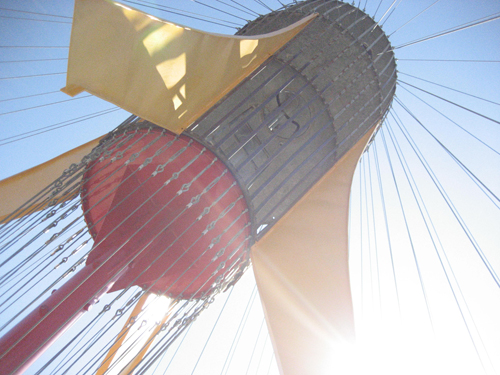
    Still, at the same time, “Return Journey” only hints at the former glory of the year it was erected. Mounted on a pole now, removed from its launch position on the ground, it does not allow us truly to go back to that time, just as it blocks any curious child from entering it. Today, outlined against the sky, frozen in mid-act of an impossible lift off, tethered with dozens of guy-wires — the sculpture is a tribute to a million risks taken by a hundred million kids through the years (who once climbed the rocket), but it’s also a mockery of our raging cultural trepidation and
    mutual risk-avoidance. Thanks to artist’s anchoring of the structure — whether intentional or not — the Brackett rocket has become nothing more than an outdoor museum piece, removed from its past energy and potential and a sad commentary on our own contemporary cultural ineffectuality.
    In the end, we can only marvel that in the much more dangerous year of 1962 the country’s citizens became united in ways that seem impossible now — its creativity focused on one project, its inspiration whetted by one young president enough to make the sacrifices (to the tune of between $20 and $25.4 billion in 1969 dollars in sum for the Apollo project, which amounts to approximately $135 billion in 2005 dollars) necessary to get the job done.

    If only we could choose to go to the moon all over again…
     

  • The Animation Show

    Landmark Theatres (Uptown Theatre, Edina Cinema and Lagoon Cinema) does a wonderful job presenting series of short films. One ticket buys you several stories in a single package, a sort-of kid-in-a-candy-store vibe for devoted cinephiles. Paris, Je T’aime (coming soon in February 2009, the sequel New York, I Love You) and the collection of 2007 Academy Award nominated short films–both animated and live action–were all quite enjoyable theater experiences.

    It’s amazing what filmmakers can do with a limited running time; shorts typically clock in anywhere from two minutes to forty. Some are hindered by the restrictions. Others thrive, telling stories free of filler like a well-cut steak without an ounce of fat. It’s an interesting viewing experience, and a great way for a filmmaker to sharpen his or her craft. After all, nearly every filmmaker’s early works are done in short story format. And if you’re a fan of film podcasts, check out The Hollywood Saloon’s episode titled "Early Works," a nearly four-hour program discussing some well-known filmmakers’ first films.

    Some of my favorite film moments of the past few years have been shorts. The best segment in Paris, Je T’aime was Tom Tykwer’s (writer/director of the fantastic Run Lola Run) titled "Faubourg Saint-Deniss." This is the definition of pure cinema: using fast cuts, time-lapse photography and strong imagery to tell the story of an entire relationship between a man and woman–something that usually takes directors at least 90 minutes–in only five. It’s breathtaking to watch, and extremely creative. I enjoyed all five of the 2007 Oscar-nominated collection of animated shorts: most notably Josh Raskin’s I Met the Walrus, a brilliant combination of guerilla-style reporting/interviewing with inspired graphic-design elements; Suzie Templeton’s nostalgic stop-motion recreation of the beloved Sergei Prokofiev composition Peter & the Wolf (it won the Oscar) transported me back to my childhood in all the right ways; and Chris Lavis and Maciek Szczerbowski’s Madame Tutli-Putli is 17 minutes of pure brilliance, with the most impressive stop-motion animation I have ever seen. Their painstaking work creates an animated character so expressive I have to constantly remind myself she isn’t real. Madame Tutli-Putli is so transfixing, telling the story of a woman with literal and metaphorical baggage getting onto a train and confronting this baggage head-on as the film devolves in to a creepy, David Lynch-style descent in to hell.

    The Lagoon Theatre is currently screening a new collection of animated shorts. Mike Judge’s (of Office Space and Beavis and Butthead fame) The Animation Show 4 is a mostly-enjoyable gathering of animators’ work from around the world. The best thing about Animation Show 4 is the pacing. If one short fails (which several do) it’s on to the next story within five to ten minutes.

    According to the official website, The Animation Show was started as an annual feature-length theatrical compilation of short films from around the world, exclusively curated by Mike Judge and Academy Award-nominated animator Don Hertzfeldt (Billy’s Balloon, Rejected, The Meaning of Life).

    The site states, "As animation continues to be plagued as the single most misunderstood film medium, the animated short film is sadly undervalued and underexposed in American cinema, despite widespread appreciation throughout the rest of the world. With luck, popular animated shorts may see limited theatrical play, but most are relegated to the dungeons of the internet, or with luck, DVD.

    "The theatrical animation festival was born in 1976 with the launch of the Fantastic Animation Festival. This was the first show to create the now-universal "program on a flyer" and the first to receive a first-run 35mm theatrical release. The Fantastic Festival‘s popularity helped pave the way shortly thereafter for similar commercial programs throughout the 80s and 90s, including Spike and Mike’s Festival of Animation, The Tournee of Animation, and several others that came and went with varying success.

    "The Animation Show launched in 2003, making it the first festival of animation created and produced with actual animators at the helm. A sister series of high quality Animation Show DVDs now supplement the theatrical tour with additional insights and brand new lineups of films – while the main Show remains a unique and unforgettable annual program that is usually gone forever once it is out of theaters. Every year the Show works diligently to put animated shorts into more theaters than any festival in American history, giving these filmmakers the wide exposure their work deserves and sharing their short masterpieces on the big screen, where they belong."

    While I agree with almost all of that sentiment, I do take issue with the offhand use of the word masterpiece. The good certainly outweigh the bad in this collection. However, several shorts cracked under the weight of mediocre, one-joke premises. The first episode of Yompi the Crotch-Biting Sloup featuring Corky Quakenbush (that has to be a made-up name) made me laugh; by the third episode I was annoyed. The name says it all. Yompi is a yellow, Gumby-styled character with what looks like a crown of shit on his head who, wait for it, bites unsuspecting people in the crotch. I initially embraced its low-brow aspirations, and giggled because the characters’ voices are hysterical in their Charlie Brown-esque mumble with a more high-pitched tinge. Nothing is added with each episode of Yompi rendering it completely unnecessary after the first. I had a similar reaction to Satoshi Tomioka’s Usavich.

    Some of the repeating animators’ works were more hit-or-miss. I loved French production company Gobelins’ deranged and violent Blind Spot (written and directed by Johanna Bessiere, Cecile Dubois Herry, Simon Rouby, Nicolas Chauvelot, Olivier Clert, Yvon Jardel), about a holdup of a convenience store that goes horribly wrong and ends on a dark-as-midnight note. The other three entries from Gobelins–Voodoo, Cocotte Minute and Burning Safari–were just okay. Dave Carter’s Psychotown from Australia was amusing but tiresome as well.

    My favorites in the program really stick out as great works. Stefan Mueller’s Mr. Schwartz, Mr. Hazen, Mr. Horlocker from Germany used a hybrid of live-action, 2D and computer animation to give life to the story of a cop going to an apartment complex to check on a noise complaint. The tale is told from several points of view, literally rewinding to bring us inside all the tenants’ apartments. It is very funny and twisted. Love Sport: Paintballing was like watching an Atari version of a paintball war which worked wonderfully. Jeu was a fascinating, expressionistic moving painting with a labyrinthine take on modern life.

    Key Lime Pie by Trevor Jiminiz crafted a welcome mix of 40’s style black-and-white film noir, Night of the Hunter (the lead character has ‘love’ and ‘hate’ tattooed on his knuckles) and Edward Hopper paintings to tell the Homer Simpson-like story of a guy selling his soul for a piece of key lime pie. Other shorts I enjoyed included This Way Up, Hot Dog, Forgetfulness and John and Karen.

    The crowning achievement in this program is Western Spaghetti by PES. This is two minutes of pure brilliance with Michel Gondry-inspired DIY effects. Think Science of Sleep but with cooking. The entire short is watching a disembodied hand as it prepares and cooks spaghetti. No rea
    l food was used, though. Instead this incredibly talented and creative animator (or animators, it’s not made entirely clear) uses everyday household items to create the dish: a set of multi-colored pick-up sticks are the noodles, yarn as grated cheese, a red pin cushion is the tomato which is sliced up to make the sauce and chess pieces are salt and pepper shakers. Sounds pedestrian as hell, but this little short held the audience in awe more than any of the other stories (I heard several proclamations of "oh that’s so cool" coming from the audience). Go to PES’s website to see more incredible work.

    So support this small group of animators. It makes for a different, fun movie-going experience, which we need more of at our cinemas. You won’t be disappointed, I venture, and you might see the beginnings of a future filmmaker who will wow us all with a full-length feature someday. You never know.

  • Spill. Moves and Movies That Stain

    Life isn’t a clean tablecloth. Stains are bound to happen sooner or
    later, and that is what Kelly Radermacher expresses in her new
    performance piece, Spill. Moves and Movies That Stain. Combining
    words, dance and video, Radermacher fluidly explores the things in life
    that get in the way, both big and small. Solo pieces and duets will
    combine with the colorful imagery and raw emotions that will capture an
    image of life that will remain turning in your mind long after the
    performance is complete.


    Spill. Moves and Movies That Stain
    will perform at Patrick’s Cabaret
    from September 19 – 21. All shows are at 8 pm. Tickets are $12 for
    adults, $10 for students, seniors and children 12 and under. For
    reservations, call (612) 327-7461. Patrick’s Cabaret is located at 3010
    Minnehaha Avenue South in Minneapolis. For more information, visit www.patrickscabaret.org.


  • Nordic Roots Festival

    The Cedar presents the 10th and Final Nordic Roots Festival from
    September 26 – 28. The best in local Scandinavian music will be
    celebrated during the three-day event, which will kick off at 7:30 pm
    with performances by Waltz With Me and Väsen. The festivities continue
    over the weekend with concerts at 2 pm and 8 pm on Saturday and Sunday.

    All performances will be held at The Cedar located at 416 Cedar Avenue South in Minneapolis. Tickets can be purchased online at www.nordicroots.org.
    And for those wondering, “why the final festival?” Don’t worry. You’ll
    still be able to catch some great Nordic bands next year when the
    festival takes an international turn and becomes the Global Roots
    Festival.