Month: February 2008

  • No Surprise Here, UnitedHealth Rides Again

    It’s not any surprise to those who’ve followed the sordid history of UnitedHealth Group to see that the company is being sued by the Attorney General of New York for manipulating the reimbursement rates for their insured who go outside of the network for their care.

    It seems United reimburses its customers based on a formula which calculates the "customary" charges for services in the New York area. Of course, the "customary" charges are calculated by a third party. In this case a company called Ingenix, which happens to be owned by UnitedHealth.

    An investigation by the state showed that a "customary" charge for a doctor visit in New York City was $200. Ingenix said it was $77. I don’t know if any of you have been to the doctor lately, but the charge in Minneapolis passed $77 quite some time ago. I’m fairly certain that I read somewhere that New York is more expensive to live in than Minneapolis.

    As NY Attorney General Andrew Cuomo said, “We believe there was an industrywide scheme perpetuated by some of the
    nation’s largest health insurers to deceive and defraud consumers.”

    Ya think?


  • The Three Pointer: Better Than Philly

    Copyright 2008 NBAE (Photo by David Sherman/NBAE via Getty Images)


    Game #52, Home Game #27: Philadelphia 88, Minnesota 104

    Season record: 11-41

    1. Spread the Credit

    It’s been a habit of these three-pointers to isolate players for individual praise or criticism, rearranging members of the roster like pieces in a jigsaw puzzle that someday will yield a different and more pleasing picture than the one who entered the All Star break losing more than four games for every one it won. But tonight’s convincing triumph over a Philadelphia 76ers team that had won five straight is most accurately seen as a blended team effort, the type of performance that most satisfies coaches and front office personnel.

    The Wolves’ outscored Philly in all four quarters, beating back a series of runs and challenges in the process. Seven of the nine players who participated–and all seven of those who logged over 20 minutes of playing time–scored in double figures. Only Antoine Walker, who played but 8:05, failed to record a positive in the plus/minus figures. Especially in the first half, the Wolves both moved the ball and moved without the ball, generating offense that was generous, dynamic, and visually pleasing. They were far better mentally and physically prepared than their opponent for their first game in nearly a week, roaring out to a 17-8 lead in the first 6:14 mostly by grabbing 12 of the game’s first 14 rebounds and proving themselves to be the more alert and energetic team.

    Within this team game, two early matchups deserve special mention. Perhaps no foe has frustrated Jefferson more than Samuel Dalembert the first time these teams played, with Big Al suffering five blocks, including a game-tying attempt in the final seconds. This time, Jefferson wasn’t lunched once en route to 9-14 FG. And at the other end, Jefferson totally stymied his taller but more listless opponent. At the half, Dalembert had two points and a rebound in 13:13 versus Jefferson’s 10 and 8 in 16:22. Jefferson’s shot wasn’t falling, but four offensive board produced a pair of putbacks that boosted his percentage (he was 5-9 FG in the first half). He added three more offensive rebounds in the second half and grabbed 14 overall versus 9 for Dalembert. Best of all, weaknesses in his game are slowly but fairly surely being caulked. His "show" on the pick and roll actually had some resonance for the dribbler, and he wasn’t as casual about getting back either.

    But the real eye-opener was a trio of interior passes down toward the hoop from a spot in the middle of the post. Because Jefferson has expanded his range enough to hit that 12-15 footer, the double-team–or at least an opponent’s attention–will be drawn. Tonight he shoveled one pass that Craig Smith finished, went over the top to find Rashad McCants in traffic beneath the hoop, and had another nifty feed come to naught due to a missed layup. His total of 3 assists could have been double that had his teammates converted, or if he needed to log more than just 2:22 in the 4th quarter.

    The other honorable mention goes to Corey Brewer’s defense on Philly’s leading scorer, Andre Iguodala. The 6-6 swingman was clearly bothered by Brewer’s length and tenacity, missing all four of his shots before Brewer picked up his second foul with 3:01 to play in the first and headed for the bench. On the other side of the ball, Brewer remains a disaster–his lone basket in 8 attempts came on a transition layup off a steal. Yes, he takes "good shots," and I suppose one should applaud his confidence in continuing to try and keep opposing defenses honest. But they simply don’t fall–long in the first half, woefully short on his first attempt of the 3rd period–and defenses cheat dishonestly away from him anyway, and will until his finds the range.

    But here’s why Brewer deserves kudos instead of brickbats for this game: While scoring just that lone bucket on five attempts in the first period, the rook also grabbed six rebounds, dished for two dimes, and sank a pair of free throws. Meanwhile, he held Iguodala to a pair of free throw attempts (one made), no baskets, two rebounds and an assist in that first period. When your rookie is getting the better of your opponent’s top point producer, the chances of winning skyrocket. Brewer wasn’t flashy about it–his blanket on Iguodala was most apparent after he sat and Iguodala suddenly was shooting jumpers without a hand in his face (McCants and Ryan Gomes were his other defenders). He *was* flashy coming out of nowhere to foul fellow rook Thaddeus Young in mid-slam well above the hoop in the third quarter, however. Bottom line, if Brewer is one of the top two (or perhaps even three) guys in your pecking order, your team isn’t likely to go far in the playoffs. On the other hand, most playoff-caliber teams have a Brewer-like presence in their lineup: An energy guy with glue-like attributes. And he’s going to get better.


    2. Bassy Hangs In

    Randy Foye finally received his first start of the season tonight, but in a bit of an upset, it was at the shooting guard slot. This move is a victory for common sense over face-saving draft politics. If Foye isn’t a point guard, then the Wolves likely erred in swapping him for Brandon Roy (certainly the injury history argument hasn’t panned out thus far for Foye’s defenders). Well, Foye *isn’t* a point guard–they are sent from God, as Stephon Marbury once said, and isn’t that ironic in retrospect–but force-feeding him at that spot to make sure was the kind of butt-covering logic I anticipated. Instead, Wittman and company are properly impressed with Bassy’s gaudy assist to turnover ratio; after preaching the value of reducing turnovers with numbing frequency, Wittman would have demonstrated blatant hypocrisy by lifting him for a unbalanced combo guy whose miscues outnumber his dimes.

    Fifty-two games into this season, Telfair is the Wolves player who has most aggressively seized this campaign by the throat, not so much surpassing the low expectations his previous play had engendered as lapping them, stoking his energy and intelligence in the process. In the past 30 games or so, Telfair has finally learned how to do more than simply turn the key in the offense and try to steer the wheel. He’s discovered how to regulate pace with the throttle and the brake, how to draw and kick, how to make opponents cover him because of his dribble penetration or initial probes in the modified fast break where the Wolves may or may not have the numbers. He’s still small, of course, and despite tonight’s 3-4 FG, his shooting continues to be a relatively wretched adventure. But when he’s paired with Jaric or Foye or McCants in the backcourt, there’s no longer much doubt that he’s the floor general.

    By the numbers, Foye had perhaps his best game thus far: 13 points, five assists and one lone turnover. But he did jack up 15 shots (making six), including a half-dosen treys (converting one), and he’s been a sub-mediocre defender all year. Tonight, Andre Miller posted him up a couple of times for easy baskets on the way to a 15-point half that kept Philly in the game (Miller didn’t score in the second half, however.) Of even greater concern, Philly was the second straight opponent to deploy a full-court press when Foye was the primary point guard, and Wittman quickly had Telfair up and ready to go back in after the court-length disruption cut into the Wolves lead.

    Foye’s confidence, like Brewer’s, remainsa little higher than reality might warrant. Asked about his defense tonight, he boasted about clamping down on Willie Green (who *was* held to 6 points on 3-10 FG) instead of Miller’s early post-ups or some garbage time matador maneuvers. It is reminiscent of his claim about being best suited for the point. And maybe after he regains full range of
    that knee and fills his head with another thousand or so minutes at the point, he’ll become more of a savior than a sabatoeur at the position. But Wittman revealed after tonight’s game that he’ll continue to experiment with the Telfair-Foye backcourt allignment for a while longer to see how well they stir up sparks.

    3. Cuban’s Kidd

    About three weeks ago when I was catching a Mavs game on League Pass, a television poll showed Dallas fans believing that Devin Harris was the team MVP at that time. Now not only Harris but the Mavs’ best legit big man in Dasanga Diop are heading to New Jersey to finally trigger the trade for Jason Kidd. It’s a bad deal for Dallas on a number of levels: The fans clearly appreciated Harris, who destroyed the Wolves with dribble penetration the first two times the teams met in Dallas earlier this year. Kidd has slipped defensively, and will have difficulty with the Nash-Williams-Paul-Parker quartet, who figure to be among his opposing matchups in the playoffs. Losing Diop means Erick Dampier will be the default man in the pivot when the Mavs need to match up with lengthy ballclubs. Then there is the small matter of two first round draft picks. And three million bucks.

    I’ll be shocked if both Dallas and Phoenix make it out of the first round of this year’s playoffs.

  • Let It Loose, Let It All Come Down: A Very Sad Business All Around

    Some mysterious combination of failing light, and the smell of an unrecognized plant bring back to some men the sense of childhood, and of future hope; and to others the sense of something which has been lost and nearly forgotten.

    –Graham Greene, The Honorary Counsul

    What we cannot think, we cannot think; we cannot therefore say what we cannot think.

    –Ludwig Wittgenstein, Tractatus Logico-Philosophicus

    When not engaged in warfare they spend a certain amount of time at hunting, but much more in idleness, thinking of nothing else but sleeping and eating. For the boldest and most warlike men have no regular employment; the care of house, home, and fields being left to the women, old men, and weaklings of the the family. In thus dawdling away their time they show a strange inconsistency –at one and the same time loving indolence and hating peace.

    –Tacitus, Germania

    The place was perpetually murky, either sticky-hot and prone to tantrums, or inhospitably cold and overcast. Clouds would roll in and set up shop for months at a time, casting a disorienting pall over the days, a permanent crepuscle that made it easy to lose track of time.

    In the warm months, between spasms of rain, the little town would bake and be congested with dust kicked up by the slow, ceaseless procession of late-model European and American cars, bicycles, and carts dragged through the dust by old women and children on their way to the crowded markets.

    The town was surrounded by thick woods that rolled steadily upward toward the mountains that were overgrown with lush, almost tropical greenery. These mountains were said to be populated by ancient tribes of warring giants and trolls.

    For almost a century the population of giants was alleged to have been in alarming decline, a decline that was attributed to environmental factors and a mysterious crisis of infertility. For generations the giants had subsisted on wild hogs and the young and elderly trolls they were able to steal from their rival tribe.

    Over the years, however, the trolls had become masters of stealth, cunning, and deception, and had adapted to the once frequent incursions of the giants by moving underground, where they had excavated a complex network of tunnels and subterranean villages. They also became quite expert in creating traps for the giants. These traps were huge bunkers that the trolls would cover with brush and bait with a howling child or pig. One giant, thus captured, could feed one hundred trolls for a month.

    Eventually, the combination of these various factors led to the wholesale eradication of the giants, and the trolls had the complete run of the place. They moved above ground, started to read the Bible, and built unsightly compounds comprised of little but poorly-made mansions, town homes, and strip malls.The trolls, it was said, were indiscriminate breeders, and they rapidly accumulated great wealth and power.They were known to comport themselves with a strange combination of indolence, aggression, and arrogance. The natives of the village grew to regard them with fear and loathing, until one day a band of brazen local youths, armed with nothing but stones, mounted a series of attacks that razed entire neighborhoods, killed hundreds of trolls, and drove the remainder of the crass little bastards back underground.

  • All the News That Fits—and Then Some

    There’s an awful lot of talk about the news lately, but not, unfortunately, the sort of constructive conversation that promotes critical thinking and engages people with their neighborhoods, their country, or their world. No, what people are talking about is the media, or, more specifically, and more onerously, the business of media. The Star Tribune is losing readers, pages, and staff. (Did that venture-capital firm buy it just for its prime downtown real estate?) The Pioneer Press is facing the same challenges, and rumors have been circulating for over a year that it will cease to exist altogether. The corporate hijacking of local “alt weekly” City Pages seems finally to have succeeded, at least in a manner of speaking. (New Times indeed—just who the hell is this Hoffman character, anyway?) And it’s not just with these outlets. Almost everywhere you turn the quality of news is being questioned as resources and profits continue to dwindle. It’s just too expensive, it seems, to chase meaningful stories these days, and the competition has never been fiercer for advertising dollars.

    Enter the internet, the longtime boogeyman and sworn enemy of print media everywhere. As it turns out, it just might be the best tool any news reporter, storyteller, or publisher ever dreamed of. With more than half the U.S. now online—and two-thirds of them getting their news online—the web is suddenly a sexy proposition for all sorts of formerly hidebound print junkies. The venture capitalists are intrigued as well—you’d have to suppose that in a recessive industry, not having to pay for ink, paper, press operators, and distribution would bode well for the bottom line.

    And so, with (undoubtedly) noble thoughts and high aspirations, many Twin Cities newsies have been turning to the web as a panacea for a host of the ailments currently bedeviling the news media. Former Strib publisher and editor Joel Kramer got the attention of media insiders across the country when he launched MinnPost, his long-anticipated online news site, in November. At about the same time, erstwhile City Pages editor Steve Perry debuted his own site, The Daily Mole, which he mothballed last month after a frustrating three-month run; now he is taking the reins at the Minnesota Monitor. Perry’s new employer, like a number of other local sites (including Twin Cities Daily Planet, the Minnesota Monitor, Cursor, and MNSpeak), had been up and running on the web long before that pair of high-profile upstarts made their splash at the tail end of 2007.

    It turns out that the web, with its atmosphere of almost unbridled democracy (a sort of anarchic egalitarian free-for-all, if such a thing is possible), has breathed new life into the moribund American Dream. Freedom of speech. Free exchange of ideas. Anybody can play. People with a little bit (or a lot) of hubris can barge their way online and plant their flags. Every citizen (or non-) can put his (or her) voice out there. And anyone can hit the jackpot, which is, of course, measured in mouse clicks. (You can be sure even the gal blogging about what she had for breakfast is watching her numbers.) In the online world, clicks mean dollars.

    The trouble, of course, comes in setting up a new online economy. How many clicks for how many dollars? What’s the rate of exchange? In a world where Britney has been the top search term for six of the past seven years, and where information is expected to be free, how can anyone make news financially viable?


    Making a play with traditional journalism

    Determined to uphold professional distinction above all else (presumed translation: no Britney stories), Joel Kramer latched on to a stable of reporters cast off in the recent newsroom purges on both sides of the river and set out to create a quality local news source. With the exception of a few videos and slideshows, MinnPost’s editorial model is little more than traditional newspaper journalism distributed online (in fact, until a few weeks ago, Kramer insisted on distributing fifteen-hundred Xeroxed printouts for those committed to words on paper).

    While web-based businesses across the globe save on rent by having staff work from home, Kramer resists this as well. He is proud of MinnPost’s old-school newsroom, which features open space to encourage dialogue, an office for the business staff, and conference rooms and workstations around the perimeter. Just as newspaper reporters rush to meet an evening deadline, MinnPost contributors—drawn from a pool of fifty-six freelancers—submit stories each morning so that web editor Corey Anderson can post them online at 11 a.m. This also runs counter to standard web protocol, where news is live twenty-four-hours and reporters bypass editors by posting their stories directly on the website. “Our goal is not to exploit the web,” explained Kramer, “but to provide quality journalism.”

    Can MinnPost make profitable use of an online medium without fully engaging its resources? Nora Paul, Director of the Institute for New Media Studies at the U of M, says no. “[Kramer] hasn’t embraced what’s interesting about online,” she argued, “which is the ability to create packages with a shelf-life, and that will have utility for a long time.” According to Paul, online news organizations need to find new and compelling ways to tell stories, and develop creative ways to pull together data. While most local online news sources have not availed themselves of Paul’s expertise, newspapers across the country are turning to her for the winning formula. Last month, eleven top newspapers, including The New York Times and the Washington Post, met with Paul (and five graduate students) to formulate questions they want answered about offering news on the web. What’s the best way to display video? Do news crawlers attract more clicks than breaking news digests? What’s the most engaging way to tell a story?

    Above all, the web offers flexibility. “Online, the walls should be much more porous,” explained Paul, “so that you have an evolving story-telling space.” In other words, there’s no excuse for anything static. Online news is more a process than a product; it’s created through interaction and various points of view, so stories build up almost organically, with varied perspectives, in varied forms, from varied arenas. Ideally, the end result is a much broader picture, and arguably a more compelling story than we’ve been reading on paper for centuries.

  • With Liberty and Luxury for All

    Luxury is big business these days, and not just because the world of the rich is more prosperous and populous than ever. The rest of us are also becoming avid consumers of goods and services that were once exclusive to the super-wealthy. Obviously your definition of “luxury” depends on where you reside on the economic food chain—there’s a difference, for instance, between a Dior T-shirt purchased at an outlet and an invitation to a Dior couture show. For some folks luxury might be a pair of Godiva truffles, nestled in a tiny gold box and purchased on a whim at Southdale; for others, a $4,000-a-night, two-story hotel penthouse with a baby grand piano.

    Such lodgings are now available in downtown Minneapolis, at the brand-new Hotel Ivy, ballyhooed as the Twin Cities’ first five-star luxury hotel. The saga of the tiny Ivy Tower is by now familiar: Long vacant, the 1930 landmark was destined for a meeting with the wrecking ball, but saved at the last minute by savvy developers. They made the idiosyncratic, vaguely Moorish building the centerpiece of a complex that includes a 136-room hotel, a 17,000-square-foot spa and fitness center, and ninety-two condominiums, almost all of which, remarkably, have sold.

    Curious about what exactly it means to be the Cities’ first five-star luxury hotel (and what that coveted and somewhat mysterious designation signifies), I interviewed the Ivy’s general manager, Alister Glen, who graciously made time while in the midst of hiring staff and other harried preparations for the opening last month. The Ivy is part of Starwood Hotels and Resorts’s “Luxury Collection,” a franchise of fifty-some hotels and resorts around the world. (Starwood also owns the Westin, W, and Sheraton chains, among others.) Despite this pedigree, Glen made it clear that the Hotel Ivy would appeal “to all spectrums of the market”—that is, it would even welcome those who indulge in discount Dior and Godiva two-packs.

    “I don’t want people to feel like ‘We’re going to have to mortgage our house to even go in there,’ ” he said. “Is it luxurious? Yes. Does it have the kind of rooms and feel that we haven’t seen in Minneapolis? Yes. But are we setting it up to be a bunch of snooty people with attitude? No. No matter who walks through that door, they’ll be treated like they’re staying in the hotel. Maybe you won’t be able to stay in a hotel room, but you’ll definitely be able to have a drink in the bar or a cup of coffee in the lounge.”

    Glen’s open-arms approach gets at a tricky aspect of peddling “luxury” in the current market. You can’t be snooty and uptight—or perhaps, more to the point, you can’t afford to be. Thus the emergence of terms like “casual luxe” and “universally likable luxury”; the latter was used last year in a Wall Street Journal article about an ad campaign for Lincoln, the idea being to establish Ford’s high-end automobiles as an “approachable brand” distinct from “old world” luxury or “money-is-everything” luxury.

    Why be so adamantly democratic about luxury? One thing to consider is how much of the wealth among the upper-income elite is newly minted, and how many of its holders will eschew old standards of luxury—say, the Saint Paul Hotel—and defect to the Hotel Ivy.

    Another, perhaps more important factor to consider: the rest of us. Those who aren’t wealthy can ride along, to some degree, on the coattails of those who are. In “The Snob Within,” an article that appeared last year in the Boston Globe, Don Aucoin noted the original definition of “snob”: one who aspires to membership in a class above his own. In our growing fondness for five-dollar coffees, one-hundred-dollar facials, and thousand dollar “it” bags, he observed that middle-class people are taking cues from the rich instead of fomenting class war against them. As the income gap grows ever larger, it’s as if some of the middle class—or many, really—are looking to make the leap to the expanding yet still tiny ranks of the elite.

    However unlikely their chances of success in that endeavor, these strivers make for a huge market, and in an era of growth-at-all-costs global capitalism, why wouldn’t purveyors of luxury seek to exploit them? Hotels, for instance, generate considerable revenue outside of renting rooms; to maximize profits the Hotel Ivy needs to welcome locals for coffee, cocktails, or a spare-no-expense dinner. Its spa needs loyal customers, as do its meeting and banquet facilities—especially as it’s moving into an increasingly crowded “new luxury” market that includes the Graves 601 and the Chambers, and later this year, the W Minneapolis at the Foshay.

    As luxury-for-all goes, high-end hotels are distinct from goods like couture, cars, or mansions. A hotel is a place where you can experience a posh lifestyle without a long-term investment of cash. Regular folks will be tolerated—or even, as Glen insists, welcomed. “New luxury” hotels are one of a dwindling number of places that serve both the rich and those who enjoy rubbing elbows with them. Elite night clubs used to have the same function: In the heyday of Studio 54, street kids and hustlers could mingle with socialites, as long as they were good-looking, enterprising, or just plain interesting (even freakish). But as a recent story in New York magazine complained, with VIP everything and de rigueur “bottle service,” the top nightclubs have become the exclusive province of rich kids with platinum cards and assholes partying on expense accounts.

    Glen is an affable, thirtyish native of South Africa, and prior to coming onboard at the Ivy he was a manager at Barnsley Gardens, a luxury resort outside Atlanta. I noticed during our interview that he was wearing a Polo sweater—a perfect “new luxury” symbol. It’s well-known that Ralph Lauren grew up Jewish in the Bronx—which perhaps made him the perfect interpreter of wealthy WASP lifestyles. The designer is a great pretender, and so are his legions of fans around the globe, whether they buy Polo as part of “the ultimate retail experience” at the Rhinelander Mansion flagship on Madison Avenue or forage for it in a bin at Costco.

  • Off to Mexico

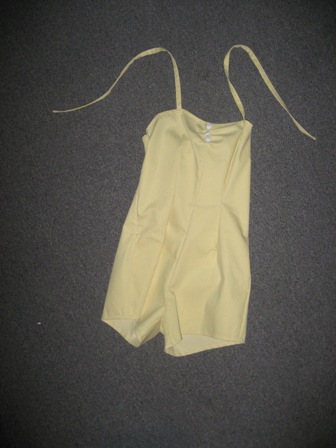
    Sick of winter much? Can you bear another cold day of having
    to bulk up? Me either! That’s why I’m checking out for Mexico, yo. Feast
    your eyes on this: the adorable, but nonetheless scanty, romper I procured for
    the occasion (as modeled by the much thinner-than-me office floor).


    The romper is by Michele Henry, originator of House of Henry
    line (check the website if you care to see the above on an actual person). Here’s another of her warm-weather rompers, which is made from the same stretch
    cotton and modeled by a lovely size-eight dress form.


    I’ll mark my return in early March with coverage of three
    local fashion shows:

    MARCH 8: A TWOFER
    Methinks it’s marginally interesting that the all-new
    Envision fashion show, which promises to parade looks from the Cliché and Local
    Motion boutiques across the IDS Center’s fiftieth floor, is going head to head
    with the stalwart DIVA MN show. Among the DIVA designers, by the
    way, will be Ms. Henry, mastermind of the rompers above.

    MARCH 9: BREAK-THE-BANK BEAUTIES
    The brand-new "Runway Luxury" show will feature unattainable
    clothes by Monique Lhuillier (whose only local connection, really, is that she
    keeps an Edina
    boutique) and Joynoëlle (a certified Twin Citian) at the soon-to-open Ivy boutique
    hotel.

    In the meanwhile, stay reasonably warm, will you?

  • Across the Globe — on land and in water

    In case you haven’t noticed, we’ve had a few great guest bloggers lately in our Just Passing Through blog. Steve Hendrickson — an actor in Ten Thousand Things‘ latest play, Eurydice — will be finishing his week-and-a-half stint with with an opening night post tomorrow. And before that, local playwright Aditi Kapil shared her behind-the-scenes experience with two current productions — one of which starts today! According to Kapil, Beneath the Surface is a circus about water; but I’ll write more about it later, after the evening performances begin. (Today’s is a daytime performance.)

    THEATER & PERFORMANCE
    The Syringa Tree

    In the meantime, go check out The Jungle Theater’s latest production: The Syringa Tree, by Pamela Gien. Sarah Agnew takes on 24 different roles in this one-woman show about an interracial family — or rather, two families (one black, one white) struggling for a point of convergence — in 1960s South Africa. The tale begins through the eyes of six-year-old Elizabeth Grace as she attempts to understand her chaotic surroundings, and continues to unfurl the world of Africa through multiple characters who cut across gender, age, race, tribe, and faith.

    7:30 p.m., The Jungle Theater, 2951 Lyndale Ave S. Minneapolis, 612-822-7063; $26.

    BOOKS & AUTHORS
    One Day, One Venue, Two Great Authors

    Today might be the perfect day to hang out by the University. Cut out of work early, avoid traffic, and get yourself settled into a nice, cheap parking spot somewhere between the bookstore and The Loring Pasta Bar, so you can stop in for some artichoke ramekin or a spicy tuna roll between presentations. Mmmm.

    At 4 p.m., join author and former Associated Press reporter Giovanna Dell’Orto for a discussion of her book, The Hidden Power of the American Dream. I don’t know how hidden it is, frankly, but I’m guessing Dell’Orto has much more to offer beyond the usual American Dream rhetoric. Exploring the different events that have shaped how Europeans — and the rest of the world — view Americans, she sets out to prove that the future of our country lies in a global belief of the American Dream. Makes sense to me.

    This, of course, is followed by the artichoke ramekin at the Loring. Or perhaps you prefer a burger and a malt at Annie’s Parlour.

    After a bite to eat, head back to the bookstore to meet open-water swimmer and best-selling author Lynne Cox. Best known for her first novel, Swimming to Antarctica, Cox will be discussing her latest work, Grayson, another beautiful and personal tale, this time about a baby whale. At the age of 17, Cox was training for another long-distance swim (if you read her previous book, you already know about how she crossed the English Channel — twice!), when she discovered a baby gray whale following her. Here’s the catch: if she were to return to shore, the baby whale would follow her to its death; but if she were to swim out to sea, she would be putting her own life at risk. Find out how Cox reunited the baby whale with its mother and likely saved its life. Is there anything this woman can’t do?!

    7 p.m., University of Minnesota Bookstore, Coffman Memorial Union, 300 Washington Ave. S.E., Minneapolis; 612-626-0559; free.

  • Letters From Eurydice IV

    The differences between the first dress and second dress are three:

    1. It’s our second dress rehearsal.
    2. We have moved from our cramped basement rehearsal space at the Quaker Meeting House to the spacious, bright, airy, and day-lit upstairs meeting room.
    3. We have a small audience of Michelle Hensley (again) and Michelle Woster (TTT Managing Director) — who has brought along four women friends. Also present are the meeting house caretaker and his daughter, who looks to be about four years old. Apart from the two Michelles, none of these people are theatre professionals, and, most importantly, nobody is carrying pens and legal pads. They’re just here to see the play.

    Larissa — who throughout the entire rehearsal period has been struggling valiantly against a nasty, persistent racking cough that has limited her to 2-3 hours of sleep a night — looks rested and, surprisingly, cheerful. She makes no attempt to take me aside and explain, eyes averted, that she has conferred with Michelle and Peter and that all agree a huge mistake has been made, and that one of the other Steves of the Minneapolis acting community — Yoakam, Pelinski, D’Ambrose, Lewis, or Sweere (fabulous actors all, btw) — will be going on with script in hand and perhaps it would be best if I gave back all my salary, packed my things quietly, and left by the back door.

    Instead, Larissa spends the first two hours giving notes and going over particular scenes, tightening, adjusting, finessing with a sense of confidence and surety. The comments she has from Peter and Michelle all appear to be smart, observant, constructive, and effective.

    Our audience arrives at 12:45, and at 1 p.m. we’re off. Sonja and Marc (Eurydice and Orpheus) start the play and instantly the energy of the room changes to something we’ve never felt before. The change is the rapt attention of our tiny audience. They are riveted, engaged, enthralled. They laugh! Omigod, the play is funny! After three and a half weeks of rehearsal, we had kind of forgotten that. But even better, the laughter is coming from recognition and identification. They cry! The end of Eurydice carries a bittersweet melancholic mixture of empathy and loss that seems almost unbearable to witness. The play ends, and we stand to face the friends of Woster. Their mouths are creased with wide smiles and their eyes damp from tears. Yin and yang — marvelous!

    Larissa and Michelle look relaxed and elated. Larissa has notes for us; there are always notes, but they’re the notes a cast gets when the director feels the play is on the right track — more than that — that the play has tuned itself to the right pitch and is working, is playing the way it’s meant to. Glitches are addressed, minor issues are discussed and solved, but the air is vibrating with the sense that the audience was compelled, moved, and we’re onto something special here. Tomorrow we give the play it’s first real audience: the VOA Women’s Correctional Facility in Roseville. Ready or not, rehearsals are over.

    Next: Opening Day

  • You're Invited: Dinner and Jazz at T's Place

    Please join us for dinner and jazz on Wednesday, February 27 at T’s Place, 2713 E. Lake St. Minneapolis.

    We stopped in the other night at T’s Place, the Ethiopian-Malaysian fusion restaurant a couple of doors down from the Town Talk Diner, to check out Yohannes Tona and his band. I’d read a piece in the Twin Cities Daily Planet by Dwight Hobbes that described Ethiopian-born Tona as "the baddest bass guitar player in the Twin Cities."

    As luck would have it, Tona was off gigging in Las Vegas, but we weren’t disappointed: his replacement was an amazing Cameroonian guitar player named Kenn Wanaku, who led Tona’s regulars in a couple of high energy sets that ranged from reggae and merengue to Congolese soukous and West African hilife, with a little Paul Simon and Bob Marley thrown in as well.

    The only sour note was that the place was nearly empty. So Carol and I decided, we have to get a bunch of friends – and Breaking Bread Readers – together and come back and make an evening of it: Tona and his band play (almost) every Wednesday night. So we are scheduling our little get-together for a week from today – Wednesday, February 27.

    Carol and I will plan to arrive by 8 p.m., and the music starts at 9:00.

    T’s Place offers a unique menu – a combination of traditional Ethiopian dishes, served on a tray covered with injera (a pancake-like flat bread), and some Malaysian-Ethiopian dishes that chef T Belachew invented when he was a chef-partner with Kin Lee at Singapore!. For menu details, check the website. Prices for food and drinks – they have a full bar – are very reasonable, and there is no cover charge for the music.

    We’re asking everybody to order – and pay – for themselves, though you are very welcome to follow the Ethiopian custom of eating from a shared tray.(With your fingers, if you really want to be authentic.)

    Please email me at iggers@rakemag.com, if you plan to attend. Or just show up.

  • Dunking the Fishtank

    Fishtank: n. a diffuse, silent comedy ostensibly done in the
    spirit of Buster Keaton and Jacques Tati. I couldn’t help but make comparisons
    to Play Time, my favorite Tati flick (I just re-watched the restaurant scene
    last week). This was Tati’s all-out screed on modernist architecture, if you’ll
    recall. In my mind, the physical acting is less funny than the extremist
    perspectives of the filmmaker. Tati goes to great, comic lengths (and toes the
    line of tedium) to illustrate his disdain for contemporary architecture and its
    sullying effect on the Parisian streetscape. Now, to make my point here: I’m
    not the sort of theatergoer who demands a message, or even a point, from the shows
    I see. Nor do I require a cohesive narrative arc (although I do happen to
    believe that story is inherent to the best art). However, this show is
    something else–lacking in both perspective and narrative.

    The basic premise: examining the little obstacles and comedies
    in our mundane, everyday existences. But there were only two instances in which I,
    as an audience member, recognized something in the situations: one performer (Nathan
    Keepers) encountered a few problems when passing through an airport metal detector,
    which was played to great comic effect and ended up being the show’s highlight;
    another performer (Dominique Serrand) got stuck on the phone in voice mail hell.
    Man, I’ve been there. But other than that, the situations were too obscured to breed
    familiarity–or, for that matter, any emotional investment in these characters.
    And it’s pretty, damn boring to watch a show that’s inhabited by people you
    could give a rat’s ass about.

    It’s got to be said: Jeune Lune has a history of omitting the
    playwright from its creative process. In fact, I believe their adaptations of
    operas and classic texts have succeeded because of the built-in storylines.
    Plus, the company demonstrates reverence for their preferred dead
    scribes (Shakespeare, Molière). But their "ensemble-created" work, in my
    opinion, has often been diffuse, disjointed, lacking in any sort of thread, too pleased with itself, and therefore emotionally
    isolating (bear in mind here: I wasn’t around for the benchmarking Yang Zen
    Froggs
    ).

    I "get" the clown thing. But the key to succeeding, as a
    clown, has always been to cultivate an alliance between audience and performer.
    In other words: The two of us ought to be in on this joke together. For
    whatever reason, I wasn’t invited to attend this joke. In fact, by the end of
    the night, the only thing that was clear to me about these characters was this:
    They’re awfully enamored of their own cuteness.

    So, the gloves are off. But before I dispense with my final criticism,
    I suppose I ought to make the disclosure I always make when writing about Jeune
    Lune: I used to work there, in administration. I have no lingering
    hostilities. I liked the job. Many of my most memorable theater-going
    experiences were at Jeune Lune. I want to see this company succeed. But of
    course, I was sad to see some of my favorite people (to say nothing of their
    artistries) leave the company, in 2006.

    My final point on Fishtank: Jennifer Baldwin Peden’s
    character–the sole woman (it felt somewhat like watching the Smurfs)–speaks baby-talk. Also, she seemed to be costumed as a Japanese schoolgirl. So,
    obviously, there’s a huge difference between finding one’s inner idiot/clown and
    infantilizing the sole female character. For many women, I’m afraid, there’s
    nothing funny about watching a grown woman behave and be treated as a precious, little six-year-old.